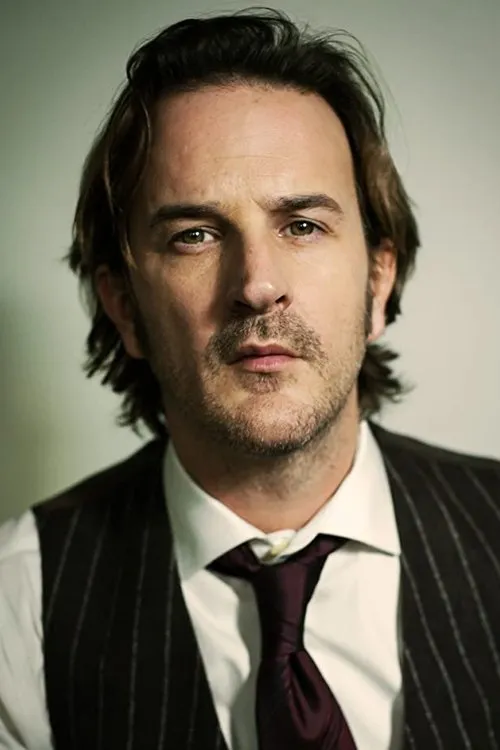
Age: 47
male
James McAvoy (born April 21, 1979) is a Scottish actor. He made his acting debut as a teen in The Near Room (1995) and appeared mostly on television until 2003, when his feature film career began. His notable television work includes the thriller State of Play, science fiction miniseries Frank Herbert's Children of Dune and the channel 4s BAFTA award-winning series Shameless (British TV series) He has performed in several West End productions and has received four nominations for the Laurence Olivier Award for Best Actor, and has also done voice work for animated films including Gnomeo & Juliet, its sequel Sherlock Gnomes, and Arthur Christmas. In 2003, McAvoy appeared in a lead role in Bollywood Queen, then in another lead role as Rory in Inside I'm Dancing in 2004. This was followed by a supporting role, as the faun Mr. Tumnus, in The Chronicles of Narnia: The Lion, the Witch and the Wardrobe (2005). His performance in Kevin Macdonald's drama The Last King of Scotland (2006) garnered him several award nominations, including the BAFTA Award for Best Supporting Actor. The critically acclaimed romantic drama war film Atonement (2007) earned him a Golden Globe Award nomination and his second BAFTA nomination. He later appeared as a newly trained assassin in the action thriller Wanted (2008). In 2011, McAvoy portrayed Professor Charles Xavier in the superhero film X-Men: First Class, a role he reprised in X-Men: Days of Future Past (2014), X-Men: Apocalypse (2016), Deadpool 2 (2018), and Dark Phoenix (2019). McAvoy starred in the crime comedy-drama film Filth (2013), for which he won Best Actor in the British Independent Film Awards. In 2016, he portrayed Kevin Wendell Crumb, a man with 23 alternate personalities, in M. Night Shyamalan's Split, for which he received critical acclaim, and later reprised the role for the sequel Glass (2019). Since 2019, he has portrayed Lord Asriel Belacqua in the BBC/HBO fantasy series His Dark Materials.
James McAvoy

Archangel Gabriel
for Archangel Gabriel in The Divine Comedy
Suggested by charlesp

The Divine Comedy (Italian: Divina Commedia [diˈviːna komˈmɛːdja]) is a long Italian narrative poem by Dante Alighieri, begun c. 1308 and completed in 1320, a year before his death in 1321. It is widely considered to be the pre-eminent work in Italian literature[1] and one of the greatest works of world literature.[2] The poem's imaginative vision of the afterlife is representative of the medieval world-view as it had developed in the Western Church by the 14th century. It helped establish the Tuscan language, in which it is written (also in most present-day Italian-market editions), as the standardized Italian language.[3] It is divided into three parts: Inferno, Purgatorio, and Paradiso.