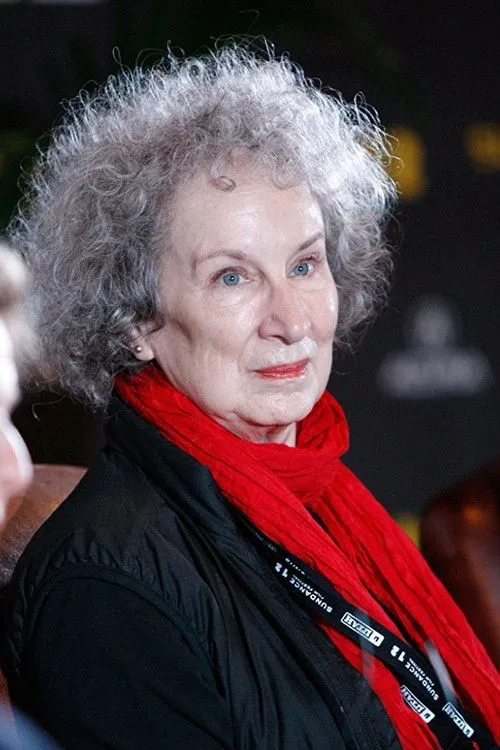
Age: 86
female
Born in Ottawa and raised in Toronto, Margaret Atwood graduated from the University of Toronto’s Victoria College in 1961 and pursued a master's at Harvard in 1963. Her teaching stint at the University of British Columbia marked her start, but it was her poetry collection, "The Circle Game," in 1964 that brought her initial literary acclaim. Her debut novel, "The Edible Woman" (1969), resonated with early feminist movements, followed by "Surfacing" in 1972, a Canadian literature mainstay. The '70s saw her prolific output: six poetry volumes, three short-story collections, and bestsellers like "Lady Oracle," "Life Before Man," and "Bodily Harm." In 1985, "The Handmaid's Tale" propelled her to global fame, showcasing her futuristic, dystopian storytelling. Subsequent novels like "Cat's Eye," "The Robber Bride," and "Alias Grace" solidified her international acclaim. Her impact extends beyond literature; as the first novelist and poet on Canada’s Walk of Fame, Atwood embodies Canadian humility, stating, "We don’t put up with people who get too high and mighty." Her work continues to resonate, cementing her status as a treasured Canadian storyteller.
Margaret Atwood

Miss Pebmarsh
for Miss Pebmarsh in The Clocks
Suggested by devahutiraichaliha

Sheila Webb, typist-for-hire, has arrived at 19 Wilbraham Crescent in the seaside town of Crowdean to accept a new job. What she finds is a well-dressed corpse surrounded by six clocks. Mrs. Pebmarsh, the blind owner of No. 19, denies all knowledge of ringing Sheila's secretarial agency and asking for her by name -- yet someone did. Nor does she own that many clocks. And neither woman seems to know the victim. Colin Lamb, a young intelligence specialist working a case of his own at the nearby naval yard, happens to be on the scene at the time of Sheila Webb's ghastly discovery. Lamb knows of only one man who can properly investigate a crime as bizarre and baffling as what happened inside No. 19 -- his friend and mentor, Hercule Poirot.

