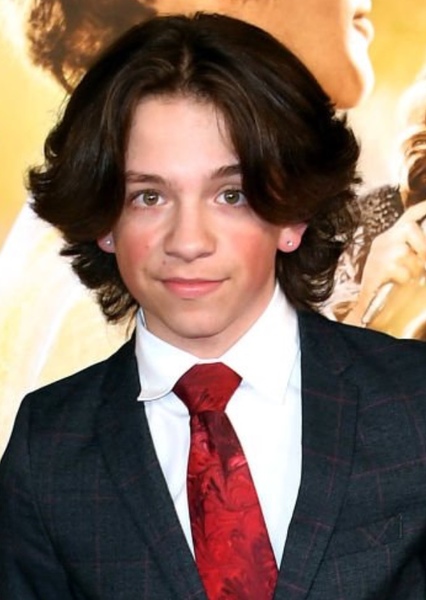
Age: 17
male
Winslow was born into a family of actors: he is the son of actors Michael Fegley and Merce Tonne, and brother to actors August Fegley and Oakes Fegley. Winslow developed his skills in 2017 while starring in the stage production of A Billion Nights on Earth, a production he also added creative collaboration to, with avant-garde theatre director Thaddeus Phillips. The show was developed at the Buntport Theatre in Denver, CO, over the summer of 2017, then toured to sold out houses in Philadelphia in September 2017, and was featured as part of the Next Wave Festival at the Brooklyn Academy of Music in November that year, where it again sold out its run. In 2018 Winslow landed his first television role, guest-starring on the hilarious TV-Land show Teachers. He then spent the spring filming 8 episodes of the Disney Channel series Fast Layne, as Mel (which debuted in 2019). After wrapping up on the limited series, he went directly into production in the title role of Timmy Failure: Mistakes Were Made directed by Academy Award-winner Tom McCarthy. It premiered at the Sundance Film Festival and then debuted in early 2020 as one of the first original features for the Disney+ streaming platform. In the fall of 2018 Winslow co-starred in the Jacob Chase-helmed horror film Come Play, opposite Azhy Robertson and Gillian Jacobs (released fall 2020). In 2019, he guest-starred as a preteen Sean in ABC's hit show The Good Doctor. In the final months of 2020, Winslow returned to work filming Nightbooks, starring as Alex opposite Kristen Ritter and Lydia Jewett. The David Yarovesky-directed picture debuted in the Netflix Top 10 in the fall of 2021. In the beginning of 2021, Winslow starred as Jake Doyle in what would be the HBO Max 2021 holiday hit 8-Bit Christmas with Neal Patrick Harris, Steve Zahn, and June Diane Raphael.
Winslow Fegley

Peter Trofimov
for Peter Trofimov in The Cherry Orchard
Suggested by elijahvanderkwast

The Cherry Orchard is the last play by the Russian playwright Anton Chekhov. Chekhov described the play as a comedy, with some elements of farce, though Stanislavski treated it as a tragedy. The play revolves around an aristocratic Russian landowner who returns to her family estate, which includes a large and well-known cherry orchard; she returns just before the estate is auctioned to pay the mortgage. Unresponsive to offers to save the estate, she allows its sale to the son of a former serf, and the family departs to the sound of the cherry orchard being cut down. The story presents themes of cultural futility – the attempts of the aristocracy to maintain its status, and the attempts of the bourgeoisie to find meaning in its newfound materialism. The play dramatizes the socioeconomic forces in Russia at the turn of the 20th century; these forces include the rise of the middle class after the abolition of serfdom in the mid-19th century, in addition to the decline in power of the aristocracy.




