Died at 97
male
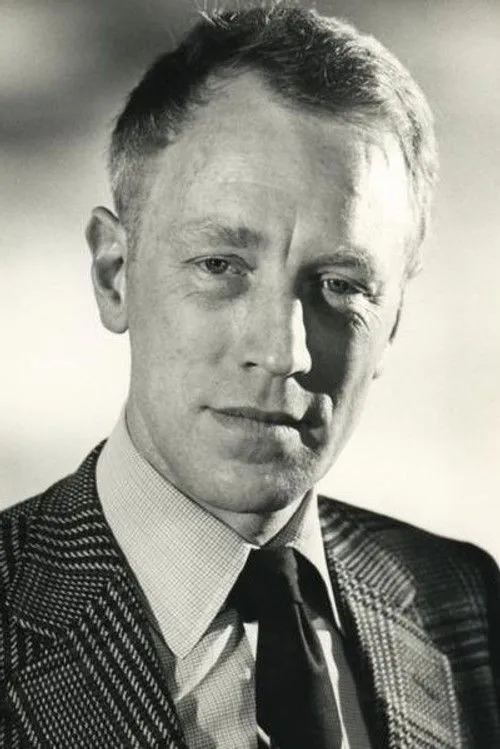
Max von Sydow (born Carl Adolf von Sydow; April 10, 1929 – March 8, 2020) was a Swedish actor. He also held French citizenship since 2002. He starred in many films and had supporting roles in dozens more. He performed in films filmed in many languages, including Swedish, Norwegian, English, Italian, German, Danish, French and Spanish. Some of his most memorable film roles include knight Antonius Block in Ingmar Bergman's The Seventh Seal (the first of his eleven films with Bergman and the film that includes the iconic shot of his career in the scene where he plays chess with Death), Jesus in George Stevens's The Greatest Story Ever Told, Father Merrin in Friedkin's The Exorcist, Joubert the assassin in Three Days of the Condor, and Ming the Merciless in the 1980 version of Flash Gordon. He was twice nominated for the Academy Award - Best Leading Actor for Pelle the Conqueror (1988) and Best Supporting Actor for Extremely Loud and Incredibly Close (2011).
Max von Sydow

George Gammell Angell
for George Gammell Angell in The Call of Cthulhu
Suggested by charlesp

The narrator, Francis Wayland Thurston, recounts his discovery of notes left behind by his grand-uncle, Brown University linguistic professor George Gammell Angell, after his death in the winter of 1926–27. Among the notes is a small bas-relief sculpture of a scaly creature which yields "simultaneous pictures of an octopus, a dragon, and a human caricature." The sculptor, a Rhode Island art student named Henry Anthony Wilcox, based the work on delirious dreams of "great Cyclopean cities of titan blocks and sky-flung monoliths." Frequent references to Cthulhu and R'lyeh are found in Wilcox's papers. Angell also discovers reports of mass hysteria around the world. More notes discuss a 1908 meeting of an archeological society in which New Orleans police official John Raymond Legrasse asks attendees to identify a statuette of unidentifiable greenish-black stone resembling Wilcox's sculpture. It is then revealed that the previous year, Legrasse and a party of policemen found several women and children being used in a ritual by an all-male cult. After killing five of the cultists and arresting 47 others, Legrasse learns that they worship the "Great Old Ones" and await the return of a monstrous being called Cthulhu.[2] The prisoners identify the statuette as "great Cthulhu." One of the academics present at the meeting, Princeton professor William Channing Webb, describes a group of "Esquimaux" with similar beliefs and fetishes. Thurston discovers a 1925 article from an Australian newspaper which reports the discovery of a derelict ship, the Emma, of which second mate Gustaf Johansen is the sole survivor. Johansen reports that the Emma was attacked by a heavily armed yacht named the Alert. The crewmen of the Emma killed those aboard the Alert, but lost their own ship in the battle, commandeered the Alert, and discovered an uncharted island in the vicinity of co-ordinates of 47°9′S 126°43′W. With the exception of Johansen and another man, the remaining crew died on the island. Johansen does not reveal the manner of their death. Upon traveling to Australia, Thurston views a statue retrieved from the Alert which is identical to the previous two. In Norway, he learns that Johansen died suddenly after an encounter with "two Lascar sailors". Johansen's widow provides Thurston with her late husband's manuscript, wherein the uncharted island is described as being home to a "nightmare corpse-city" called R'lyeh. Johansen's crew struggled to comprehend the non-Euclidean geometry of the city and accidentally release Cthulhu, resulting in their deaths. Johansen and one crew-mate flee aboard the Alert and are pursued by Cthulhu. Johansen rams the yacht into the creature's head, only for its injury to regenerate. The Alert escapes, but Johansen's crewmate dies. After finishing the manuscript, Thurston realizes he is now a target of Cthulhu's worshippers.



