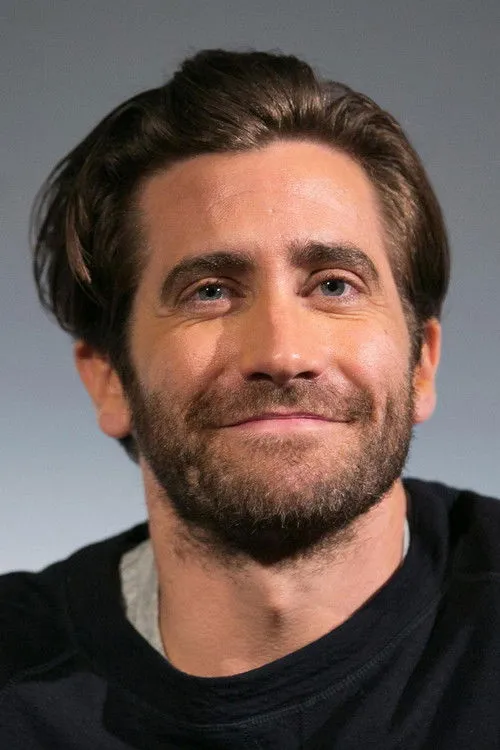
Age: 51
male
Leonardo Wilhelm DiCaprio (born November 11, 1974) is an American actor and film producer. Known for his work in biopics and period films, DiCaprio is the recipient of numerous accolades, including an Academy Award, a British Academy Film Award, and three Golden Globe Awards. As of 2019, his films have grossed over $7.2 billion worldwide, and he has been placed eight times in annual rankings of the world's highest-paid actors. Born in Los Angeles, DiCaprio began his career in the late 1980s by appearing in television commercials. In the early 1990s, he had recurring roles in various television shows, such as the sitcom Parenthood, and had his first major film part as author Tobias Wolff in This Boy's Life (1993). At age 19, he received critical acclaim and his first Academy Award and Golden Globe Award nominations for his performance as a developmentally disabled boy in What's Eating Gilbert Grape (1993). He achieved international stardom with the star-crossed romances Romeo + Juliet (1996) and Titanic (1997). After the latter became the highest-grossing film at the time, he reduced his workload for a few years. In an attempt to shed his image of a romantic hero, DiCaprio sought roles in other genres, including crime drama in Catch Me If You Can (2002) and Gangs of New York (2002); the latter marked the first of his many successful collaborations with director Martin Scorsese. DiCaprio portrayed Howard Hughes in The Aviator (2004) and received acclaim for his performances in the political thriller Blood Diamond (2006), the crime drama The Departed (2006), and the romantic drama Revolutionary Road (2008). In the following decade, DiCaprio starred in several high-profile directors' projects, including the science fiction thriller Inception (2010), the western Django Unchained (2012), the biopic The Wolf of Wall Street (2013), the survival drama The Revenant (2015), for which he won an Academy Award and a BAFTA Award for Best Actor in a Leading Role, and the comedy-drama Once Upon a Time in Hollywood (2019), all of which were critical and commercial successes. DiCaprio is the founder of Appian Way Productions, a production company that has produced some of his films and the documentary series Greensburg (2008–2010), and the Leonardo DiCaprio Foundation, a nonprofit organization devoted to promoting environmental awareness. He regularly supports charitable causes and has produced several documentaries on the environment. In 2005, he was named a Commander of the Ordre des Arts et des Lettres for his contributions to the arts, and in 2016, he appeared in Time magazine's 100 most influential people in the world.
Leonardo DiCaprio

Francis Wayland Thurston
for Francis Wayland Thurston in The Call of Cthulhu
Suggested by charlesp

The narrator, Francis Wayland Thurston, recounts his discovery of notes left behind by his grand-uncle, Brown University linguistic professor George Gammell Angell, after his death in the winter of 1926–27. Among the notes is a small bas-relief sculpture of a scaly creature which yields "simultaneous pictures of an octopus, a dragon, and a human caricature." The sculptor, a Rhode Island art student named Henry Anthony Wilcox, based the work on delirious dreams of "great Cyclopean cities of titan blocks and sky-flung monoliths." Frequent references to Cthulhu and R'lyeh are found in Wilcox's papers. Angell also discovers reports of mass hysteria around the world. More notes discuss a 1908 meeting of an archeological society in which New Orleans police official John Raymond Legrasse asks attendees to identify a statuette of unidentifiable greenish-black stone resembling Wilcox's sculpture. It is then revealed that the previous year, Legrasse and a party of policemen found several women and children being used in a ritual by an all-male cult. After killing five of the cultists and arresting 47 others, Legrasse learns that they worship the "Great Old Ones" and await the return of a monstrous being called Cthulhu.[2] The prisoners identify the statuette as "great Cthulhu." One of the academics present at the meeting, Princeton professor William Channing Webb, describes a group of "Esquimaux" with similar beliefs and fetishes. Thurston discovers a 1925 article from an Australian newspaper which reports the discovery of a derelict ship, the Emma, of which second mate Gustaf Johansen is the sole survivor. Johansen reports that the Emma was attacked by a heavily armed yacht named the Alert. The crewmen of the Emma killed those aboard the Alert, but lost their own ship in the battle, commandeered the Alert, and discovered an uncharted island in the vicinity of co-ordinates of 47°9′S 126°43′W. With the exception of Johansen and another man, the remaining crew died on the island. Johansen does not reveal the manner of their death. Upon traveling to Australia, Thurston views a statue retrieved from the Alert which is identical to the previous two. In Norway, he learns that Johansen died suddenly after an encounter with "two Lascar sailors". Johansen's widow provides Thurston with her late husband's manuscript, wherein the uncharted island is described as being home to a "nightmare corpse-city" called R'lyeh. Johansen's crew struggled to comprehend the non-Euclidean geometry of the city and accidentally release Cthulhu, resulting in their deaths. Johansen and one crew-mate flee aboard the Alert and are pursued by Cthulhu. Johansen rams the yacht into the creature's head, only for its injury to regenerate. The Alert escapes, but Johansen's crewmate dies. After finishing the manuscript, Thurston realizes he is now a target of Cthulhu's worshippers.