
Died at 136
male
From Wikipedia, the free encyclopedia. John L. Balderston (October 22, 1889 in Philadelphia, Pennsylvania - March 8, 1954 Los Angeles, California) was an American playwright and screenwriter best known for his horror and fantasy scripts. Balderston began his career as a journalist. He worked as European war correspondent during World War I. He was the editor of Outlook magazine and a correspondent for the New York World. In 1927, he was retained by Horace Liveright to revise Hamilton Deane's stage adaptation of Dracula for its American production. His 1929 play Berkeley Square later formed the basis of the musical On a Clear Day You Can See Forever. His Dracula subsequently formed the basis of the 1931 film version, leading Balderston into a screenwriting career, initially for Universal Pictures horror films: in addition to Dracula, he contributed to Frankenstein, Bride of Frankenstein, The Mummy, and Dracula's Daughter. He spent much of his career adapting novels for the screen, including The Prisoner of Zenda in 1937 and 1944's Gaslight, which earned him his second Academy Award nomination (the first was for 1935's The Lives of a Bengal Lancer). He was also one of the team of writers who collaborated on the 1939 film adaptation of Gone with the Wind. His 1932 play Red Planet was filmed as Red Planet Mars in 1952. Description above from the Wikipedia article John L. Balderston, licensed under CC-BY-SA, full list of contributors on Wikipedia.
John L. Balderston

Writer
for Writer in The Call of Cthulhu (1936)
Suggested by tomzillawash3r3
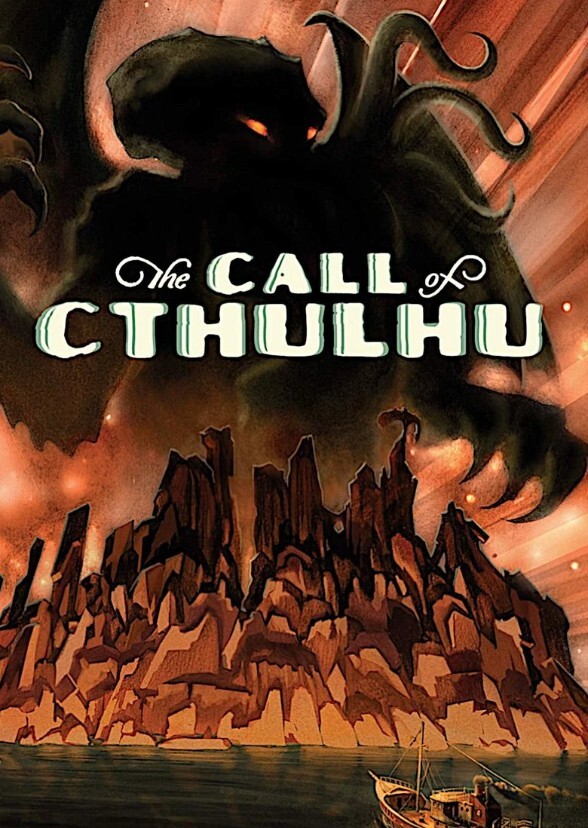
A narrator named Francis Thurston tries to piece back together notes left by his deceased uncle who had seen a fate far worse than death. He interviews artists and sailors who visualized their dreams depicting a terrifying giant creature who stalks through the fog at night. Francis is then taken to a mysterious island where inside the largest temple lies an evil cult who worship their god of madness, Cthulhu.

