
Age: 65
male
Woodrow Tracy "Woody" Harrelson (born July 23, 1961) is an American actor. He first became known for his role as bartender Woody Boyd on the NBC sitcom Cheers (1985–1993), for which he won a Primetime Emmy Award for Outstanding Supporting Actor in a Comedy Series from five nominations. Harrelson received three Academy Award nominations: Best Actor for The People vs. Larry Flynt (1996), Best Supporting Actor for The Messenger (2009) and Three Billboards Outside Ebbing, Missouri (2017). Other notable films include White Men Can't Jump(1992), Natural Born Killers (1994), The Thin Red Line (1998), No Country for Old Men (2007), Seven Pounds (2008), Zombieland (2009), Seven Psychopaths (2012), Now You See Me (2013), The Edge of Seventeen (2016), War for the Planet of the Apes (2017), Venom: Let There Be Carnage (2021), and Triangle of Sadness (2022). He also played Haymitch Abernathy in The Hunger Games film series (2012–2015). Harrelson received further Primetime Emmy Award nominations for his portrayal of Steve Schmidt in the HBO film Game Change (2012) and a detective in the HBO crime anthology series True Detective (2014). He also portrayed E. Howard Hunt in the HBO political limited series White House Plumbers (2023).
Woody Harrelson

Colonel Charles E. Stanton
for Colonel Charles E. Stanton in The Black Jack
Suggested by jakubduda
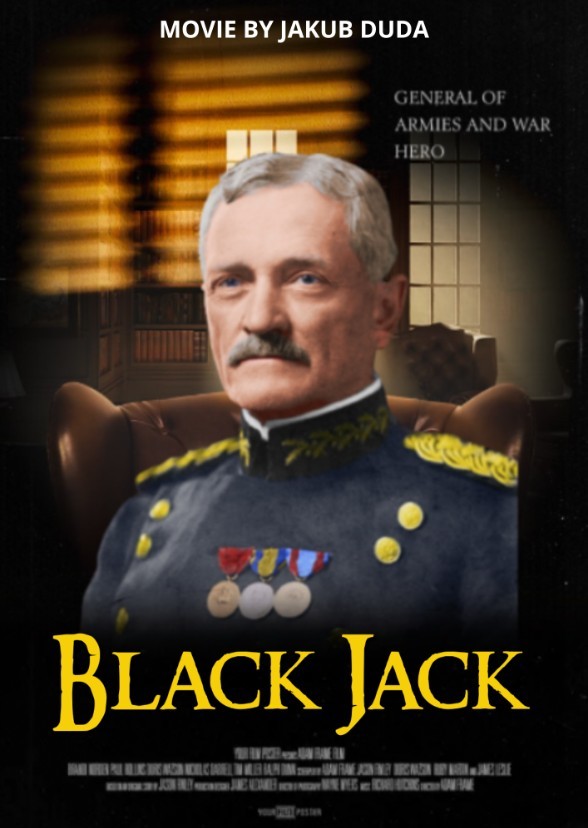
The film promises an unforgettable tribute to John J. Pershing and the sacrifices he made in service to his country as a servant in Indian Wars, Spanish-American War, Philippine-American War, Mexican Revolution, Russian-Japan War, and WW1. The film chronicles his life from beginnings as a teacher in rural Missouri, to his rise through the ranks of the U.S. Army, to his role as commander of the American Expeditionary Forces during WW1. The film explores his relationships with family, colleagues, and his country, as well as the challenges he faced in leading a nation at war. The film opens with a young John, working in Missouri. As the US enters WWI, Pershing is appointed as the commander of the US Forces in Europe. He faces resistance from his British and French counterparts, who believe that the USA is not ready for battle. He is determined to prove them wrong and leads troops into war. The film's middle act focuses on Pershing's experiences during WW1. We see him lead his troops through the trenches of France and deals with the challenges of coordinating a multinational force. Along the way, he forms close relationships with several of his officers, including his aide-de-camp, Captain Patton, and Major Eisenhower. Meanwhile, in the US, He faces opposition from politicians who want to limit US involvement in the war. Pershing fights through to the end and leaves as a winner. With the outbreak of World War II, General Perhing advised his old colleagues, Marshall and Patton.

