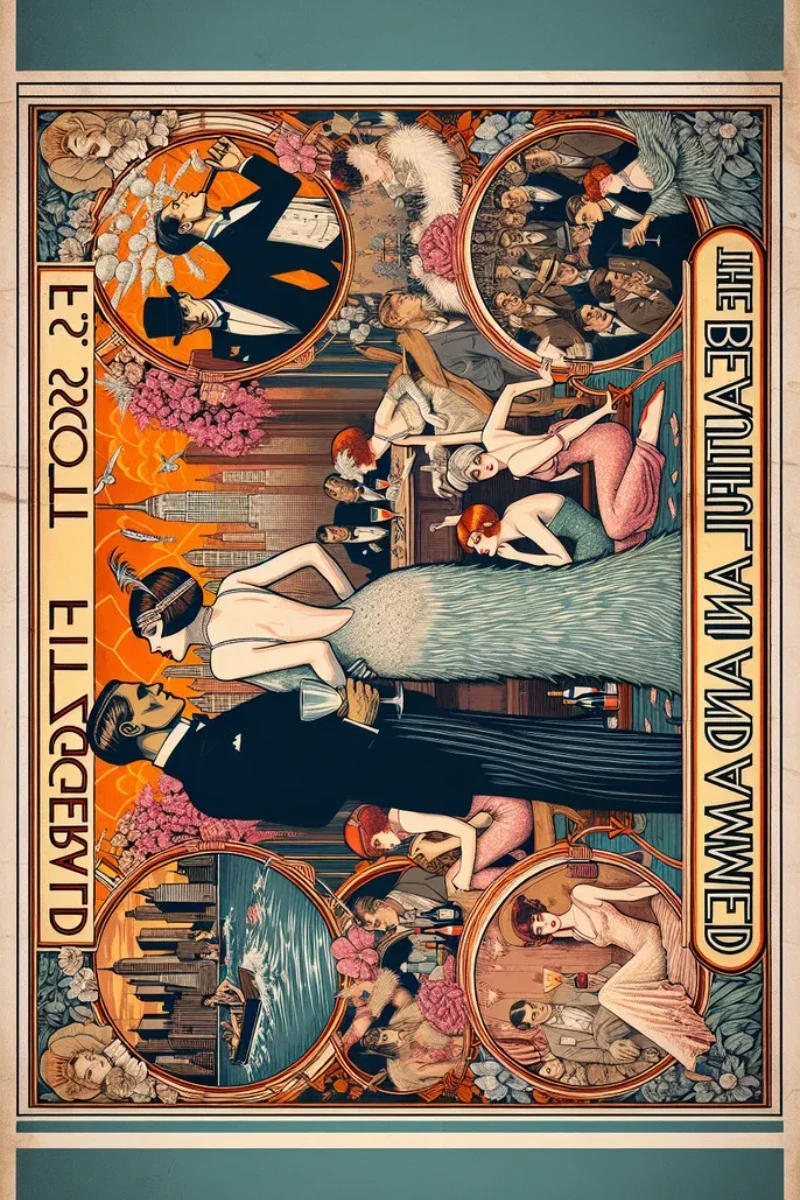
F. Scott Fitzgerald's debut novel follows Anthony Patch and his wife Gloria as they navigate the glittering but morally bankrupt world of 1920s New York high society. Wealthy, beautiful, and utterly self-absorbed, the couple drifts through a haze of parties, alcohol, and hedonistic excess while waiting to inherit a vast fortune. As they squander their youth and resources on meaningless pursuits, their relationship deteriorates and their prospects dim. Anthony's obsession with a legal battle over his inheritance consumes him, while Gloria's fading beauty becomes her primary source of anxiety. The novel captures the disillusionment of the Jazz Age elite—glamorous on the surface but hollow within. Through their decline, Fitzgerald explores themes of American materialism, the corruption of wealth, and the spiritual emptiness lurking beneath the era's glittering facade. The Patches' trajectory from promising youth to bitter, broken middle age serves as a cautionary tale about the dangers of living without purpose or moral foundation, making this a prescient critique of American excess that remains strikingly relevant.