
Age: 93
female
Ellen Burstyn (born Edna Rae Gillooly; December 7, 1932) is an American actress. Known for her portrayals of complex women in dramas, she has received numerous accolades, including an Academy Award, a Tony Award, and two Primetime Emmy Awards, making her one of the few performers to achieve the "Triple Crown of Acting". She has also received a BAFTA Award and a Golden Globe Award. Burstyn made her acting debut on Broadway in Fair Game in 1957 before winning the Tony Award for Best Actress in a Play for Same Time, Next Year (1975). She earned the Academy Award for Best Actress as the widow Alice Hyatt in Martin Scorsese's romantic drama Alice Doesn't Live Here Anymore (1974). Her other Oscar-nominated roles were in The Last Picture Show (1971), The Exorcist (1973), Same Time, Next Year (1978), Resurrection (1980), and Requiem for a Dream (2000). Her other notable films include Harry and Tonto (1974), How to Make an American Quilt (1995), Divine Secrets of the Ya-Ya Sisterhood (2002), W. (2008), Interstellar (2014), The Age of Adaline (2015), and Pieces of a Woman (2020). She won Primetime Emmy Awards for her guest role in the NBC legal drama Law & Order: Special Victims Unit (2009) and supporting role in the USA Network political miniseries Political Animals (2013). Her other Emmy-nominated roles include Pack of Lies (1988), Mrs. Harris (2005), Big Love (2008), Draft Day, Flowers in the Attic (both 2014), and House of Cards (2016). Since 2000, she has been co-president of the Actors Studio, a drama school in New York City. In 2013, she was inducted into the American Theatre Hall of Fame for her work onstage.
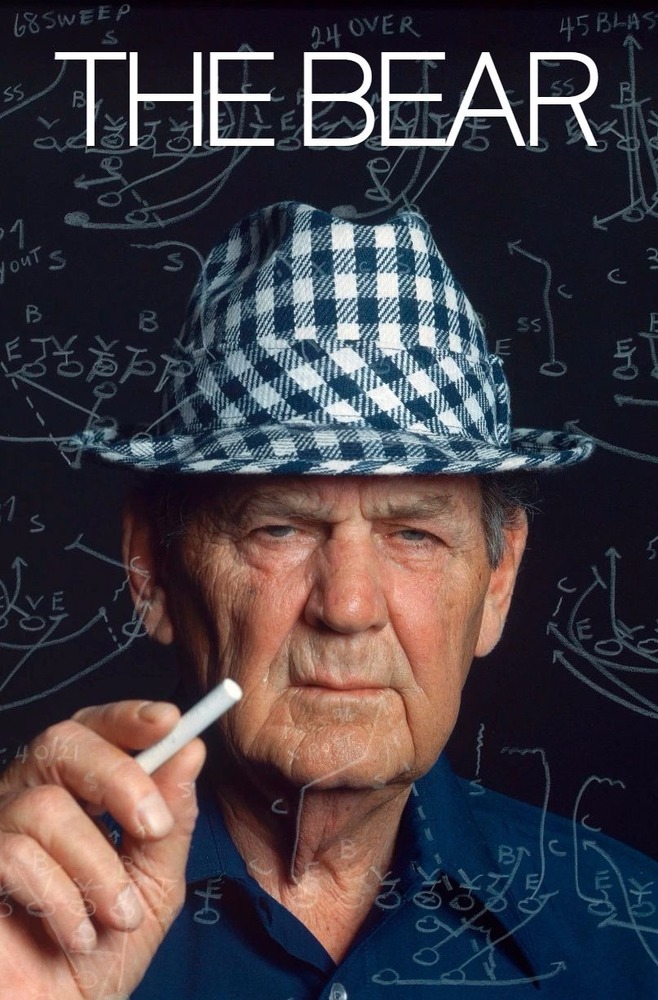
A biopic about Paul "Bear" Bryant. At the close of the 1957 football season, having compiled an overall 25–14–2 record at Texas A&M, Bryant returned to Tuscaloosa to take the head coaching position, succeeding J.B. "Ears" Whitworth, as well as the athletic director job at Alabama. When asked why he came to Alabama, he replied "Momma called. And when Momma calls, you just have to come runnin'." The next year, in 1959, Alabama beat Auburn and appeared in a bowl game, the first time either had happened in the last six years. In 1961, under his leadership, with quarterback Pat Trammell and football greats Lee Roy Jordan and Billy Neighbors, Alabama went 11–0 and defeated Arkansas 10-3 in the Sugar Bowl to claim the national championship. The next three years (1962–64) featured Joe Namath at quarterback and were among Bryant's finest. In his later years, Bryant was able to recruit Wilbur Jackson as Alabama's first black scholarship player, and junior-college transfer John Mitchell became the first black man to play for Alabama. By 1973, one-third of the team's starters were black. Bryant coached at Alabama for 25 years, winning six national titles (1961, 1964, 1965, 1973, 1978, and 1979) and thirteen SEC championships. Bryant's win over in-state rival Auburn University, coached by former Bryant assistant Pat Dye on November 28, 1981 was Bryant's 315th as a head coach, which was the most of any head coach at that time. Bryant was a heavy smoker and drinker, and his health began to decline in the late 1970s. Bryant decided to retire at the seasons end. After the 1982 season, Bryant was asked what he planned to do now that he was retired. He replied "Probably croak in a week." His reply proved eerily prophetic. Four weeks after making that comment, and just one day after passing a routine medical checkup, on January 25, 1983, Bryant checked into Druid City Hospital nd passed away.


