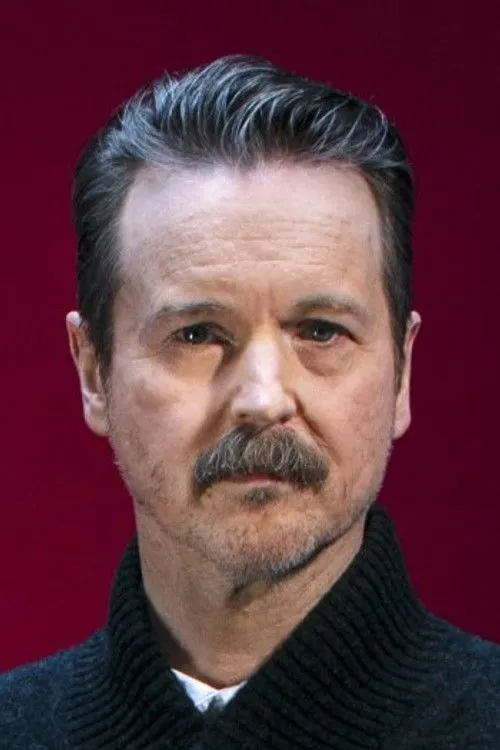
Age: 60
male
Matthew George "Matt" Reeves (born April 27, 1966 in Rockville Center, New York, USA) is an American screenwriter, director, and producer. He began making movies at age eight, directing friends and using a wind-up camera. Reeves befriended filmmaker J.J. Abrams when both were 13 years old and they were making short films together. When Reeves and Abrams were 15 or 16 years old, Steven Spielberg hired them to transfer some of his own Super 8 films to videotape. Reeves began his career as a screenwriter for the films Under Siege 2: Dark Territory (1995) and The Pallbearer (1996), the latter of which marked his feature-length directorial debut. He then transitioned into television as a director and co-creator of the drama series Felicity (1998–2002) alongside J.J. Abrams. Reeves has since directed the horror film Cloverfield (2008), the romantic horror film Let Me In (2010), and the science fiction sequels Dawn of the Planet of the Apes (2014) and War for the Planet of the Apes (2017). In February 2017, Warner Bros. announced that Reeves would direct The Batman (2022) by DC, starring Robert Pattinson.
Gotham City breathes in shadows. The film opens in silence and rain as Thomas Wayne and Martha Wayne are murdered in a dark alley after a night at the theater. A young Bruce Wayne watches helplessly as his world collapses—an image that will haunt him long after Gotham forgets. Years later, Gotham is rotting from the inside out. A brutal wave of executions sweeps through the city’s criminal underworld. Each victim is found grotesquely mutilated, marked with ritualistic precision. The killings are soon traced to Victor Zsasz, a sadistic serial killer leaving scars not only on his own flesh, but on Gotham itself. Yet Zsasz is only the blade—not the hand guiding it. Behind the violence stands Black Mask, Roman Sionis, a calculating crime lord who uses fear, spectacle, and chaos to consolidate power. With the city’s mob families fractured, Black Mask seizes control, using Zsasz as his enforcer while hiding behind legitimate fronts and political connections. Working the case from the shadows is Batman—early in his war on crime, obsessive and methodical. His uneasy alliance with James Gordon, a weary but honest detective, allows him access to crime scenes the GCPD would rather keep sealed. Together, they uncover a conspiracy tying Gotham’s elite, its justice system, and organized crime into one festering wound. As the body count rises, a third player enters the hunt: Deadshot, a precision assassin hired to eliminate loose ends—including Zsasz himself. Deadshot’s presence turns Gotham into a battlefield, forcing Batman to confront an enemy who kills not out of madness, but professionalism. At the center of the web is Carmine Falcone, the aging crime patriarch who has survived every purge Gotham has ever seen. Falcone’s past dealings intertwine with the Waynes, raising uncomfortable questions for Bruce about his family’s legacy—and whether Gotham’s corruption was ever truly fought, or merely managed. Bruce’s only emotional anchor is Harvey Dent, his closest friend and an idealistic district attorney determined to save Gotham through the law. Their bond is genuine, hopeful—and fragile, strained by secrets Bruce cannot share and truths Harvey is not ready to face. A brief encounter with Selina Kyle, a thief navigating Gotham’s underbelly for her own survival, offers Bruce a glimpse of a different path—one driven not by vengeance, but escape. As Black Mask’s empire closes in on total control and Deadshot’s contract nears completion, Batman must choose what kind of symbol he will become. Not just a weapon in the dark—but a warning. The film concludes not with victory, but with realization: Gotham cannot be saved overnight. Justice here is slow, painful, and incomplete. And Batman is only just beginning.



