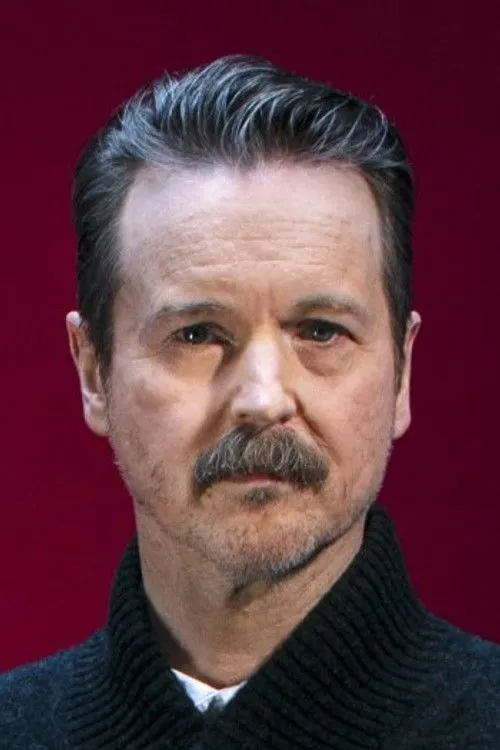
Age: 60
male
Matthew George "Matt" Reeves (born April 27, 1966 in Rockville Center, New York, USA) is an American screenwriter, director, and producer. He began making movies at age eight, directing friends and using a wind-up camera. Reeves befriended filmmaker J.J. Abrams when both were 13 years old and they were making short films together. When Reeves and Abrams were 15 or 16 years old, Steven Spielberg hired them to transfer some of his own Super 8 films to videotape. Reeves began his career as a screenwriter for the films Under Siege 2: Dark Territory (1995) and The Pallbearer (1996), the latter of which marked his feature-length directorial debut. He then transitioned into television as a director and co-creator of the drama series Felicity (1998–2002) alongside J.J. Abrams. Reeves has since directed the horror film Cloverfield (2008), the romantic horror film Let Me In (2010), and the science fiction sequels Dawn of the Planet of the Apes (2014) and War for the Planet of the Apes (2017). In February 2017, Warner Bros. announced that Reeves would direct The Batman (2022) by DC, starring Robert Pattinson.
Gotham is no longer just afraid of crime. It is afraid of Batman. In the aftermath of the city’s brutal reckoning, Batman has become an unavoidable presence—seen in reflections, felt in silence, whispered about in interrogation rooms. Crime has not vanished, but it has evolved. Fear now shapes Gotham’s underworld as much as greed once did. At the center of Gotham’s fragile recovery stands Harvey Dent, the city’s charismatic and relentless District Attorney. Backed by Batman’s unseen influence and the law’s full force, Dent wages war on organized crime, targeting the remnants of Carmine Falcone’s empire and his longtime rival Salvatore Maroni. To Bruce Wayne, Harvey is more than a political ally—he is a friend, a symbol of hope, and proof that Gotham might still be saved without masks. That hope begins to rot. As the mob fractures, a series of public, theatrical crimes grip the city—crimes designed not for profit, but for attention. Behind them is The Joker, an emerging figure whose presence infects Gotham like a disease. He does not seek control. He seeks reaction. Fear. Laughter in the wrong places. He orchestrates chaos to expose the lie beneath order, forcing Batman into confrontations that are psychological as much as physical. At the same time, a new weapon spreads through Gotham’s streets: a refined hallucinogenic toxin. Its source is Scarecrow, operating quietly in the shadows, testing fear itself as a means of domination. Victims are left broken, screaming, or catatonic—haunted by visions of Batman as a monster rather than a savior. As tensions rise, Maroni strikes back. In a public attack meant to shatter Gotham’s faith in justice, Harvey Dent is horribly disfigured. The city watches its golden boy fall—while Batman watches a friend disappear. Dent survives, but something inside him fractures. The law that once guided him becomes a coin flip. Justice becomes punishment. Two-Face is born. Bruce Wayne, already battling the weight of his crusade, now carries another responsibility: Dick Grayson, a sharp, angry orphan taken in after a tragedy that mirrors Bruce’s own. As the first Robin, Dick becomes both Bruce’s greatest risk and his only chance at breaking the cycle—challenging Batman’s obsession with fear by reminding him of compassion. A brief reunion with Selina Kyle offers Bruce clarity. Selina sees Gotham for what it is—a city that feeds on symbols—and warns him that fear alone will consume everything it touches. As Joker manipulates Dent’s descent, Scarecrow’s toxin floods the streets, and the mob tears itself apart, Batman is forced to confront the truth: fear can inspire—but it can also destroy. The film culminates in a citywide psychological collapse, where Batman must stop Two-Face not just as a criminal, but as a man he failed… while refusing to become the monster Joker believes him to be. Gotham survives—but scarred. And Batman learns that fear is a tool… not a foundation.



