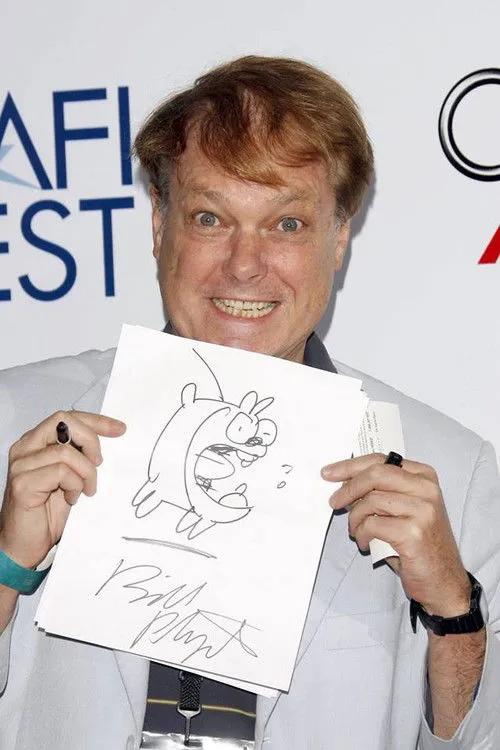
Age: 80
male
Bill Plympton (born April 30, 1946) is an American animator, director, graphic designer, cartoonist, screenwriter and producer best known for his 1987 Academy Award-nominated animated short Your Face and his series of shorts Guard Dog, Guide Dog, Hot Dog and Horn Dog. Plympton's illustrations and cartoons have been published in The New York Times and the weekly newspaper The Village Voice, as well as in the magazines Vogue, Rolling Stone, Vanity Fair, Penthouse, and National Lampoon. His political cartoon strip Plympton, which began in 1975 in the SoHo Weekly News, eventually was syndicated and appeared in over 20 newspapers. In 1988, his animated short Your Face was nominated for the Academy Award for Best Animated Short Film. He also became known for other animated short films, including 25 Ways to Quit Smoking (1989) and Enemies (1991), the latter of which was part of the Animania series on MTV, where many of his other shorts were shown. In 1992, his self-financed, first feature-length animated film, The Tune debuted at the Sundance Film Festival. His work also appeared on the 1992–1993 Fox comedy series The Edge. In 1993, he made his first live action film, J. Lyle. In 1995, he contributed animation and graphics to a computer game collection, Take Your Best Shot. He also published a comic book in 2003, The Sleazy Cartoons of Bill Plympton. Plympton's 2008 80-minute feature, Idiots and Angels presented by Terry Gilliam, had no dialogue. Plympton directed the segment "On Eating and Drinking" in the 2014 animated film The Prophet, adapted from Kahlil Gibran's book The Prophet. In 2020, Plympton released a Kickstarter for his new animated comedy western, Slide. The funding was successful and Plympton had planned on finishing the film by 2022.
Bill Plympton

Director
for Director in The Animated Story of The Doors
Suggested by Jeshisthename
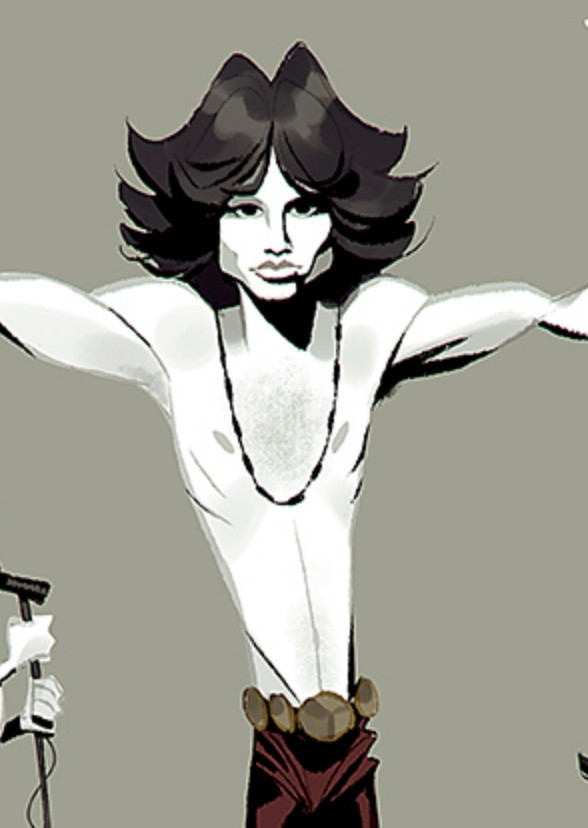
The Doors were an American rock band formed in Los Angeles in 1965, with vocalist Jim Morrison, keyboardist Ray Manzarek, guitarist Robby Krieger, and drummer John Densmore. They were among the most controversial and influential rock acts of the 1960s, mostly because of Morrison's lyrics and his erratic stage persona, and the group was widely regarded as representative of the era's counterculture. The band took its name from the title of Aldous Huxley's book The Doors of Perception, itself a reference to a quote by William Blake. After signing with Elektra Records, the Doors released eight albums in five years, some of which are considered among the greatest of all time, including The Doors (1967), Strange Days (1967), and L.A. Woman (1971). By 1972 the Doors had sold over 4 million albums domestically and nearly 8 million singles.[5] Morrison died in uncertain circumstances in 1971. The band continued as a trio until disbanding in 1973.[6][7] They released three more albums in the 1970s, two of which featured earlier recordings by Morrison, and over the decades reunited on stage in various configurations. In 2002, Manzarek, Krieger and Ian Astbury of the Cult on vocals started performing as the Doors of the 21st Century. Densmore and the Morrison estate successfully sued them over the use of the band's name. After a short time as Riders on the Storm, they settled on the name Manzarek–Krieger and toured until Manzarek's death in 2013.




