
Age: 37
female
Alicia Amanda Vikander (born 3 October 1988) is a Swedish actress. She is the recipient of various accolades, including an Academy Award, and nominations for two Golden Globe Awards and three British Academy Film Awards. Born and raised in Gothenburg, Vikander began acting as a child in minor stage productions at the Gothenburg opera house and trained as a ballet dancer at the Royal Swedish Ballet in Stockholm. She began her acting career in Swedish short films and television series and first gained recognition for her role in the drama series Andra Avenyn (2008–2010). She made her feature film debut in Pure (2010), for which she won the Guldbagge Award for Best Actress. She gained wider recognition in 2012 for playing Kitty in Joe Wright's adaptation of Anna Karenina and Queen Caroline Mathilde in the Danish film A Royal Affair. Vikander achieved global recognition for her roles as Vera Brittain in Testament of Youth (2014), a humanoid robot in Ex Machina (2014), for which she was nominated for the BAFTA Award for Best Actress in a Supporting Role, and Gerda Wegener in The Danish Girl (2015), for which she won the Academy Award for Best Supporting Actress. In 2016, Vikander was listed by Forbes in its 30 Under 30 list. She has since starred in the action film Jason Bourne (2016), the fantasy film The Green Knight (2021), the miniseries Irma Vep (2022), the historical drama Firebrand (2023), the horror comedy Rumours (2024) and the sci-fi thriller The Assessment (2024). Description above from the Wikipedia article Alicia Vikander, licensed under CC-BY-SA, full list of contributors on Wikipedia.
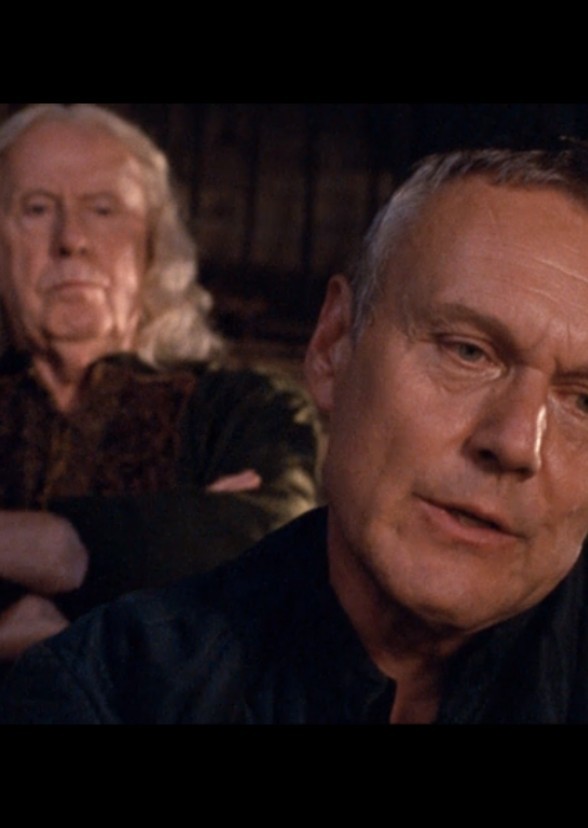
A prequel/spinoff to the BBC show Merlin. About the adolescent/young adult years of Uther and Gaius, showing insight into their unconventional friendship and turbulent history. Uther is a prince training to become a king (little does he know, he will one day conquer and rule over Camelot). Gaius is an apprentice at court. The adventures Uther and Gaius go through together mirror Arthur and Merlin's relationship, but they are set in a time when magic freely roams in the realm (pre-The Great Purge) yet anarchy reigns. The overarching irony for the audience is Uther's slow descent into tyranny and Gaius' efforts in trying to convince Uther to be more forgiving and gentle. Maybe Gaius sticks with Uther because he knows the prophecy his future son, Arthur, will hold. Or perhaps it's something else... Over the series, countless misfortunes (and good times) shape the paths of Uther and Gaius as we know it becomes in Merlin.




