
Age: 69
male
Timothy Leonard Spall (born February 27, 1957) is an English actor and presenter. He became a household name in the UK after appearing as Barry Spencer Taylor in the 1983 ITV comedy-drama series Auf Wiedersehen, Pet. Spall performed in Secrets & Lies (1996), and was nominated for the BAFTA Award for Best Actor in a Leading Role. Subsequently, he starred in many films, including Hamlet (1996), Still Crazy (1998), Nicholas Nickleby (2002), The Last Samurai (2003), Enchanted (2007), Sweeney Todd: The Demon Barber of Fleet Street (2007), The Damned United (2009), The King's Speech (2010), Ginger and Rosa (2012), Denial (2016), and The Party (2017). He voiced Nick, a cynical, portly rat in Chicken Run (2000). He played Peter Pettigrew in five Harry Potter films, from Prisoner of Azkaban (2004) to Deathly Hallows – Part 1 (2010). Spall has collaborated with director Mike Leigh, making six films together: Home Sweet Home (1982), Life is Sweet (1990), Secrets & Lies (1996), Topsy-Turvy (1999), All or Nothing (2002), and Mr. Turner (2014). Spall won great acclaim for his performance in the last of these for his portrayal as J. M. W. Turner winning him the Best Actor Award at the 2014 Cannes Film Festival. He starred in the television documentary Timothy Spall: ...at Sea (2010–2012) and in 2019 he appeared as Lord Arthur Wallington in the 6-part BBC Cold War drama Summer of Rockets.
Timothy Spall

Sir Steady Steerwell
for Sir Steady Steerwell in The Adventures of Peregrine Pickle
Suggested by Jeshisthename
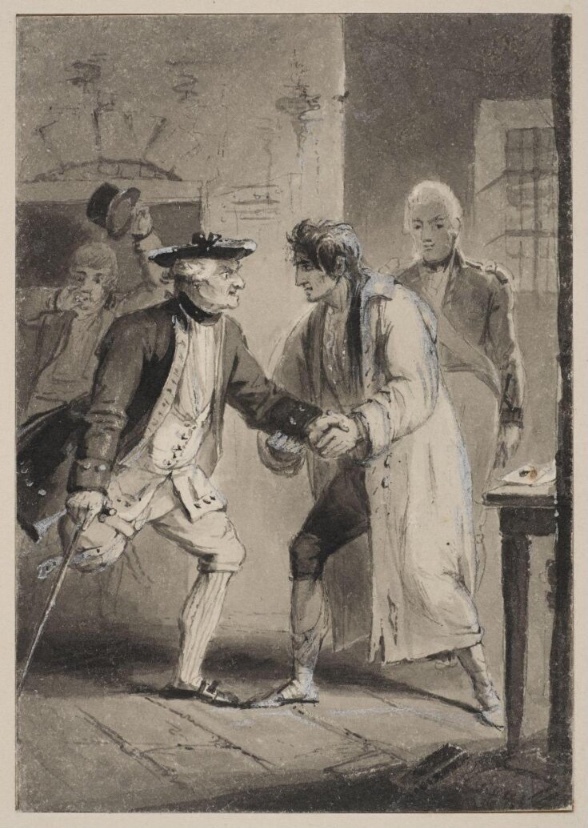
This picaresque tale, first published in 1751, was Tobias Smollett’s second novel. Following the fortunes and misfortunes of the egotistical dandy Peregrine Pickle, the novel is written as a series of brief adventures with every chapter typically describing a new escapade. The novel begins with Peregrine as a young country gentleman. His mother rejects him, as do his aloof father and his dissolute, spiteful brother. Commodore Hawser Trunnion takes Peregrine under his care and raises him. Peregrine’s upbringing, education at Oxford, and journey to France, his debauchery, bankruptcy, jailing, and succession to his father’s fortune, and his final repentance and marriage to his beloved Emilia all provide scope for Smollett’s comic and caustic perspectiveon the Europe of his times. As John P. Zomchick and George S. Rousseau note in the introduction, “by contrasting the genteel and the common, the sophisticated and the primal, Smollett conveys forcefully the way it felt to be alive in the middle of the eighteenth century.”


