
Age: 62
male
Clive Owen (born 3 October 1964) is an English actor. He first gained recognition in the United Kingdom for playing the lead role in the ITV series Chancer from 1990 to 1991. He received critical acclaim for his work in the film Close My Eyes (1991) before earning international attention for his performance as a struggling writer in Croupier (1998). In 2005, he won a Golden Globe and a BAFTA Award . He was nominated for an Academy Award for his performance in the drama Closer (2004). Owen has played leading roles in films such as Sin City (2005), Derailed (2005), Inside Man (2006), Children of Men (2006), and The International (2009). In 2012, he earned his first Primetime Emmy Award nomination for Outstanding Lead Actor in a Miniseries or a Movie for his role in Hemingway & Gellhorn. He played Dr. John W. Thackery on the Cinemax medical drama series The Knick, for which he received a Golden Globe Award for Best Actor – Television Series Drama nomination. In 2021, Owen starred in the psychological romance-horror miniseries Lisey's Story. Also, he portrayed President Bill Clinton in the third season of American Crime Story. He then had further television roles in A Murder at the End of the World (2023) and Monsieur Spade (2024). Description above from the Wikipedia article Clive Owen, licensed under CC-BY-SA, full list of contributors on Wikipedia.
Clive Owen

Gamaliel Pickle
for Gamaliel Pickle in The Adventures of Peregrine Pickle
Suggested by Jeshisthename
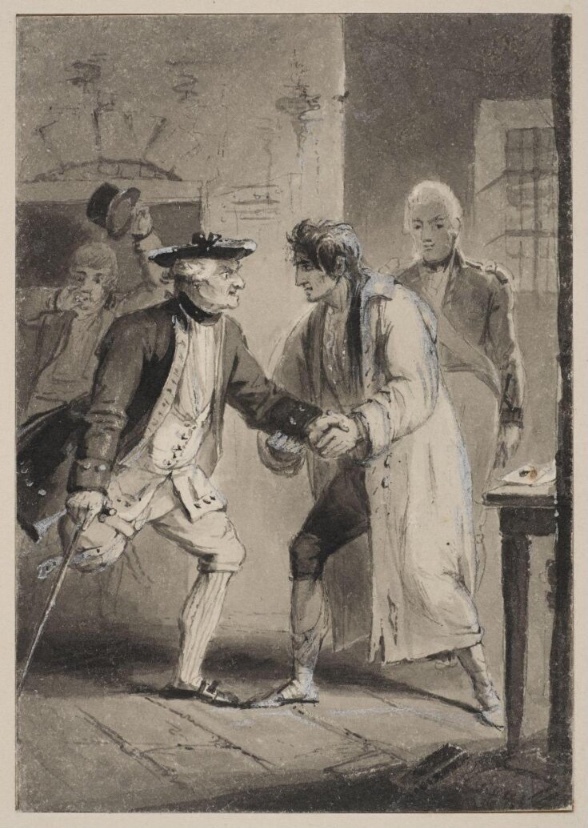
This picaresque tale, first published in 1751, was Tobias Smollett’s second novel. Following the fortunes and misfortunes of the egotistical dandy Peregrine Pickle, the novel is written as a series of brief adventures with every chapter typically describing a new escapade. The novel begins with Peregrine as a young country gentleman. His mother rejects him, as do his aloof father and his dissolute, spiteful brother. Commodore Hawser Trunnion takes Peregrine under his care and raises him. Peregrine’s upbringing, education at Oxford, and journey to France, his debauchery, bankruptcy, jailing, and succession to his father’s fortune, and his final repentance and marriage to his beloved Emilia all provide scope for Smollett’s comic and caustic perspectiveon the Europe of his times. As John P. Zomchick and George S. Rousseau note in the introduction, “by contrasting the genteel and the common, the sophisticated and the primal, Smollett conveys forcefully the way it felt to be alive in the middle of the eighteenth century.”



