
Age: 33
male
Suraj Sharma is an Indian actor from New Delhi, who made his debut with the title role in the 2012 film Life of Pi. Suraj Sharma was born in New Delhi, India. His parents are Malayalis, they hail from Kerala. Suraj is a student of philosophy at St Stephen's college in New Delhi. He has completed schooling from Sardar Patel Vidyalaya, where he was described as a popular student. Before the role, he had no acting experience, and auditioned only because he was there with his younger brother Shriharsh Sharma who requested he come along. He was one of the 3,000 actors to audition for the role of Piscine Molitor Patel (Pi). Sharma went through several rounds of auditions before winning the part. Director Ang Lee has stated that he selected Sharma primarily based on his expressive eyes and innocent appearance. According to him, Sharma had not only the emotion, but also the "look" of Pi. His "medium complexion" and "average build" were deemed perfect for the role. Since filming Life of Pi, Sharma has returned to studying philosophy at St. Stephen's College, Delhi of Delhi University, and intends to continue working in filmmaking in some capacity.[6] The movie has received critical acclaim and positive reviews for Sharma's performance. From Wikipedia, the free encyclopedia.
Suraj Sharma

Hadgi
for Hadgi in The Adventures of Peregrine Pickle
Suggested by Jeshisthename
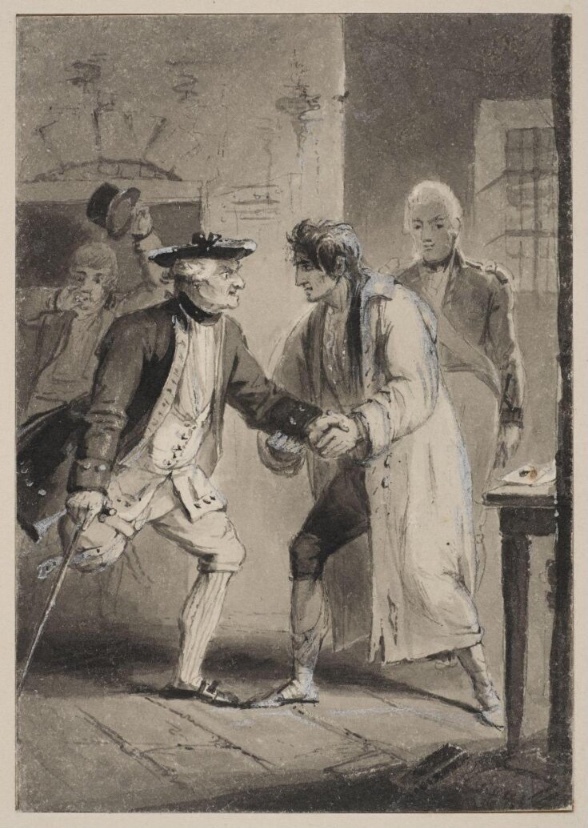
This picaresque tale, first published in 1751, was Tobias Smollett’s second novel. Following the fortunes and misfortunes of the egotistical dandy Peregrine Pickle, the novel is written as a series of brief adventures with every chapter typically describing a new escapade. The novel begins with Peregrine as a young country gentleman. His mother rejects him, as do his aloof father and his dissolute, spiteful brother. Commodore Hawser Trunnion takes Peregrine under his care and raises him. Peregrine’s upbringing, education at Oxford, and journey to France, his debauchery, bankruptcy, jailing, and succession to his father’s fortune, and his final repentance and marriage to his beloved Emilia all provide scope for Smollett’s comic and caustic perspectiveon the Europe of his times. As John P. Zomchick and George S. Rousseau note in the introduction, “by contrasting the genteel and the common, the sophisticated and the primal, Smollett conveys forcefully the way it felt to be alive in the middle of the eighteenth century.”

