
Age: 63
male
John Powell is an English composer best known for his film scores. He has been based in Los Angeles since 1997 and has composed the scores to over 70 feature films. He is best known for composing scores for films, including Just Visiting, Face/Off, the Bourne film series, the Happy Feet films, United 93, X-Men: The Last Stand, Wicked and its sequel, Evolution, Dr. Seuss' The Lorax, Migration, Drumline, Hancock, The Call of the Wild, Bolt, eight Blue Sky Studios films, and nine DreamWorks Animation films. His work on Happy Feet, Ferdinand, and Solo: A Star Wars Story has earned him three Grammy nominations. He was nominated for an Academy Award for How to Train Your Dragon. Powell was a member of Hans Zimmer's music studio, Remote Control Productions, and has collaborated frequently with other composers from the studio, including Harry Gregson-Williams on Antz, Chicken Run, and Shrek and Zimmer himself on Chill Factor, The Road to El Dorado, and the first two Kung Fu Panda films. He has also collaborated with film directors such as Carlos Saldanha, Dean DeBlois, Chris Sanders, Benjamin Renner, Chris Renaud, George Miller, John Woo, Ron Underwood, Doug Liman, Charles Stone III, Simon Otto, Jared Hess, and Paul Greengrass. Description above from the Wikipedia article John Powell (film composer), licensed under CC-BY-SA, full list of contributors on Wikipedia.
John Powell

Composer
for Composer in The Adventures of Peregrine Pickle
Suggested by Jeshisthename
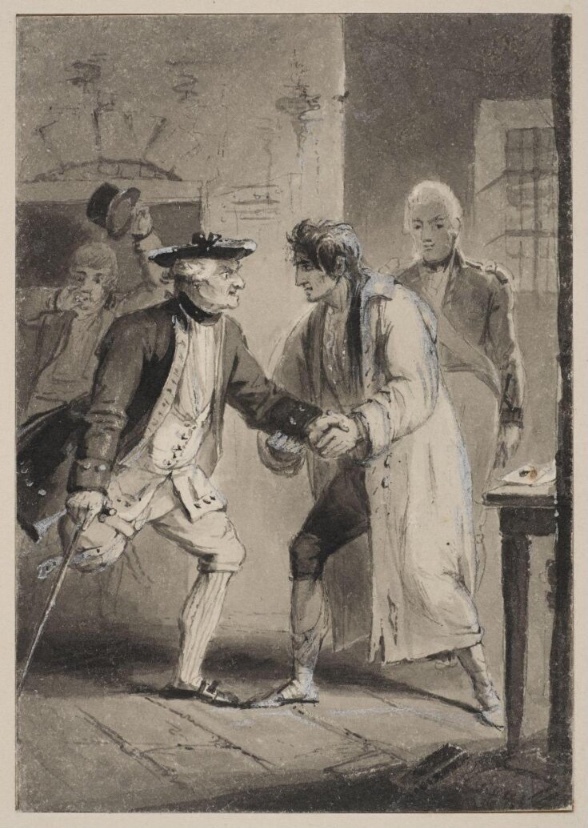
This picaresque tale, first published in 1751, was Tobias Smollett’s second novel. Following the fortunes and misfortunes of the egotistical dandy Peregrine Pickle, the novel is written as a series of brief adventures with every chapter typically describing a new escapade. The novel begins with Peregrine as a young country gentleman. His mother rejects him, as do his aloof father and his dissolute, spiteful brother. Commodore Hawser Trunnion takes Peregrine under his care and raises him. Peregrine’s upbringing, education at Oxford, and journey to France, his debauchery, bankruptcy, jailing, and succession to his father’s fortune, and his final repentance and marriage to his beloved Emilia all provide scope for Smollett’s comic and caustic perspectiveon the Europe of his times. As John P. Zomchick and George S. Rousseau note in the introduction, “by contrasting the genteel and the common, the sophisticated and the primal, Smollett conveys forcefully the way it felt to be alive in the middle of the eighteenth century.”

