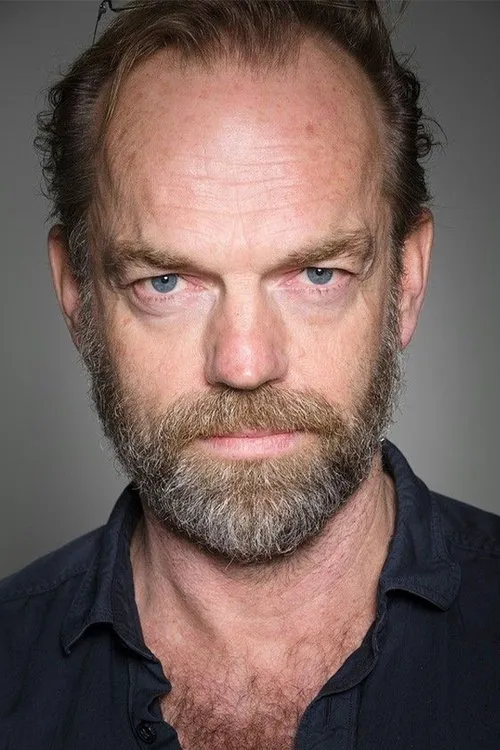
Age: 66
male
Hugo Wallace Weaving AO (born 4 April 1960) is an English actor. Born in Colonial Nigeria to English parents, he has resided in Australia for the entirety of his career. He is the recipient of six Australian Academy of Cinema and Television Arts Awards (AACTA) and has also been recognised as an Honorary Officer of the Order of Australia. Weaving landed his first major role as English cricket captain Douglas Jardine on the Australian television series Bodyline (1984). Continuing to act in Australia, he rose to prominence with his appearances in the films Proof (1991) and The Adventures of Priscilla, Queen of the Desert (1994), winning his first AACTA Award for Best Actor in a Leading Role with the former. By the turn of the millennium, Weaving achieved international recognition through appearances in mainstream American productions. His most notable film roles include Agent Smith in the first three The Matrix films (1999–2003), Elrond in The Lord of the Rings (2001–2003) and The Hobbit (2012–2014) trilogies, the title character in V for Vendetta (2005), and Johann Schmidt / Red Skull in the Marvel Cinematic Universe (MCU) film Captain America: The First Avenger (2011). In addition to his live action appearances, Weaving has had several voice over roles, including in the films Babe (1995), Happy Feet (2006) and Happy Feet Two (2011), and the Transformers series as Megatron (2007–2011). He also reprised his roles of Agent Smith and Elrond in Matrix and Lord of the Rings video game adaptations.
Hugo Weaving

Elrond
for Elrond in Tales of Middle Earth: The Rise of the Witch King
Suggested by tabbycat22

After 1000 years of peace that followed the Battle of the Last Alliance, evil once more began to spread across Middle-earth. In the year 1300 of the Third-Age, evil things started to stir in Middle-Earth again, and the Nazgul re-appeared. The Witch-king settled in Angmar, and after having built an army there, invades Arnor in the year 1409, and waged a 500-year war against the kingdom of Arnor, the Northern-Kingdom of men. The tower of Amon-Sûl is destroyed, but the great fortress of Fornost is defended, and war continues. After the Great Plague in 1636 which devastates Gondor and desolates many parts of Eriador, the southern part of Arnor, the Witch-king finally destroys Fornost, and takes it as his own fortress. The Rise of the Witch-king tells the story of the evil Witch-king’s rise to power, domination of Angmar, invasion of the great kingdom of Arnor, and eventual downfall at the hands of the Elves and the Men of Gondor.

