
Age: 69
male
Philip Bradley Bird (born September 24, 1957) is an American filmmaker, animator, and voice actor. He has had a career spanning over four decades in both live-action and animation. Bird was born in Montana and grew up in Oregon. He developed an interest in the art of animation early on, and completed his first short subject by age 14. Bird sent the film to Walt Disney Productions, leading to an apprenticeship from the studio's Nine Old Men. He attended the California Institute of the Arts in the late 1970s, and worked for Disney shortly thereafter. In the 1980s, Bird worked in film development with various studios. He co-wrote Batteries Not Included (1987), and developed two episodes of Amazing Stories for Steven Spielberg, including its spin-off (based on a segment written by Bird for the show), the widely panned animated sitcom Family Dog. Afterwards, Bird joined the animated sitcom The Simpsons as creative consultant for eight seasons. He directed the animated film The Iron Giant (1999); though acclaimed, it was a box-office bomb. Bird moved to Pixar where he wrote and directed two successful animated films, The Incredibles (2004) and Ratatouille (2007). They earned Bird two Academy Awards for Best Animated Feature wins and Best Original Screenplay nominations. He transitioned to live-action filmmaking with similarly successful Mission: Impossible – Ghost Protocol (2011), he then directed Disney's Tomorrowland (2015). He returned to Pixar to develop Incredibles 2 (2018), which became the second-highest-grossing animated film of all time during its theatrical run, and earned him another nomination for the Academy Award. Bird has a reputation for supervising his projects to a high degree of detail. He advocates for creative freedom and the possibilities of animation, and has criticized its stereotype as children's entertainment, or classification as a genre, rather than an art. Description above from the Wikipedia article Brad Bird, licensed under CC-BY-SA, full list of contributors on Wikipedia
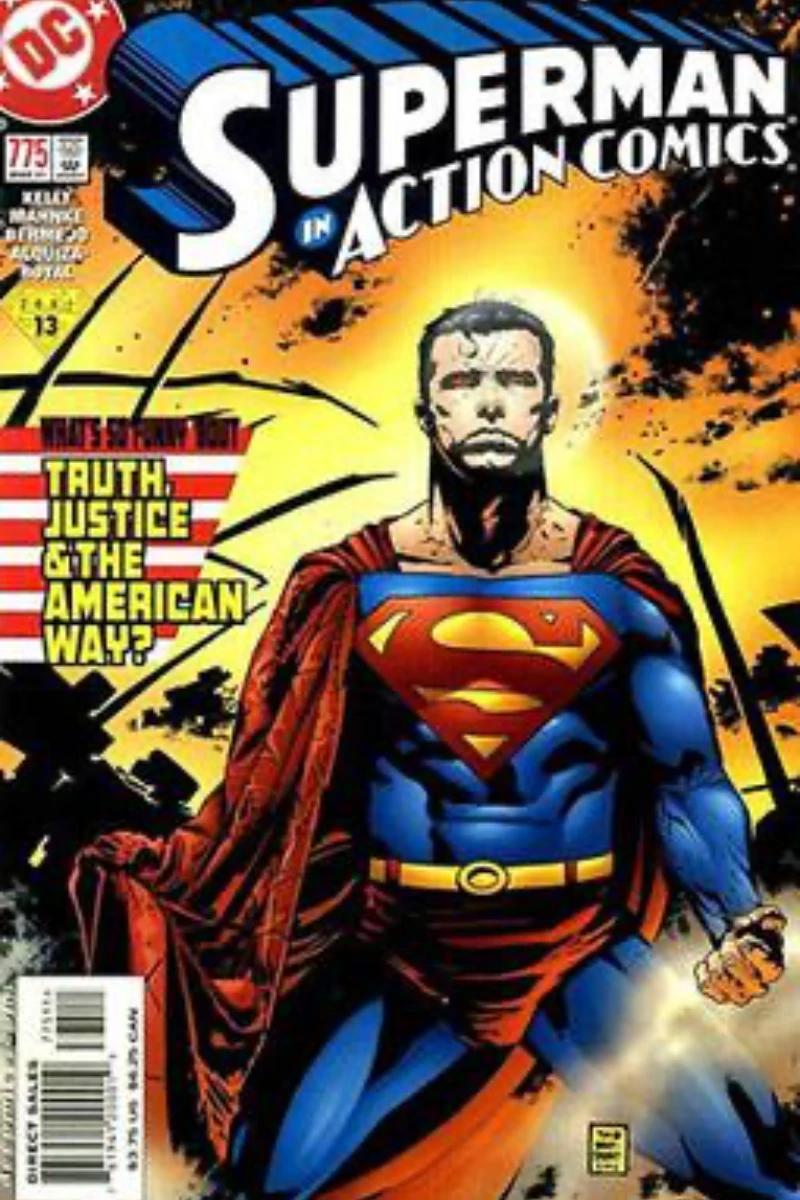
It’s been three years since Superman made his first appearance in Metropolis. Since then, it seems a new monster shows up every week. Superman is a beloved figure and symbol of hope for all in Metropolis, but some view his blind optimism and commitment to kindness as being an outdated sentiment for the modern day. Defense magnate, Lex Luthor, stands out as the biggest skeptic to the blue boyscout. On the ground, mild-mannered reporter Clark Kent, along with his girlfriend Lois Lane and best friend Jimmy Olsen, is researching shady business dealings associated with LexCorp. Lois has uncovered some documents related to an English research laboratory called Action Labs, which she believes LexCorp is embezzling government funds to. Clark is afraid this story may be too dangerous to take on, but Lois feels Clark has been coddling her ever since telling her he’s Superman. This leads to an argument and Clark storming out of her apartment. The next day, Superman is fighting a kaiju in the middle of Metropolis when, out of nowhere, the monster wails in agony and falls dead. Superman just barely manages to move some bystanders out of the way before the kaiju crushes them. The monster was killed by Manchester Black, an antihero with telepathic powers. Later, Lex Luthor holds a press conference announcing he has partnered with the United States Department of Defense to create a new team of superheroes that he calls “The Elite.” The team is comprised of Manchester Black, Coldcast, the Hat, and Menagerie. Superman and Lois are skeptical of this team, both by their affiliation with Luthor and their affinity of using deadly force. As time goes on, some members of the public begin defending the harsh nature of The Elite. Superman fights against Manchester Black, insisting that compassion and hope is the only way to fight for truth, justice, and a better tomorrow.


