
Age: 59
male
Denis Villeneuve (born October 3, 1967) is a Canadian filmmaker. He has received seven Canadian Screen Awards as well as nominations for three Academy Awards, five BAFTA Awards, and two Golden Globe Awards. Villeneuve's films have grossed more than $1.8 billion worldwide. Villeneuve began his career in his home country, directing four French-language dramas: August 32nd on Earth (1998); Maelström (2000); Polytechnique (2009), a dramatisation of the 1989 École Polytechnique massacre; and Incendies (2010). The last of these gained him international prominence and earned a nomination for the Academy Award for Best International Feature Film. He expanded to English-language films by directing the thrillers Prisoners (2013), Enemy (2013), and Sicario (2015). Villeneuve gained wider recognition for directing science fiction films. His work on Arrival (2016) earned him a nomination for the Academy Award for Best Director. This was followed by Blade Runner 2049 (2017), which was critically lauded but financially unsuccessful. His next projects were Dune (2021) and Dune: Part Two (2024), a two-part adaptation of Frank Herbert's novel of the same name. Both films were critically and commercially successful, with the former earning him Academy Award nominations for Best Adapted Screenplay and Best Picture.
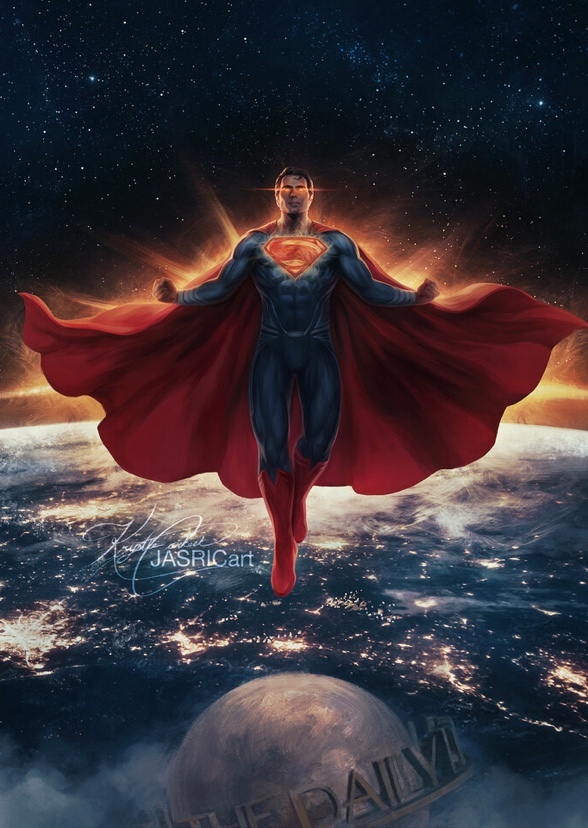
Superman I is a grounded, emotionally resonant story that redefines the Man of Steel’s journey in a modern world. The film follows Clark Kent as he balances his role as Superman with his deep connection to humanity, wrestling with his identity as both an alien from Krypton and an adopted son of Earth. When Lex Luthor, a brilliant and morally complex antagonist, challenges the world’s trust in Superman, questioning whether any one being should have that much power, Superman faces a crisis of faith in his mission to protect humanity. As Metropolis becomes divided over Superman’s presence, a new threat emerges: General Zod, a survivor of Krypton, who offers Superman the chance to restore their lost world—at the cost of Earth. Superman must choose between preserving his Kryptonian legacy or defending his adopted home, leading to a climactic battle with Zod that threatens the future of both worlds. Through moments of compassion, sacrifice, and introspection, the film explores the true nature of heroism, proving that Superman’s greatest power is not his strength, but his unwavering belief in the potential of humanity. In a world fraught with division, Superman becomes the beacon of hope that inspires others to rise above fear and embrace their better selves.


