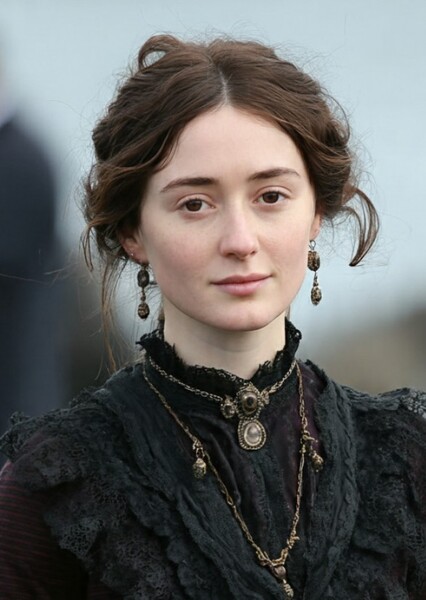
Age: 32
female
Saoirse Una Ronan (/ˈsɜːrʃə ˈuːnə ˈroʊnən/ SUR-shə OO-nə ROH-nən; born 12 April 1994) is an American-born Irish actress. Primarily known for her work in period dramas since adolescence, she has received various accolades, including a Golden Globe Award and nominations for four Academy Awards and seven British Academy Film Awards. Ronan made her acting debut in 2003 on the Irish medical drama series The Clinic and had her breakthrough role as a precocious teenager in the period drama film Atonement (2007), which earned her a nomination for the Academy Award for Best Supporting Actress. Her career progressed with starring roles in The Lovely Bones (2009) and Hanna (2011) and a supporting role in The Grand Budapest Hotel (2014). Ronan received critical acclaim and nominations for the Academy Award for Best Actress for playing an Irish immigrant in New York in Brooklyn (2015), the eponymous high school senior in Greta Gerwig's Lady Bird (2017)—which won her a Golden Globe—and Jo March in Gerwig's Little Women (2019). Ronan has since produced and starred in the drama The Outrun (2024). On stage, Ronan portrayed Abigail Williams in the 2016 Broadway revival of The Crucible and Lady Macbeth in the 2021 West End revival of The Tragedy of Macbeth. In 2016, she was featured by Forbes in two of their 30 Under 30 lists, and in 2020, The New York Times ranked her tenth on its list of the greatest actors of the 21st century. Description above from the Wikipedia article Saoirse Ronan, licensed under CC-BY-SA, full list of contributors on Wikipedia.
Saoirse Ronan

Mary Shelley
for Mary Shelley in Story of The Monster: A Tale of Mary Shelley (Biopic)
Suggested by kaueoliveira

The film, "Story of The Monster," is a Gothic psychological drama that eschews the traditional literary biopic structure to focus on the brief, intensely creative, and tragic period in Mary Shelley's (née Godwin) life that led to the creation of Frankenstein. The story begins with Mary as a young, intellectual woman, fleeing her conventional life to enter a passionate, morally complex, and tumultuous relationship with the romantic poet Percy Bysshe Shelley. Their lives are a whirlwind of radical ideas, intellectual fire, and reckless emotional abandon. The central narrative is set during the infamous "Year Without a Summer" (1816) when Mary, Percy, and Lord Byron were confined indoors at Villa Diodati. The film uses the dreary atmosphere, the competitive intellectualism, and the ghosts of Mary's own personal tragedies—including the loss of her infant child—to fuel her imagination. The Monster's creation is visualized not as a simple writing act, but as a direct, psychological manifestation of Mary's deepest fears: the horror of birth and death, the guilt of ambition, and the feeling of intellectual rejection. The story culminates with the publishing of Frankenstein, but the focus remains on the author's internal life—a woman who brought a profound, timeless horror to life by grappling with her own devastating grief and the isolation of her genius.

