
Died at 85
male
Sir Michael John Gambon (October 19, 1940 – September 27, 2023) was an Irish-English actor. Gambon started his acting career with Laurence Olivier as one of the original members of the Royal National Theatre. Over his six-decade-long career, he received three Olivier Awards and four BAFTA TV Awards. In 1998, he was knighted by Queen Elizabeth II for services to drama. Gambon appeared in many productions of works by William Shakespeare such as Othello, Hamlet, Macbeth and Coriolanus. Gambon was nominated for thirteen Olivier Awards, winning three times for A Chorus of Disapproval (1985), A View from the Bridge (1987), and Man of the Moment (1990). In 1997, Gambon made his Broadway debut in David Hare's Skylight, earning a Tony Award for Best Actor in a Play nomination. Gambon made his film debut in Othello (1965). His other notable films include The Cook, the Thief, His Wife & Her Lover (1989), The Wings of the Dove (1997), The Insider (1999), Gosford Park (2001), Amazing Grace (2006), The King's Speech (2010), Quartet (2012), and Victoria & Abdul (2017). Gambon also appeared in the Wes Anderson films The Life Aquatic with Steve Zissou (2004) and Fantastic Mr. Fox (2009). Gambon gained wider recognition through his role of Albus Dumbledore in the Harry Potter film series from 2004 to 2011, replacing Richard Harris following his death in 2002. For his work on television, he received four BAFTA Awards for The Singing Detective (1986), Wives and Daughters (1999), Longitude (2000), and Perfect Strangers (2001). He also received two Primetime Emmy Award nominations for Path to War (2002) and Emma (2009). Gambon's other notable projects include Cranford (2007) and The Casual Vacancy (2015). In 2017, he received the Irish Film & Television Academy Lifetime Achievement Award. In 2020, he was listed at No. 27 on The Irish Times's list of Ireland's greatest film actors.
Michael Gambon

Obi-Wan Kenobi
for Obi-Wan Kenobi in Star Wars Trilogy (2003-2009)
Suggested by leonardmoney
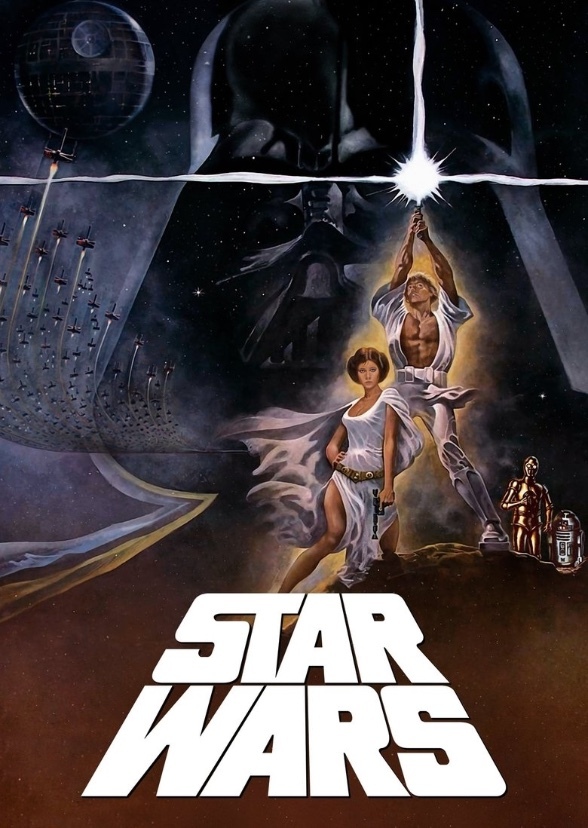
The Star Wars franchise depicts the adventures of characters "a long time ago in a galaxy far, far away" across multiple fictional eras, in which humans and many species of aliens (often humanoid) co-exist with droids, which may be programmed for personal assistance or battle. Space travel between planets is common due to lightspeed hyperspace technology. The planets range from wealthy, planet-wide cities to deserts scarcely populated by primitive tribes. Virtually any Earth biome, along with many fictional ones, has its counterpart as a Star Wars planet which, in most cases, teem with sentient and non-sentient alien life. The franchise also makes use of other astronomical objects such as asteroid fields and nebulae. Spacecraft range from small starfighters to large capital ships, such as the Star Destroyers, as well as space stations such as the moon-sized Death Stars. Telecommunication includes two-way audio and audiovisual screens, holographic projections, and hyperspace transmission.

