
Age: 76
male
William Francis Nighy (born 12 December 1949) is an English actor. Known for his work on screen and stage, he has received numerous awards, including two BAFTA Awards, a Golden Globe Award and nominations for an Academy Award and a Tony Award. Nighy started his career with the Everyman Theatre, Liverpool and made his London debut with the Royal National Theatre starting with The Illuminatus! in 1977. There he gained acclaim for his roles in David Hare's Pravda in 1985, Harold Pinter's Betrayal in 1991, Tom Stoppard's Arcadia in 1993, and Anton Chekov's The Seagull in 1994. He received a Laurence Olivier Award for Best Actor nomination for his performance in Blue/Orange in 2001. He made his Broadway debut in Hare's The Vertical Hour in 2006, and returned in the 2015 revival of Hare's Skylight earning a Tony Award for Best Actor in a Play nomination. Early film roles include in the comedies Still Crazy (1998), and Blow Dry (1999) before his breakout role in Love Actually (2003) which earned him a BAFTA Award for Best Supporting Actor. He soon gained recognition portraying Davy Jones in the Pirates of the Caribbean film series (2006-2007), and Viktor in the Underworld film series (2003-2009). Other films include Shaun of the Dead (2004), The Hitchhiker's Guide to the Galaxy (2005), The Constant Gardener (2005), Notes on a Scandal (2006), Hot Fuzz (2007), Valkyrie (2008), Harry Potter and the Deathly Hallows – Part 1 (2010), The Best Exotic Marigold Hotel (2012), About Time (2013), Emma (2020), and Living (2022), the last of these earning him his first career Academy Award nomination. Nighy has gained acclaim for his roles in television earning a British Academy Television Award for Best Actor for his performance in BBC One series State of Play (2003), and a Golden Globe Award for Best Actor for the BBC film Gideon's Daughter (2007). He's also known for his roles in HBO's The Girl in the Café (2006) and PBS's Page Eight (2012).
Bill Nighy

Grand Moff Tarkin
for Grand Moff Tarkin in Star Wars Trilogy (2003-2009)
Suggested by christopher00h
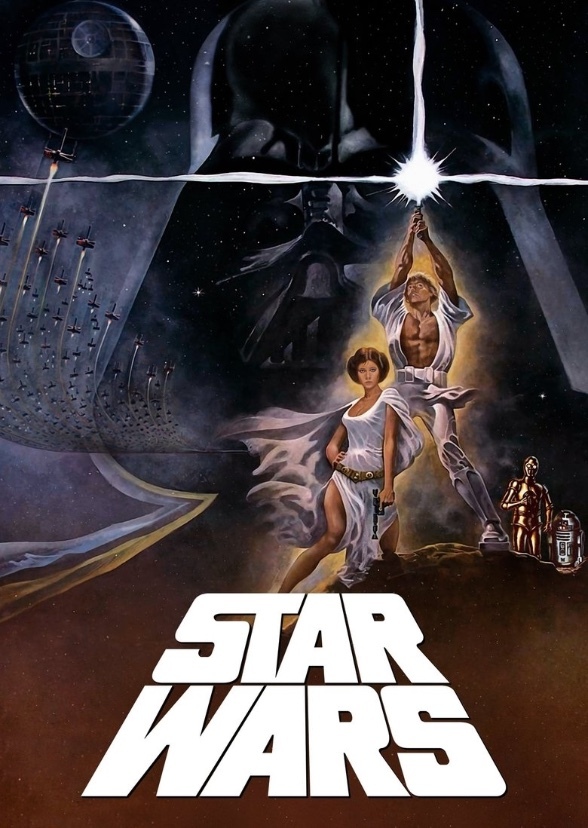
The Star Wars franchise depicts the adventures of characters "a long time ago in a galaxy far, far away" across multiple fictional eras, in which humans and many species of aliens (often humanoid) co-exist with droids, which may be programmed for personal assistance or battle. Space travel between planets is common due to lightspeed hyperspace technology. The planets range from wealthy, planet-wide cities to deserts scarcely populated by primitive tribes. Virtually any Earth biome, along with many fictional ones, has its counterpart as a Star Wars planet which, in most cases, teem with sentient and non-sentient alien life. The franchise also makes use of other astronomical objects such as asteroid fields and nebulae. Spacecraft range from small starfighters to large capital ships, such as the Star Destroyers, as well as space stations such as the moon-sized Death Stars. Telecommunication includes two-way audio and audiovisual screens, holographic projections, and hyperspace transmission.

