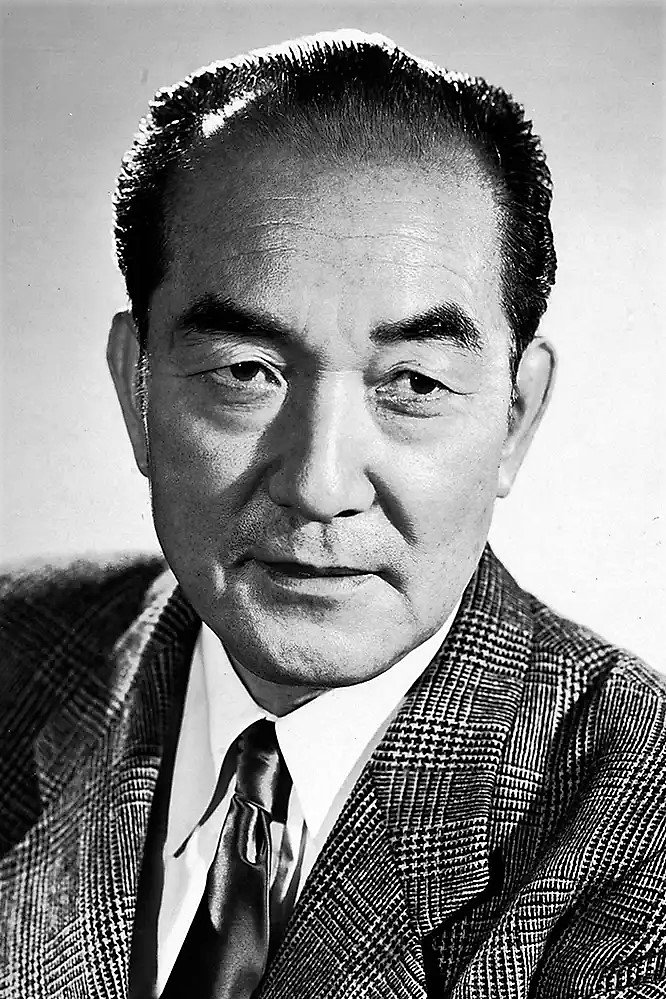
Died at 137
male
Sessue Hayakawa (June 10, 1889 – November 23, 1973) was a Japanese and American Issei (Japanese immigrant) actor who starred in American, Japanese, French, German, and British films. Hayakawa was the first and one of the few Asian actors to find stardom in the United States as well as Europe. Between the mid-1910s and the late 1920s, he was as well known as actors Charlie Chaplin and Douglas Fairbanks. He was one of the highest paid stars of his time; making $5,000 a week in 1915, and $2 million a year via his own production company during the 1920s. He starred in over 80 movies and has two films in the U.S. National Film Registry. His international stardom transitioned both silent films and talkies. Of his English-language films, Hayakawa is probably best known for his role as Colonel Saito in the film The Bridge on the River Kwai, for which he received a nomination for Academy Award Best Supporting Actor in 1957. He also appeared as the pirate leader in Disney's Swiss Family Robinson in 1960. In addition to his film acting career, Hayakawa was a theatre actor, film and theatre producer, film director, screenwriter, novelist, martial artist, and an ordained Zen master. Description above from the Wikipedia article Sessue Hayakawa, licensed under CC-BY-SA, full list of contributors on Wikipedia.
Sessue Hayakawa
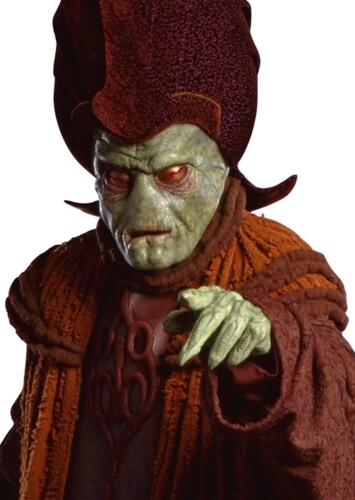
Nute Gunray
for Nute Gunray in Star Wars Prequel Trilogy (1940's)
Suggested by adrianpintado
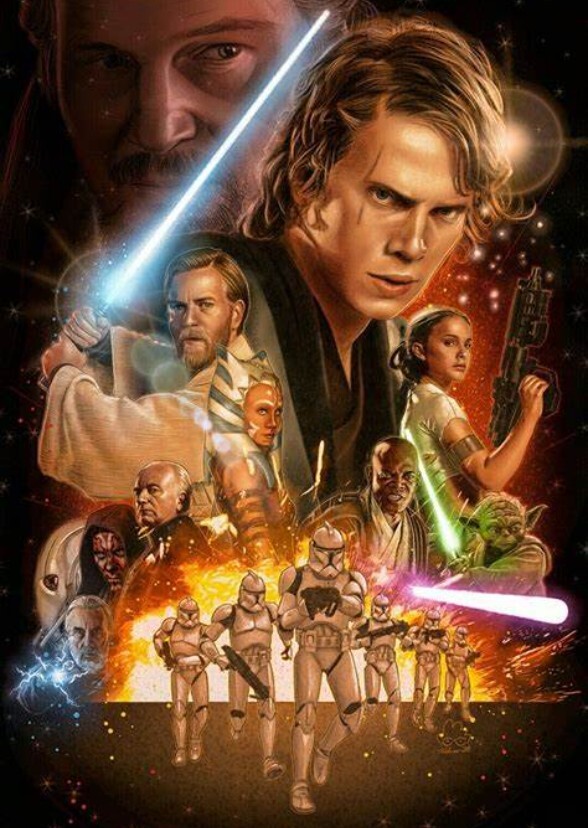
The Star Wars prequel trilogy, colloquially referred to as the prequels, is a series of epic space-opera films written and directed by George Lucas. It was produced by Lucasfilm Ltd. and distributed by 20th Century Fox. The trilogy was released from 1999 to 2005 and is set before the original Star Wars trilogy (1977–1983), chronologically making it the first act of the Skywalker Saga. Lucas had planned a prequel trilogy (as well as a sequel trilogy) before the release of the original film, but halted major Star Wars films beyond the original trilogy by 1981. When computer-generated imagery (CGI) had advanced to the level he wanted for the visual effects he wanted for subsequent films, Lucas revived plans for the prequels by the early 1990s. The trilogy marked Lucas's return to directing after the 22-year hiatus following the original Star Wars film in 1977, as well as a 16-year hiatus between the classic and prequel trilogies.

