
Died at 127
male
Charles Laughton (1 July 1899 – 15 December 1962) was an English-American stage and film actor, director, producer and screenwriter. Laughton was trained in London at the Royal Academy of Dramatic Art and first appeared professionally on the stage in 1926. In 1927, he was cast in a play with his future wife Elsa Lanchester, with whom he lived and worked until his death. He played a wide range of classical and modern parts, making an impact in Shakespeare at the Old Vic. His film career took him to Broadway and then Hollywood, but he also collaborated with Alexander Korda on notable British films of the era, including The Private Life of Henry VIII, for which he won the Academy Award for Best Actor for his portrayal of the title character. He portrayed everything from monsters and misfits to kings. Among Laughton's biggest film hits were The Barretts of Wimpole Street, Mutiny on the Bounty, Ruggles of Red Gap, Jamaica Inn, The Hunchback of Notre Dame, and The Big Clock. In his later career, he took up stage directing, notably in The Caine Mutiny Court-Martial, and George Bernard Shaw's Don Juan in Hell, in which he also starred. He directed one film, the thriller The Night of the Hunter. Daniel Day-Lewis cited Laughton as one of his inspirations, saying: "He was probably the greatest film actor who came from that period of time. He had something quite remarkable. His generosity as an actor, he fed himself into that work. As an actor, you cannot take your eyes off him."
Charles Laughton
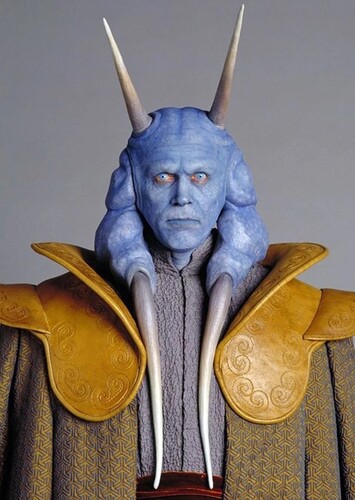
Mas Amedda
for Mas Amedda in Star Wars Prequel Trilogy (1940's)
Suggested by adrianpintado
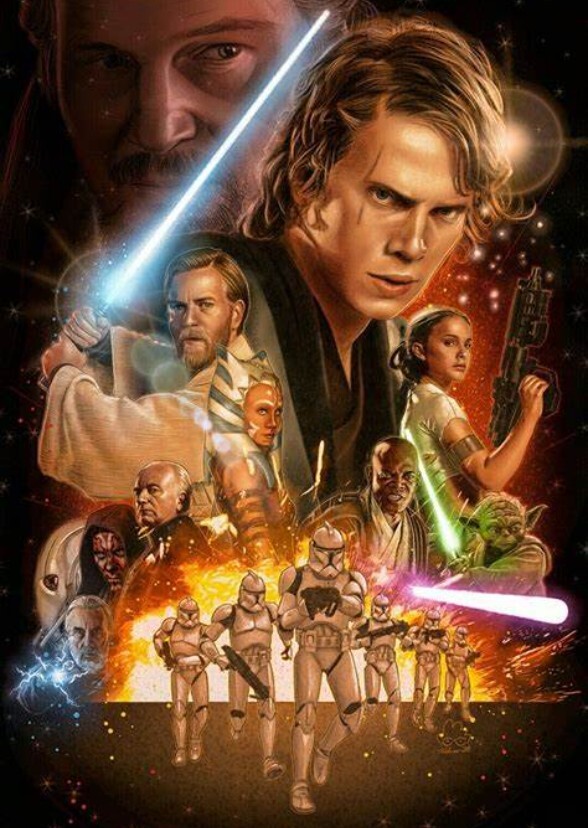
The Star Wars prequel trilogy, colloquially referred to as the prequels, is a series of epic space-opera films written and directed by George Lucas. It was produced by Lucasfilm Ltd. and distributed by 20th Century Fox. The trilogy was released from 1999 to 2005 and is set before the original Star Wars trilogy (1977–1983), chronologically making it the first act of the Skywalker Saga. Lucas had planned a prequel trilogy (as well as a sequel trilogy) before the release of the original film, but halted major Star Wars films beyond the original trilogy by 1981. When computer-generated imagery (CGI) had advanced to the level he wanted for the visual effects he wanted for subsequent films, Lucas revived plans for the prequels by the early 1990s. The trilogy marked Lucas's return to directing after the 22-year hiatus following the original Star Wars film in 1977, as well as a 16-year hiatus between the classic and prequel trilogies.

