Age: 94
male
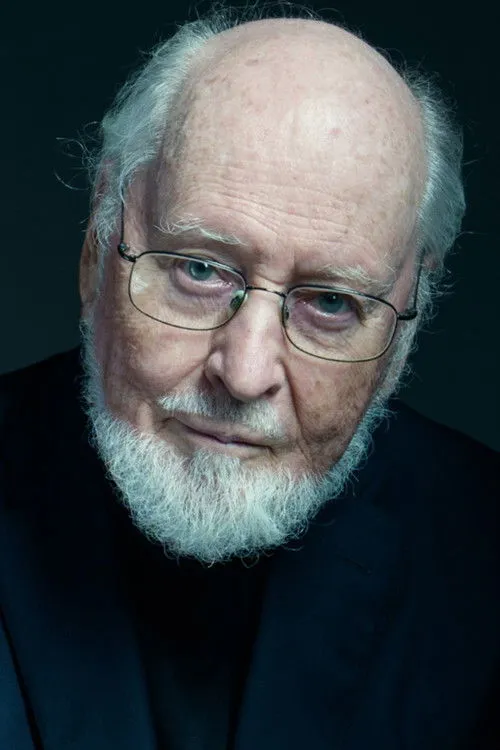
John Towner Williams (born February 8, 1932) is an American composer and conductor. In a career that has spanned seven decades, he has composed some of the most popular, recognizable, and critically acclaimed film scoresin cinema history. He has a distinct sound that mixes romanticism, impressionism and atonal music with complex orchestration. He is best known for his collaborations with Steven Spielberg and George Lucas and has received numerous accolades including 26 Grammy Awards, five Academy Awards, seven BAFTA Awards, three Emmy Awards and four Golden Globe Awards. With 54 Academy Award nominations, he is the second-most nominated person, after Walt Disney, and is the oldest Oscar nominee in any category, at 91 years old. Williams's early work as a film composer includes Valley of the Dolls (1967), Goodbye, Mr. Chips (1969), Images and The Cowboys (both 1972), The Long Goodbye (1973) and The Towering Inferno (1974). He has collaborated with Spielberg since The Sugarland Express (1974), composing music for all but five of his feature films. He received five Academy Awards for Best Score for Fiddler on the Roof (1971), Jaws (1975), Star Wars (1977), E.T. the Extra-Terrestrial (1982) and Schindler's List (1993). Other memorable collaborations with Spielberg include Close Encounters of the Third Kind (1977), the Indiana Jones franchise (1981–2023), Hook (1991), Jurassic Park (1993), Saving Private Ryan (1998), Catch Me If You Can (2002), War Horse (2011), Lincoln (2012), and The Fabelmans (2022). He also scored Superman (1978), the first two Home Alone films (1990–1992), and the first three Harry Potter films (2001–2004). Williams has also composed numerous classical concertos and other works for orchestral ensembles and solo instruments. He served as the Boston Pops' principal conductor from 1980 to 1993 and is its laureate conductor. Other works by Williams include theme music for the 1984 Summer Olympic Games; NBC Sunday Night Football; "The Mission" theme (used by NBC News and Seven News in Australia); and the television series Lost in Space, Land of the Giants and Amazing Stories. Among other accolades, he has received the Kennedy Center Honor in 2004, the National Medal of the Arts in 2009 and the AFI Life Achievement Award in 2016. He was inducted into the Songwriters Hall of Fame in 1998, the Hollywood Bowl's Hall of Fame in 2000 and the American Classical Music Hall of Fame in 2004. He has composed the score for nine of the top 25 highest-grossing films at the U.S. box office. In 2022, Williams was appointed an Honorary Knight Commander of the Order of the British Empire (KBE) by Queen Elizabeth II, "for services to film music". In 2005, the American Film Institute placed Williams's score to Star Wars first on its list AFI's 100 Years of Film Scores; his scores for Jaws and E.T. also made the list. The Library of Congress entered the Star Wars soundtrack into the National Recording Registry for being "culturally, historically, or aesthetically significant". Description above from the Wikipedia article John Williams, licensed under CC-BY-SA, full list of contributors on Wikipedia.
John Williams

Composer
for Composer in Star Wars: Episode IX - Return of the Sith
Suggested by matthewsimmons1
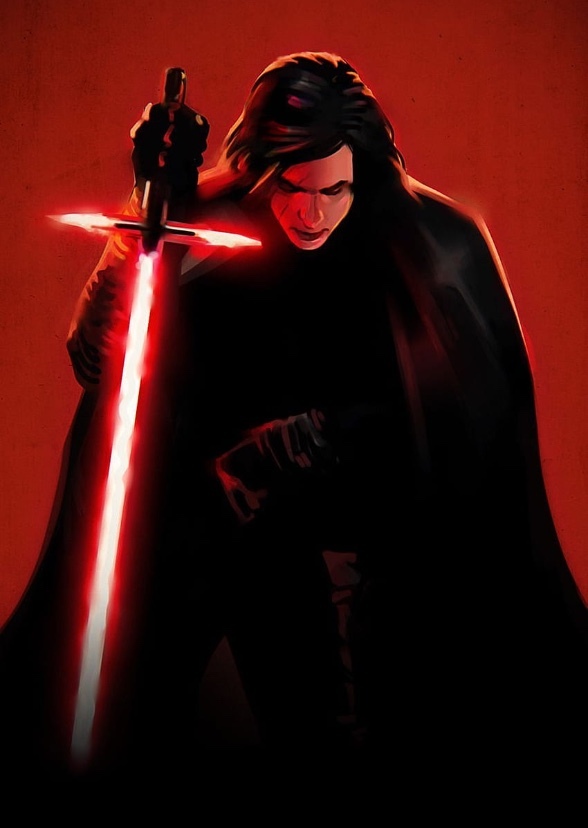
Set five years after the events of the last film. Inspired by other novels in the Legacy of the Force series. Darth Caedus under Lumiya’s orders eliminates the false Sith around the galaxy in mass numbers but soon realizes he can never be the true Sith that Lumiya claims as she was never an actual Sith apprentice of Vader or Palpatine. He kills the false Sith who tells him but spares a young follower who he brings back to Lumiya. However, in a surprise turn, Caedus kills Lumiya and takes Tahiri Veila as his new apprentice. Together they go on a mission to steal the artifact Luke found in the first movie. An artifact that Caedus knows can play with time. He plans to travel back in time to train with Palpatine before overthrowing him and taking the Empire for himself. Darth Caedus kills Luke and takes the artifact, sending him, Veila, Breha, and Kai back in time. We return to the OG trilogy time encountering characters such as Vader, Palpatine, Luke, Yoda, Han, and Leia. The film ends in a battle throughout time (in and out of the world between worlds) between Breha and Darth Caedus where she has to kill him. Both her and Kai survive and destroy the artifact.

