
Died at 86
male
Russell Charles Means was a Native American activist for the rights of Red (Brown) people, libertarian political activist, actor, musician and writer. He became a prominent member of the American Indian Movement (AIM) after joining the organization in 1968 and helped organize notable events that attracted national and international media coverage. Means was active in international issues of Indigenous peoples, including working with groups in Central and South America and with the United Nations for recognition of their rights. He was active in politics at his native Pine Ridge Indian Reservation and at the state and national level. Beginning an acting career in 1992, he appeared on numerous television series and in several films, including The Last of the Mohicans and Pocahontas and released his own music CD. Means published his autobiography Where White Men Fear to Tread in 1995. Means was married five times; the first four marriages ended in divorce. He was married to his fifth wife, Pearl Means, until his death. His wife Pearl died ten years later in May 2022, at the age of 62. He had a total of ten children: seven biological children and three adopted children, who were "adopted in the Lakota way", including Tatanka Means who is also an actor. As "a grandfather with twenty-two grandchildren", Russell Means divided his time "between Chinle, Navajo Nation, Arizona, and Porcupine, South Dakota."
Russell Means

Ensign Walking Bear
for Ensign Walking Bear in Star Trek: The Original Series (What If)
Suggested by ltathena
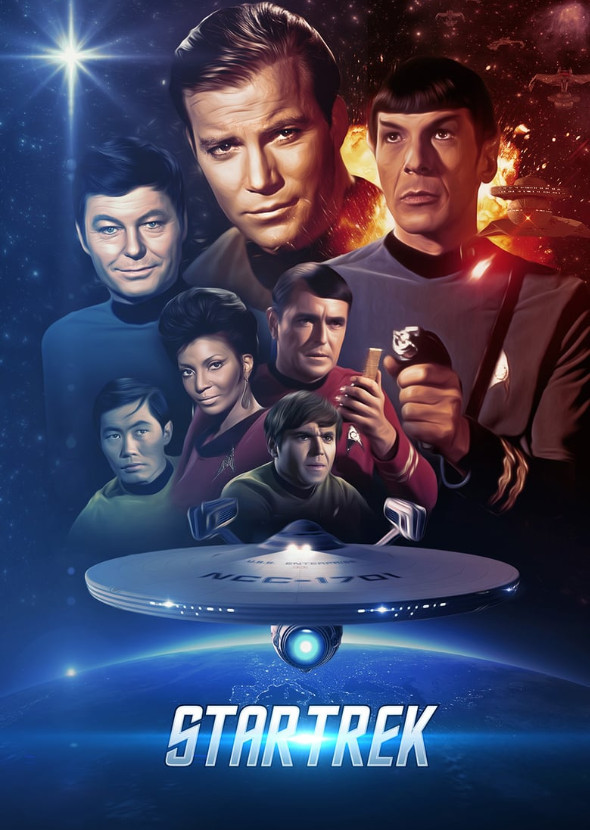
"Space: the final frontier. These are the voyages of the starship Enterprise. Her continuing mission: to explore strange new worlds. To seek out new life and new civilizations. To boldly go where no one has gone before!" With these words, television history was made. But what if time travelers from the future went back and financed the series at $5,000,000.00 budgets per episode (in 1966 money) for a full agreed-upon five years/seasons of 26 hourlong adventures over a great mission? With the $5 Million per episode spent on a large ensemble cast and pushing the boundaries of the then-new fields of visual/photographic effects, another $5 Million per episode would be used for insurance and convincing NBC affiliates to air the programs as is from fall 1966 to spring 1972 to document a sex/race/species-positive future vision of the crew of the starship Enterprise. If the merchandising and other problems were tackled out of the gate, what would happen to the show?

