
Planet Coaster is a construction and management simulation video game developed and published by Frontier Developments for Windows. It was released worldwide on 17 November 2016. Frontier had previously worked in the amusement park construction and management genre with RollerCoaster Tycoon 3 (to which Planet Coaster is a spiritual successor), Thrillville, Thrillville: Off the Rails, and Zoo Tycoon. A version for PlayStation 4, Xbox One, and Xbox Series X/S, known as Planet Coaster: Console Edition, was released worldwide on 10 November 2020.[2][3] The PlayStation 5 version was released in North America and Australia on 12 November 2020 and in Europe on 19 November 2020.[4][5] A macOS version, developed by Aspyr, was later released on 17 November 2020 on both Steam and Mac App Store. There are four different modes in the game, namely Sandbox, Challenge, Career, and Scenario Editor. In the career mode, players assume the role of a theme park manager and must complete tasks such as constructing unfinished roller coasters or hiring janitors. In Sandbox mode, players are tasked to construct their own theme park on an empty plot of land. The challenge mode is similar to the sandbox mode, but with added difficulty, as players need to take funds into account. The scenario mode, which was added in the 1.4.0 update on 22 November 2017, is similar to the career mode, but allows players to customise their own task in all saved parks. Originally called Coaster Park Tycoon, the game was revealed on 29 January 2015 and was renamed during E3 2015. Planet Coaster is Frontier's second self-published franchise, following Elite Dangerous. Frontier organised multiple alpha and beta tests before launching the game in November 2016. The game was supported with free as well as paid post-release downloadable content upon launch. The title received positive reviews upon release, with critics praising the game's sandbox mode and creation tools. Criticism was mainly directed to the game's career mode. It was a commercial success, with more than 2.5 million copies sold as of January 2020.
Planet Coaster

Rollercoaster Tycoon
for Rollercoaster Tycoon in Spiritual Successor
Suggested by GodzillaLover04
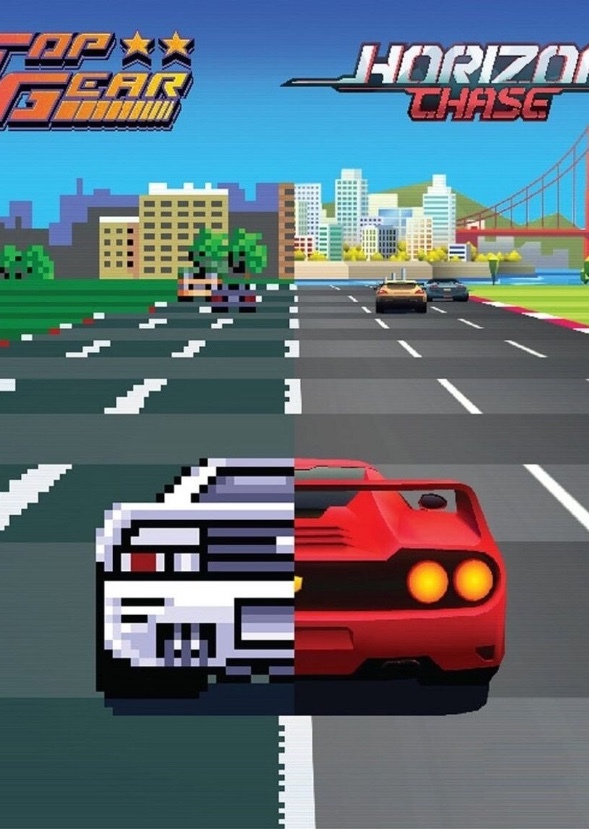
A spiritual successor is a type of follow-up work that isn’t directly connected to the original story or universe, but still carries forward its essence through similar themes, style, and ideas—essentially acting as a sequel “in spirit.” Creators may do this for many reasons: to pay homage while avoiding legal ties, to continue exploring familiar creative ground without risking a direct sequel, or simply because their artistic voice naturally echoes past work. This concept appears across many forms of media, though it’s especially common in video games, where developers may retain the tools and design philosophy of a past project even if they no longer hold the rights to its name or characters. A related concept is the spiritual adaptation, where a work in one medium closely mirrors the tone and structure of another, almost feeling like an unofficial adaptation. Spiritual successors can sometimes feel like rebranded continuations of ideas from older or discontinued franchises, effectively serving as a kind of creative reincarnation. They often overlap with ideas like unofficial counterparts or heavily inspired works, and can even share the same creative teams. While they celebrate and evolve what came before, they stand apart as independent creations, occasionally even contrasting with or redefining the works that inspired them.

