
Uncharted is an action-adventure video game series and media franchise published by Sony Interactive Entertainment and developed by Naughty Dog. Created by Amy Hennig, the Uncharted franchise follows a group of treasure hunters who travel across the world to uncover various historical mysteries. The series features historical fiction, elements of fantasy and folklore, and fictional characters alongside real-world historical figures and events. In the main series, players control Nathan Drake; in the expansion, players control Chloe Frazer. The franchise's first game, Uncharted: Drake's Fortune, was released in 2007, and followed by the sequels Uncharted 2: Among Thieves (2009), Uncharted 3: Drake's Deception (2011), and Uncharted 4: A Thief's End (2016). Spin-offs Uncharted: Golden Abyss (2011), Uncharted: Fight for Fortune (2012), and the standalone expansion Uncharted: The Lost Legacy (2017) also support the main series. Originally published exclusively for PlayStation consoles, the franchise later released games for other platforms, with the mobile spin-off Uncharted: Fortune Hunter (2016) and remasters of A Thief's End and The Lost Legacy for Windows in 2022. The main games are played from a third-person perspective, with gameplay mostly revolving around combat, shooting, exploration, and puzzles, while platforming is used to navigate the environment. Later titles began including competitive and co-operative multiplayer game modes, stealth, and driving gameplay. Uncharted drew inspiration from other games,[1] film, and additional media, and is known for featuring exotic locations. Several adaptations of the series have also been released, including a live-action film, board games, comics, and a novel. The main series received critical acclaim, with praise for the stories, characters, voice acting, gameplay, and graphics, with its high production value being frequently compared to Hollywood-produced action-adventure films, specifically the Indiana Jones series. It has also been credited by critics and publications for raising the standards of single-player action-adventure games, and its second and fourth numbered installments are consistently ranked among the greatest video games. Uncharted has sold over 41 million units, making it one of the best-selling video game franchises, helping the success of PlayStation during the seventh and eighth generation and elevating Naughty Dog's reputation as a renowned game developer.
Uncharted (Franchise)
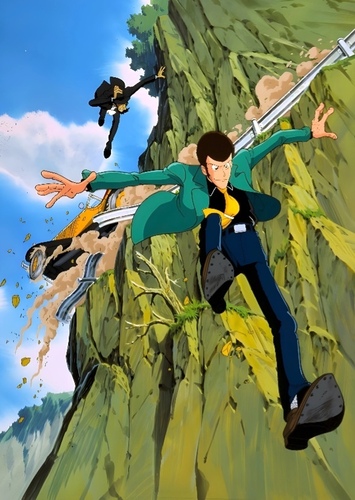
Lupin III: The Lost City of Ophir
for Lupin III: The Lost City of Ophir in Spiritual Successor
Suggested by toonking1985
A spiritual successor is a type of follow-up work that isn’t directly connected to the original story or universe, but still carries forward its essence through similar themes, style, and ideas—essentially acting as a sequel “in spirit.” Creators may do this for many reasons: to pay homage while avoiding legal ties, to continue exploring familiar creative ground without risking a direct sequel, or simply because their artistic voice naturally echoes past work. This concept appears across many forms of media, though it’s especially common in video games, where developers may retain the tools and design philosophy of a past project even if they no longer hold the rights to its name or characters. A related concept is the spiritual adaptation, where a work in one medium closely mirrors the tone and structure of another, almost feeling like an unofficial adaptation. Spiritual successors can sometimes feel like rebranded continuations of ideas from older or discontinued franchises, effectively serving as a kind of creative reincarnation. They often overlap with ideas like unofficial counterparts or heavily inspired works, and can even share the same creative teams. While they celebrate and evolve what came before, they stand apart as independent creations, occasionally even contrasting with or redefining the works that inspired them.




