
The Lost World: Jurassic Park is a 1997 American science fiction action film.[4] It is the second installment in the Jurassic Park franchise and the second film in the Jurassic Park trilogy. A sequel to 1993's Jurassic Park and loosely based on Michael Crichton's 1995 novel The Lost World, the film was directed by Steven Spielberg and written by David Koepp. The film stars Jeff Goldblum, returning as the eccentric chaos theorist and mathematician Ian Malcolm, as well as Julianne Moore, Pete Postlethwaite, Arliss Howard, Vince Vaughn, and Vanessa Lee Chester. Four years after the original film, John Hammond (Richard Attenborough) sends a team, led by Malcolm, to Isla Sorna, the second island Hammond's company InGen used to make the dinosaurs, to study the animals while coming into conflict with a team led by InGen to bring some of the dinosaurs back to the United States. After the original novel's release and the first film's success, fans pressured Crichton for a sequel. Following the book's publication in 1995, production began on a film sequel. Filming took place from September to December 1996, primarily in California, with a shoot in Kauai, Hawaii, where the first film was shot. The Lost World's plot and imagery is substantially darker than Jurassic Park. It makes more extensive use of computer-generated imagery to depict the dinosaurs, along with life-sized animatronics. Released on May 23, 1997, the film received mixed reviews from critics, who praised the visuals and action sequences, but criticized the writing and character development. The film was a box office success, grossing over $618 million worldwide, becoming the second-highest-grossing film of 1997. It earned an Academy Award nomination for Best Visual Effects. A sequel, Jurassic Park III, was released on July 18, 2001.
The Lost World: Jurassic Park

Godzilla
for Godzilla in Spiritual Successor
Suggested by toonking1985
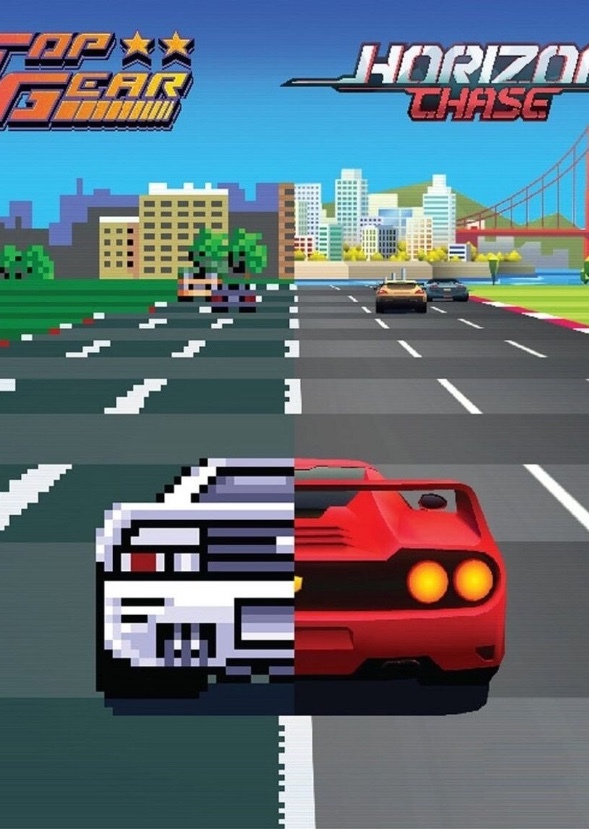
A spiritual successor is a type of follow-up work that isn’t directly connected to the original story or universe, but still carries forward its essence through similar themes, style, and ideas—essentially acting as a sequel “in spirit.” Creators may do this for many reasons: to pay homage while avoiding legal ties, to continue exploring familiar creative ground without risking a direct sequel, or simply because their artistic voice naturally echoes past work. This concept appears across many forms of media, though it’s especially common in video games, where developers may retain the tools and design philosophy of a past project even if they no longer hold the rights to its name or characters. A related concept is the spiritual adaptation, where a work in one medium closely mirrors the tone and structure of another, almost feeling like an unofficial adaptation. Spiritual successors can sometimes feel like rebranded continuations of ideas from older or discontinued franchises, effectively serving as a kind of creative reincarnation. They often overlap with ideas like unofficial counterparts or heavily inspired works, and can even share the same creative teams. While they celebrate and evolve what came before, they stand apart as independent creations, occasionally even contrasting with or redefining the works that inspired them.




