The 1967 International and Universal Exposition, commonly known as Expo 67, was a general exhibition from April 28 to October 29, 1967.[2] It was a category one world's fair held in Montreal, Quebec, Canada. It is considered to be one of the most successful world's fairs of the 20th century[3] with the most attendees to that date and 62 nations participating. It also set the single-day attendance record for a world's fair, with 569,500 visitors on its third day. Expo 67 was Canada's main celebration during its centennial year. The fair had been intended to be held in Moscow, to help the Soviet Union celebrate the Russian Revolution's 50th anniversary; however, for various reasons, the Soviets decided to cancel, and Canada was awarded it in late 1962. The project was not well supported in Canada at first. It took the determination of Montreal's mayor, Jean Drapeau, and a new team of managers to guide it past political, physical and temporal hurdles. Defying a computer analysis that said it could not be done, the fair opened on time.[4] After Expo 67 ended in October 1967, the site and most of the pavilions continued on as an exhibition called Man and His World, open during the summer months from 1968 until 1984. By that time, most of the buildings—which had not been designed to last beyond the original exhibition—had deteriorated and were dismantled. Today, the islands that hosted the world exhibition are mainly used as parkland and for recreational use, with only a few remaining structures from Expo 67 to show that the event was held there. Major League Baseball's 1969 expansion team, the Montreal Expos (now the Washington Nationals), was named in tribute to this event.[5]
Expo 67
EPCOT World Expo: Tomorrow Together
for EPCOT World Expo: Tomorrow Together in Spiritual Successor
Suggested by toonking1985
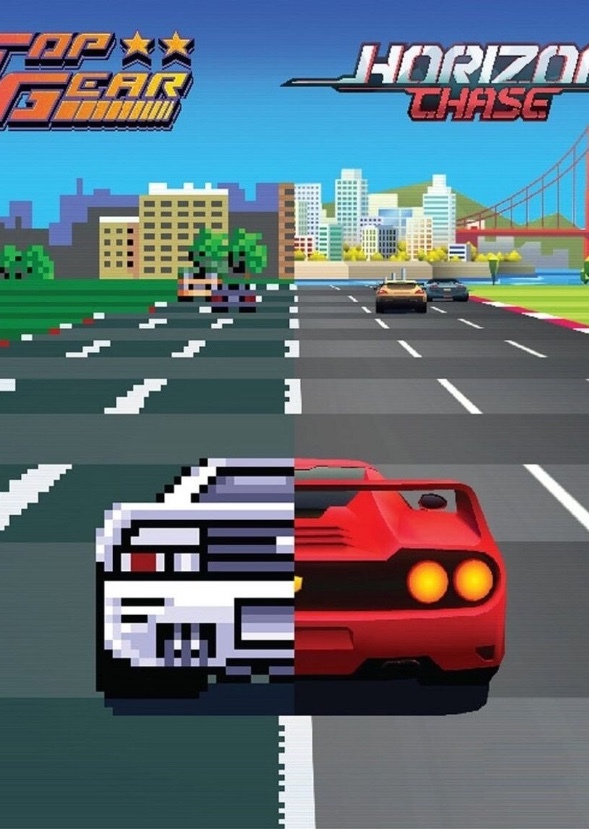
A spiritual successor is a type of follow-up work that isn’t directly connected to the original story or universe, but still carries forward its essence through similar themes, style, and ideas—essentially acting as a sequel “in spirit.” Creators may do this for many reasons: to pay homage while avoiding legal ties, to continue exploring familiar creative ground without risking a direct sequel, or simply because their artistic voice naturally echoes past work. This concept appears across many forms of media, though it’s especially common in video games, where developers may retain the tools and design philosophy of a past project even if they no longer hold the rights to its name or characters. A related concept is the spiritual adaptation, where a work in one medium closely mirrors the tone and structure of another, almost feeling like an unofficial adaptation. Spiritual successors can sometimes feel like rebranded continuations of ideas from older or discontinued franchises, effectively serving as a kind of creative reincarnation. They often overlap with ideas like unofficial counterparts or heavily inspired works, and can even share the same creative teams. While they celebrate and evolve what came before, they stand apart as independent creations, occasionally even contrasting with or redefining the works that inspired them.