
Age: 44
female
Kirsten Caroline Dunst (/ˈkɪərstən/ KEER-stən; born April 30, 1982) is an American actress. She made her acting debut in the anthology film New York Stories (1989) and has since starred in several films and television productions. She has received several awards, including nominations for an Academy Award, a Primetime Emmy Award, and four Golden Globe Awards. Dunst first gained recognition for her role as child vampire Claudia in the horror film Interview with the Vampire (1994), which earned her a Golden Globe nomination for Best Supporting Actress. She also had roles in her youth in Little Women (1994) and Jumanji (1995). Dunst transitioned to leading roles in teen films of 1999, the satires Dick and Drop Dead Gorgeous and Sofia Coppola's drama The Virgin Suicides. After the leading role in the cheerleading film Bring It On (2000), she gained wider attention for her role as Mary Jane Watson in Sam Raimi's Spider-Man trilogy (2002–2007). Her career progressed with a supporting role in Eternal Sunshine of the Spotless Mind (2004), followed by a lead role in Cameron Crowe's tragicomedy Elizabethtown (2005), and as Marie Antoinette in Coppola's Marie Antoinette (2006). In 2011, Dunst starred as a depressed newlywed in Lars von Trier's drama Melancholia, which earned her the Cannes Film Festival Award for Best Actress. In 2015, she played Peggy Blumquist in the second season of the FX series Fargo, earning a Primetime Emmy Award nomination for the role. Dunst had a supporting role in the film Hidden Figures (2016), and leading roles in Coppola's The Beguiled (2017) and in the dark comedy series On Becoming a God in Central Florida (2019), for which she received a third Golden Globe nomination. Dunst earned her fourth nomination for a Golden Globe and first nomination for an Academy Award for her performance in the psychological drama The Power of the Dog (2021). In 2024, she led the dystopian thriller film Civil War. Description above from the Wikipedia article Kirsten Dunst, licensed under CC-BY-SA, full list of contributors on Wikipedia.
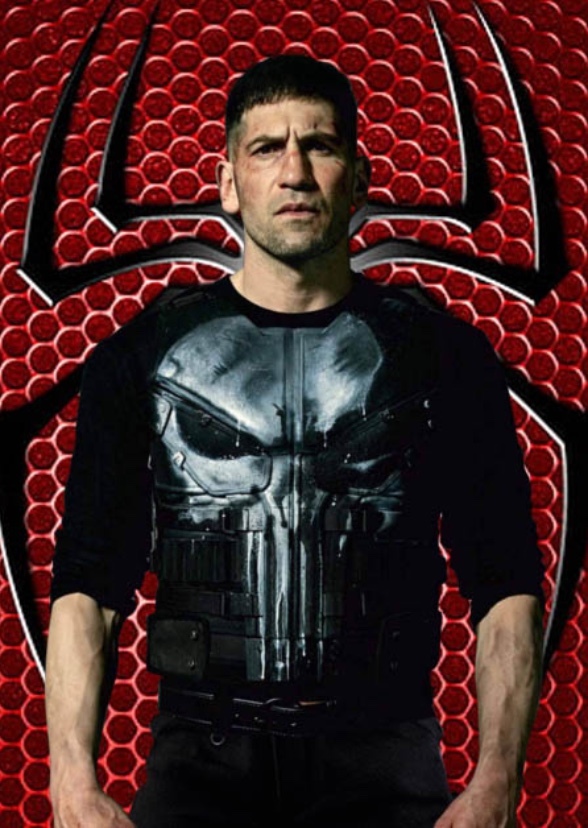
Serving in a war, Burt Kenyon saved his comrade Frank Castle's life. Both Castle and Kenyon assumed this was a life debt. Kenyon was released from service because he was deemed psychologically unstable. Upon returning to the USA, Kenyon took work for the Maggia as Hitman, a villainous analoge to Frank Castle's emerging vigilante identity of the Punisher. On his first assignment, Hitman ran afoul of Spider-Man by taking a contract on the hero's life. Spider-Man passed his tracker onto the Punisher who began to hunt his former friend. During Kenyon's next assignment to assassinate J. Jonah Jameson, Hitman, Punisher, and Spider-Man held a final battle at the Statue of Liberty. When Punisher chose to save an injured Spider-Man and Jameson hanging over the monument's edge over his former ally in similar dire straits, Kenyon released him of his debt to him from the war and let go, falling to his death. Several years later, Hitman was one of the many friends or foes of Spider-Man returned to life by the Jackal using his cloning. Jackal intended to use the return of these people as an incentive to make Spider-Man join his enterprise. Most of the people cloned back to life by the Jackal died shortly afterwards, but Hitman was one of the few survivors, and continued working as a mercenary. Kenyon devised a way to constantly cheat death, by establishing a system in which his consciousness was uploaded to a cloud and then downloaded into a new body whenever necessary.




