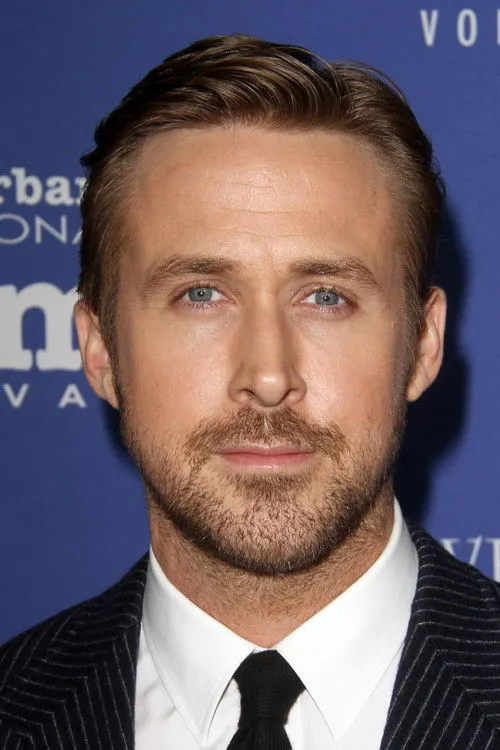
Age: 45
male
Ryan Thomas Gosling (born November 12, 1980) is a Canadian actor. Prominent in independent film, he has also worked in blockbuster films of varying genres, and has accrued a worldwide box office gross of over 1.9 billion USD. He has received various accolades, including a Golden Globe Award, and nominations for two Academy Awards and a BAFTA Award. Born and raised in Canada, he rose to prominence at age 13 for being a child star on the Disney Channel's The Mickey Mouse Club (1993–1995), and went on to appear in other family entertainment programs, including Are You Afraid of the Dark? (1995) and Goosebumps (1996). His first film role was as a Jewish neo-Nazi in The Believer (2001), and he went on to star in several independent films, including Murder by Numbers (2002), The Slaughter Rule (2002), and The United States of Leland (2003). Gosling gained wider recognition and stardom for the 2004 romance film The Notebook. This was followed by starring roles in a string of critically acclaimed independent dramas including Half Nelson (2006), for which he was nominated for the Academy Award for Best Actor. Gosling co-starred in three mainstream films in 2011, the romantic comedy Crazy, Stupid, Love and the action drama Drive, all of which were critical and commercial successes. He then starred in the acclaimed financial satire The Big Short (2015) and the romantic musical La La Land (2016), the latter of which won him the Golden Globe Award for Best Actor and a second Academy Award nomination for Best Actor. Further acclaim followed with the science fiction thriller Blade Runner 2049 (2017) and the biopic First Man (2018). In addition to acting, he made his directorial debut in 2014's Lost River.
Ryan Gosling

Paul Newman
for Paul Newman in Southern Discomfort: The Tennessee Williams Story
Suggested by kamsismith

"Southern Discomfort" chronicles the life of Tennessee Williams, from his early years in Mississippi to his rise as one of the most celebrated playwrights of the 20th century. Born Thomas Lanier Williams III, he struggled with a turbulent relationship with his family, particularly his overbearing father, and sought solace in his writing. As a young man, he navigated the complexities of his sexuality in a time of rigid social norms, which would later influence his groundbreaking works. The film explores Williams's creative process, depicting how his own experiences and relationships fueled the characters and themes in his plays, including "A Streetcar Named Desire," "Cat on a Hot Tin Roof," and "The Glass Menagerie." It delves into the emotional depths of his characters, mirroring his own inner turmoil and longing for connection. As Williams achieves fame and critical acclaim, the film also delves into the darker aspects of his life, including his struggles with addiction and mental health issues. Despite his success, he grapples with loneliness and a constant search for meaning in a world that often rejects his unconventional views.


