
Brachiosaurus (/ˌbrækiəˈsɔːrəs/) is a genus of sauropod dinosaur that lived in North America during the Late Jurassic, about 154–153 million years ago. It was first described by American paleontologist Elmer S. Riggs in 1903 from fossils found in the Colorado River valley in western Colorado, United States. Riggs named the dinosaur Brachiosaurus altithorax; the generic name is Greek for "arm lizard", in reference to its proportionately long arms, and the specific name means "deep chest". Brachiosaurus is estimated to have been between 18 and 21 meters (59 and 69 ft) long; weight estimates range from 28.3 to 58 metric tons (31.2 and 64 short tons). It had a disproportionately long neck, small skull, and large overall size, all of which are typical for sauropods. Atypically, Brachiosaurus had longer forelimbs than hindlimbs, which resulted in a steeply inclined trunk, and a proportionally shorter tail. Brachiosaurus is the namesake genus of the family Brachiosauridae, which includes a handful of other similar sauropods. Most popular depictions of Brachiosaurus are in fact based on Giraffatitan, a genus of brachiosaurid dinosaur from the Tendaguru Formation of Tanzania. Giraffatitan was originally described by German paleontologist Werner Janensch in 1914 as a species of Brachiosaurus, B. brancai, but moved to its own genus in 2009. Three other species of Brachiosaurus have been named based on fossils found in Africa and Europe; two are no longer considered valid, and a third has become a separate genus, Lusotitan. The type specimen of B. altithorax is still the most complete specimen, and only a few other specimens are thought to belong to the genus, making it one of the rarer sauropods of the Morrison Formation. It is regarded as a high browser, possibly cropping or nipping vegetation as high as 9 meters (30 ft) off the ground. Unlike other sauropods, it was unsuited for rearing on its hindlimbs. It has been used as an example of a dinosaur that was most likely ectothermic because of its large size and the corresponding need for sufficient forage, but more recent research suggests it was warm-blooded. Among the most iconic and initially thought to be one of the largest dinosaurs, Brachiosaurus has appeared in popular culture, notably in the 1993 film Jurassic Park.
Brachiosaurus

Dinosaurs / Creatures
for Dinosaurs / Creatures in Sonic in Jurassic Park (Version 5)
Suggested by alecgroskreutz1
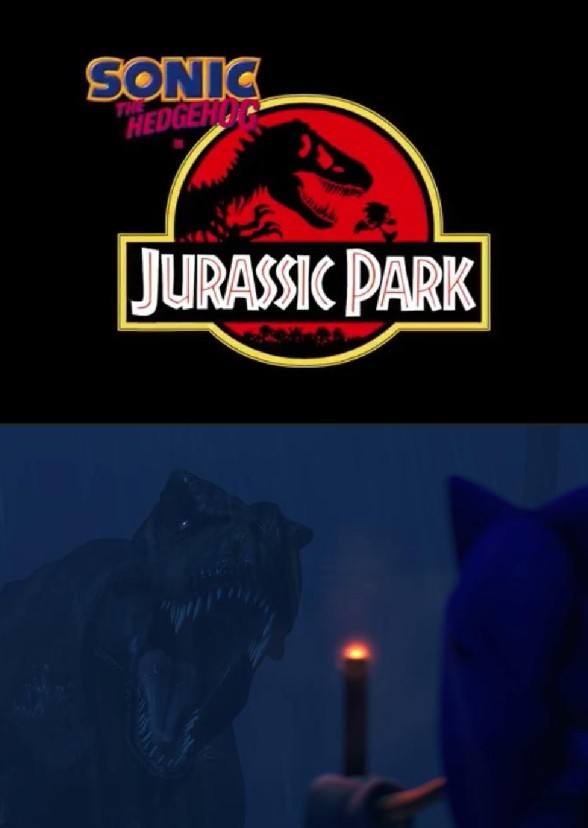
Sonic in Jurassic Park is about when Reed Hammond the second grandson of John Hammond was inviting Sonic, Tails, Tempest, Knuckles, Amy Rose, Tangle, Whisper, Vector, Espio, Vector, Jewel, with Fastidious Beaver, Tom and Megan Wachowski, and Alejandro Hayek, and of course Conker the Squirrel who did survived from get eatting by the Shark and already landed on Isla Nublar from Sonic in Jaws. And also the return of the sam character from Jurassic Park, and The Lost World Jurassic Park Dr. Ian Malcolm to Isla Nublar. Since after 30 years during the incidents on Isla Nublar, Reed was now the new head of both InGen and Jurassic Park, because like his grandfather he build the park, breed dinosaurs, and entertain people, espucally Rexy the T-Rex herself was recaptured after she was escaped and roamed free on the island 30 years ago.




