
Smilodon (commonly known as saber-toothed tiger) is a genus of the extinct machairodont subfamily of the felids. It is one of the most famous prehistoric mammals and the best known saber-toothed cat. Although commonly known as the saber-toothed tiger, it was not closely related to the tiger or other modern cats. Smilodon lived in the Americas during the Pleistocene epoch (2.5 mya-10,000 years ago). The genus was named in 1842 based on fossils from Brazil; the generic name means "scalpel" or "two-edged knife" combined with "tooth". Three species are recognized today: S. gracilis, S. fatalis, and S. populator. The two latter species were probably descended from S. gracilis, which itself probably evolved from Megantereon. The hundreds of individuals obtained from the La Brea Tar Pits in Los Angeles constitute the largest collection of Smilodon fossils. Overall, Smilodon was more robustly built than any extant cat, with particularly well-developed forelimbs and exceptionally long upper canine teeth. Its jaw had a bigger gape than that of modern cats, and its upper canines were slender and fragile, being adapted for precision killing. S. gracilis was the smallest species at 55 to 100 kg (120 to 220 lb) in weight. S. fatalis had a weight of 160 to 280 kg (350 to 620 lb) and height of 100 cm (39 in). Both of these species are mainly known from North America, but remains from South America have also been attributed to them. S. populator from South America was the largest species, at 220 to 436 kg (485 to 961 lb) in weight and 120 cm (47 in) in height, and was among the largest known felids. The coat pattern of Smilodon is unknown, but it has been artistically restored with plain or spotted patterns. In North America, Smilodon hunted large herbivores such as bison and camels, and it remained successful even when encountering new prey species in South America. Smilodon is thought to have killed its prey by holding it still with its forelimbs and biting it, but it is unclear in what manner the bite itself was delivered. Scientists debate whether Smilodon had a social or a solitary lifestyle; analysis of modern predator behavior as well as of Smilodon's fossil remains could be construed to lend support to either view. Smilodon probably lived in closed habitats such as forests and bush, which would have provided cover for ambushing prey. Smilodon died out at the same time that most North and South American megafauna disappeared, about 10,000 years ago. Its reliance on large animals has been proposed as the cause of its extinction, along with climate change and competition with other species, but the exact cause is unknown.
Smilodon

Vertebrate Embryos
for Vertebrate Embryos in Sonic in Jurassic Park (Version 4)
Suggested by alecgroskreutz1
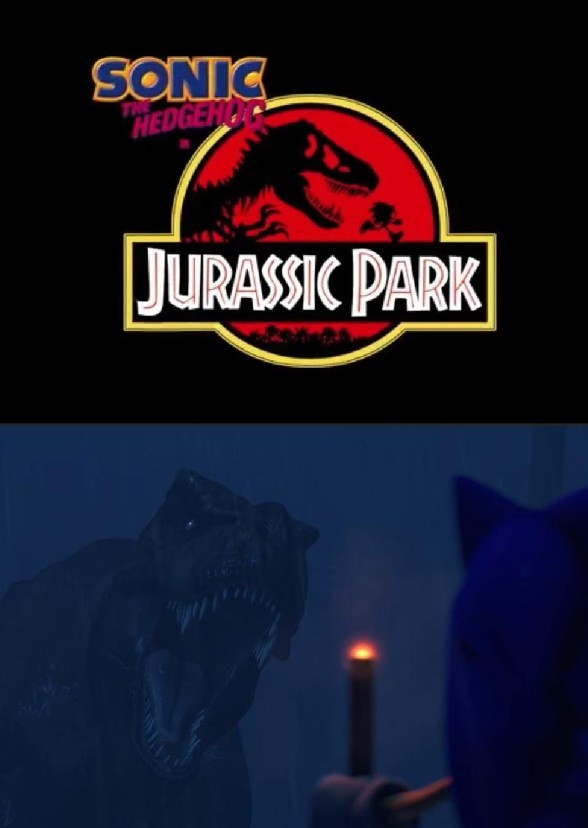
Sonic in Jurassic Park is about when Reed Hammond the second grandson of John Hammond was inviting Sonic, Tails, Tempest, Knuckles, Amy Rose, Tangle, Whisper, Vector, Espio, Charmy, with Fastidious Beaver, Tom and Megan Wachowski, and Alejandro Hayek, and of course Conker the Squirrel who did survived from get eatting by the Shark and already landed on Isla Nublar from Sonic in Jaws. And also the return of the sam character from Jurassic Park, and The Lost World Jurassic Park Dr. Ian Malcolm to Isla Nublar. Since after 30 years during the incidents on Isla Nublar, Reed was now the new head of both InGen and Jurassic Park, because like his grandfather he build the park, breed dinosaurs, and entertain people, espucally Rexy the T-Rex herself was recaptured after she was escaped and roamed free on the island 30 years ago.




