
Deinonychus (/daɪˈnɒnɪkəs/[1] dy-NON-ih-kəs; from Ancient Greek δεινός (deinós) 'terrible', and ὄνυξ (ónux), genitive ὄνυχος (ónukhos) 'claw') is a genus of dromaeosaurid theropod dinosaur with one described species, Deinonychus antirrhopus. This species, which could grow up to 3.4 meters (11 ft) long, lived during the early Cretaceous Period, about 115–108 million years ago (from the mid-Aptian to early Albian stages). Fossils have been recovered from the U.S. states of Montana, Utah, Wyoming, and Oklahoma, in rocks of the Cloverly Formation and Antlers Formation, though teeth that may belong to Deinonychus have been found much farther east in Maryland. Paleontologist John Ostrom's study of Deinonychus in the late 1960s revolutionized the way scientists thought about dinosaurs, leading to the "dinosaur renaissance" and igniting the debate on whether dinosaurs were warm-blooded or cold-blooded. Before this, the popular conception of dinosaurs had been one of plodding, reptilian giants. Ostrom noted the small body, sleek, horizontal posture, ratite-like spine, and especially the enlarged raptorial claws on the feet, which suggested an active, agile predator. "Terrible claw" refers to the unusually large, sickle-shaped talon on the second toe of each hind foot. The fossil YPM 5205 preserves a large, strongly curved ungual. In life, archosaurs have a horny sheath over this bone, which extends the length. Ostrom looked at crocodile and bird claws and reconstructed the claw for YPM 5205 as over 120 millimetres (4.7 in) long. The species name antirrhopus means "counter balance", which refers to Ostrom's idea about the function of the tail. As in other dromaeosaurids, the tail vertebrae have a series of ossified tendons and super-elongated bone processes. These features seemed to make the tail into a stiff counterbalance, but a fossil of the very closely related Velociraptor mongoliensis (IGM 100/986) has an articulated tail skeleton that is curved laterally in a long S-shape. This suggests that, in life, the tail could bend to the sides with a high degree of flexibility. In both the Cloverly and Antlers formations, Deinonychus remains have been found closely associated with those of the ornithopod Tenontosaurus. Teeth discovered associated with Tenontosaurus specimens imply they were hunted, or at least scavenged upon, by Deinonychus.
Deinonychus

Vertabrate Embryos
for Vertabrate Embryos in Sonic in Jurassic Park (Version 4)
Suggested by alecgroskreutz1
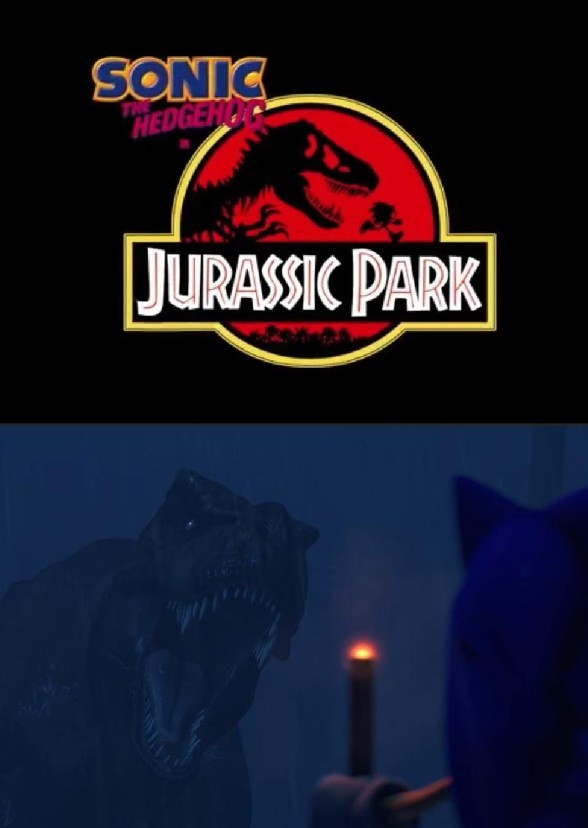
Sonic in Jurassic Park is about when Reed Hammond the second grandson of John Hammond was inviting Sonic, Tails, Tempest, Knuckles, Amy Rose, Tangle, Whisper, Vector, Espio, Charmy, with Fastidious Beaver, Tom and Megan Wachowski, and Alejandro Hayek, and of course Conker the Squirrel who did survived from get eatting by the Shark and already landed on Isla Nublar from Sonic in Jaws. And also the return of the sam character from Jurassic Park, and The Lost World Jurassic Park Dr. Ian Malcolm to Isla Nublar. Since after 30 years during the incidents on Isla Nublar, Reed was now the new head of both InGen and Jurassic Park, because like his grandfather he build the park, breed dinosaurs, and entertain people, espucally Rexy the T-Rex herself was recaptured after she was escaped and roamed free on the island 30 years ago.




