
Age: 87
male
Sir Ian Murray McKellen (born 25 May 1939) is an British and American actor. He has played roles on the screen and stage in genres ranging from Shakespearean dramas and modern theatre to popular fantasy and science fiction. He is regarded as a British cultural icon and was knighted by Queen Elizabeth II in 1991. He has received numerous accolades, including a Tony Award, six Olivier Awards, and a Golden Globe Award, as well as nominations for two Academy Awards, five BAFTA Awards and five Emmy Awards. McKellen made his stage debut in 1961 at the Belgrade Theatre as a member of its repertory company, and in 1965 made his first West End appearance. In 1969, he was invited to join the Prospect Theatre Company to play the lead parts in Shakespeare's Richard II and Marlowe's Edward II. In the 1970s, McKellen became a stalwart of the Royal Shakespeare Company and the National Theatre of Great Britain. He has earned five Olivier Awards for his roles in Pillars of the Community (1977), The Alchemist (1978), Bent (1979), Wild Honey (1984), and Richard III (1995). McKellen made his Broadway debut in The Promise (1965). He received the Tony Award for Best Actor in a Play for his role as Antonio Salieri in Amadeus (1980). He was further nominated for Ian McKellen: Acting Shakespeare (1984). He returned to Broadway in Wild Honey(1986), Dance of Death (1990), No Man's Land (2013), and Waiting for Godot (2013), the latter two being a joint production with Patrick Stewart. McKellen achieved worldwide fame for his film roles, including the titular King in Richard III(1995), James Whale in Gods and Monsters (1998), Magneto in the X-Men films, Cogsworth in Beauty and the Beast (2017) and Gandalf in The Lord of the Rings (2001–2003) and The Hobbit (2012–2014) trilogies. Other notable film roles include A Touch of Love (1969), Plenty (1985), Six Degrees of Separation (1993), Restoration (1995), Flushed Away (2006), Mr. Holmes (2015), and The Good Liar (2019). McKellen came out as gay in 1988, and has since championed LGBT social movements worldwide. He was awarded the Freedom of the City of London in October 2014. McKellen is a cofounder of Stonewall, an LGBT rights lobby group in the United Kingdom, named after the Stonewall riots. He is also patron of LGBT History Month, Pride London, Oxford Pride, GayGlos, LGBT Foundation and FFLAG. Description above from the Wikipedia article Ian McKellen, licensed under CC-BY-SA, full list of contributors on Wikipedia.
Ian McKellen

Ignitus the Flame Guardian
for Ignitus the Flame Guardian in Shadow the Hedgehog (Vivendi Universal)
Suggested by jasonhansen
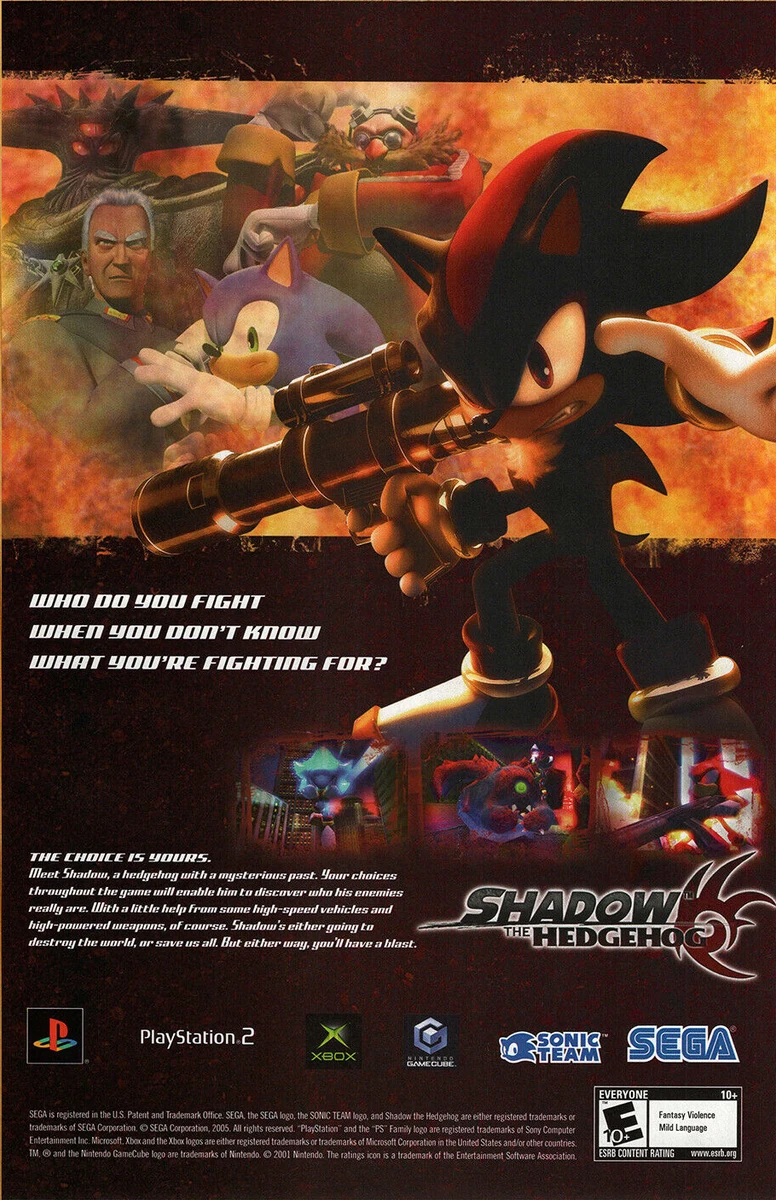
Shadow the Hedgehog is a 2005 platform game developed by Sega Studios USA and Radical Entertainment and published by Sega and Vivendi Universal Games. It is a spinoff from the Sonic the Hedgehog series starring the character Shadow. It follows the amnesiac Shadow's attempts to learn about his past during an alien invasion. Gameplay is similar to previous Sonic games, featuring fast-paced platforming and ring collecting, but introduces third-person shooter and nonlinear elements. Shadow uses a variety of weapons to defeat enemies and complete missions that determine the plot and playable levels. Sega Studios USA and Vivendi Universal chose to make a game featuring Shadow to capitalize on his popularity and resolve plot mysteries that began with his introduction in Sonic Adventure 2 (2001). Shadow the Hedgehog was directed by Christopher Nolan and Takuma Iizuka, produced by Lauren Shuler Donner, Akiva Goldsman and Lorenzo di Bonaventura and written by David S. Goyer and David Koepp, with music by Brian Tyler and Klaus Badelt. Nolan and Iizuka strove to attract an older audience; Shadow's character allowed the team to use a darker tone and elements otherwise considered inappropriate for the series. Shadow the Hedgehog was revealed at the March 2005 Walk of Game event. It was released for the GameCube, PlayStation 2, and Xbox in North America and Europe in November 2005 and in Japan in December. It received generally unfavorable reviews from critics, who criticized its controls, mature themes, level design, and addition of guns and other weapons to traditional Sonic gameplay. However, some praised its replay value, and the game was commercially successful, selling 2.06 million copies by March 2007. Over time, the game has developed a cult following.

