
Age: 50
male
Cillian Murphy (born May 25, 1976) is an Irish actor. He made his professional debut in Enda Walsh's 1996 play Disco Pigs, a role he later reprised in the 2001 screen adaptation. His early notable film credits include the horror film 28 Days Later (2002), the dark comedy Intermission (2003), the thriller Red Eye (2005), the Irish war drama The Wind That Shakes the Barley (2006), and the science fiction thriller Sunshine (2007). He played a transgender Irish woman in the comedy-drama Breakfast on Pluto (2005), which earned him a Golden Globe Award nomination. Murphy began collaborating with filmmaker Christopher Nolan in 2005, playing Dr. Jonathan Crane / Scarecrow in The Dark Knight Trilogy (2005–2012) as well as appearing in Inception (2010) and Dunkirk (2017) and portraying the lead role of J. Robert Oppenheimer in the biographical epic Oppenheimer (2023). By the year 2023, Murphy has already worked with Nolan for around 20 years and six films. He also gained prominence for his role as Tommy Shelby in the BBC period drama series Peaky Blinders (2013–2022) and for starring in the horror sequel A Quiet Place Part II (2020). In 2011, Murphy won the Irish Times Theatre Award for Best Actor and Drama Desk Award for Outstanding Solo Performance for the one-man play Misterman. In 2020, The Irish Times named him one of the greatest Irish film actors.
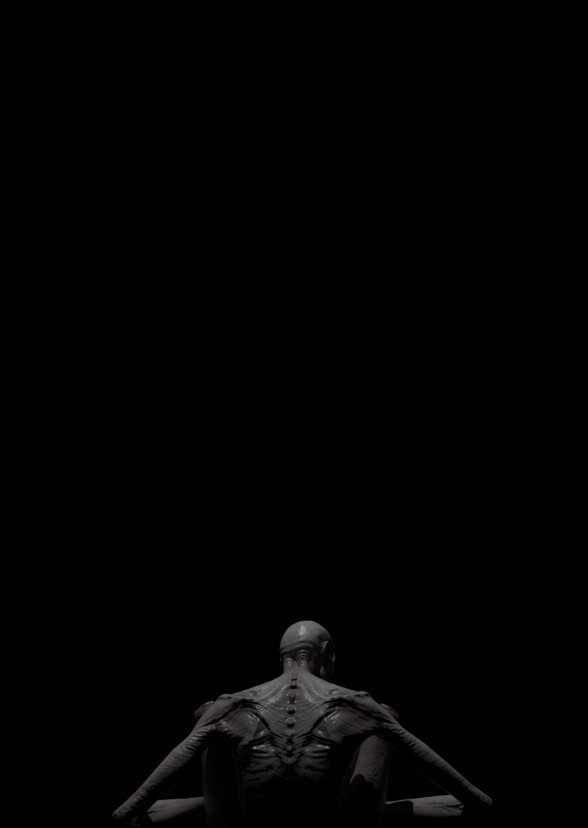
Deep within a classified research facility operated by a covert global organization, an anomaly known only as SCP-096 is contained in total isolation. Humanoid in shape, pale and emaciated, the entity is completely passive—so long as no human ever sees its face. That rule is broken during a routine satellite reconnaissance mission in the Arctic Circle, when a civilian hiker unknowingly captures SCP-096’s face in a long-range photograph. Within minutes, alarms ignite across the facility. SCP-096 begins to scream. What follows is not chaos—but inevitability. Once its face is viewed, SCP-096 enters a state of extreme psychological distress before relentlessly hunting the viewer, no matter the distance, terrain, or defenses between them. Walls, vehicles, and human resistance mean nothing. The entity does not stop. It does not slow. And it does not fail. As a rapid-response containment team races to intercept SCP-096 before it reaches its target, they begin to uncover disturbing truths: SCP-096 is not acting out of rage, but terror—driven by a compulsion it cannot control. Each breach leaves behind unrecognizable carnage, forcing the team to question whether containment is even possible… or ethical. The mission escalates when a catastrophic containment error exposes multiple personnel to SCP-096’s face via corrupted body-cam footage. With several victims now marked, the organization must make an impossible decision: sacrifice innocent lives to preserve secrecy, or attempt an untested procedure that could permanently alter—or destroy—the entity. As SCP-096 tears through military strongholds and urban infrastructure with horrifying precision, the film shifts from survival horror to existential dread. The closer the creature comes to its final target, the clearer it becomes that SCP-096 is not a monster to be killed—but a tragedy to be understood. The final act traps survivors in a sealed underground facility as SCP-096 breaches containment one last time. In a desperate bid to end the cycle, a scientist willingly exposes herself to SCP-096’s face, drawing it into a controlled environment where its nature—and origin—are finally revealed. The film ends not with victory, but silence. SCP-096 is recontained. The world remains unaware. And the rule still stands: Do not look at its face.


