Age: 74
male
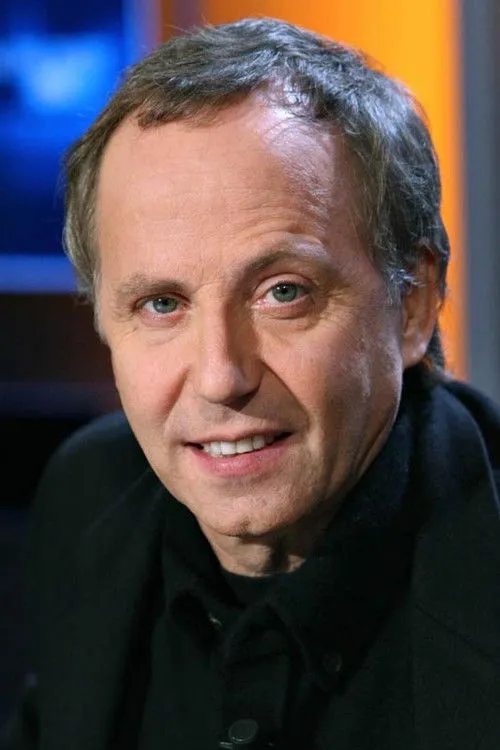
Fabrice Luchini was born in Île-de-France, Paris, into an Italian immigrant family, who were fruit and vegetable vendors. He grew up around the neighbourhood of Goutte d'Or in Paris's 18th arrondissement. When he was 13, his mother apprenticed him to a hairdresser in a trendy parlor on Avenue Matignon, where he would take the name of the hairdresser's son, Fabrice, in place of his real name, Robert. At the same time he developed a great interest for literature (Balzac, Flaubert, Proust). His passion for soul music (James Brown) made him a regular of discothèques. This is where he met Philippe Labro, who gave him his first role in Tout peut arriver in 1969. He then studied acting under Jean-Laurent Cochet. However, it was his collaboration with Éric Rohmer that would make him popular for Le Genou de Claire in 1970, in which he played a small role as an adolescent. He appeared in Rohmer's Perceval le Gallois, and Les Nuits de la pleine lune, and in films directed by Nagisa Oshima, Pierre Zucca, Claude Lelouch, Cedric Klapisch, Édouard Molinaro. Thanks to Jean-Laurent Cochet, he later discovered theater, his true passion, which he described as "the only place where life is expressed... something that no school will ever teach". However, it was his role in La Discrète, directed by Christian Vincent in 1990, that made him well-known to the general public. He divides his work between cinema and theater, where since 1980 he has had considerable success with readings from the texts of La Fontaine, Nietzsche, Céline's Voyage au bout de la nuit, Paul Valéry and Roland Barthes. Description above from the Wikipedia article Fabrice Luchini, licensed under CC-BY-SA, full list of contributors on Wikipedia
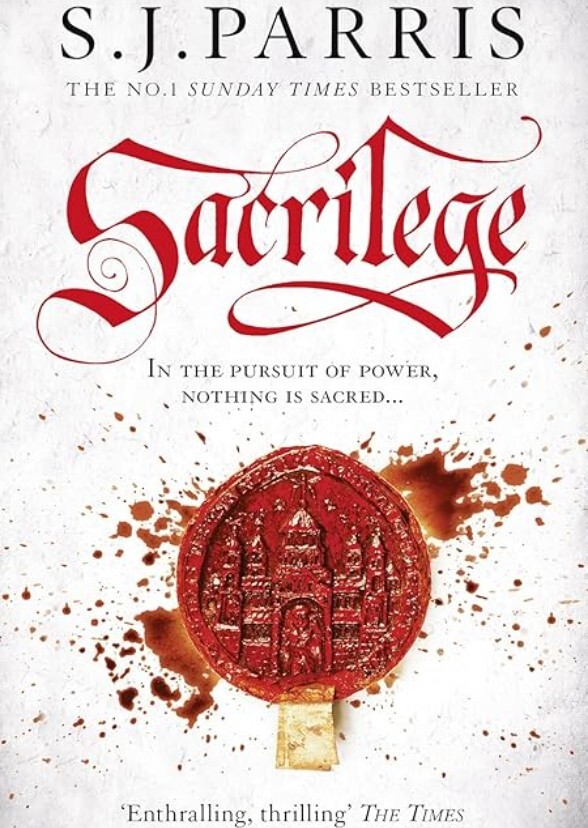
A gripping historical thriller set in sixteenth-century England and centered on the highly secretive cult of Saint Thomas Becket, the twelfth-century archbishop murdered in Canterbury Cathedral. London, summer of 1584: Radical philosopher, ex-monk, and spy Giordano Bruno suspects he is being followed by an old enemy. He is shocked to discover that his pursuer is in fact Sophia Underhill, a young woman with whom he was once in love. When Bruno learns that Sophia has been accused of murdering her husband, a prominent magistrate in Canterbury, he agrees to do anything he can to help clear her name. In the city that was once England's greatest center of pilgrimage, Bruno begins to uncover unsuspected secrets that point to the dead man being part of a larger and more dangerous plot in the making. He must turn his detective's eye on history—on Saint Thomas Becket, the twelfth-century archbishop murdered in Canterbury Cathedral, and on the legend surrounding the disappearance of his body—in order to solve the crime. As Bruno's feelings for Sophia grow more intense, so does his fear that another murder is about to take place—perhaps his own. But more than Bruno's life is at stake in this vividly rendered, impeccably researched, and addictively page-turning whodunit—the stability of the kingdom hangs in the balance as Bruno hunts down a brutal murderer in the shadows of England's most ancient cathedral.


