Age: 96
male
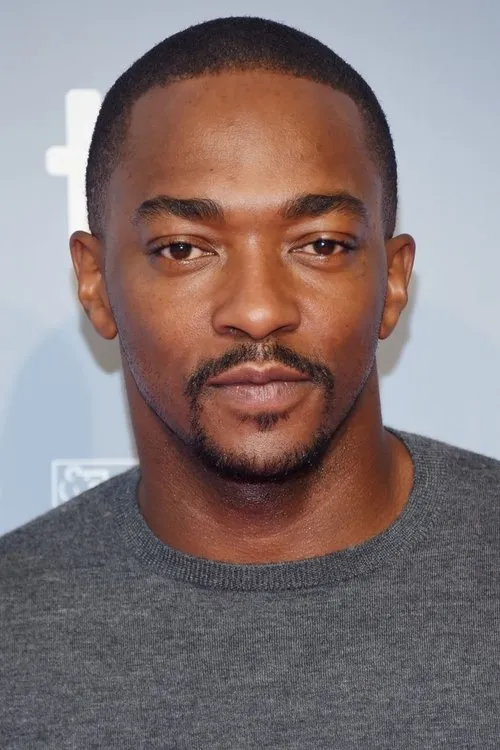
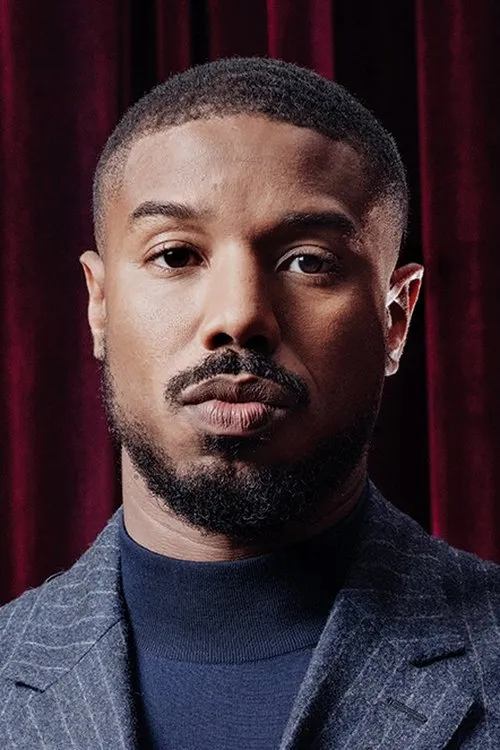
Berry Gordy III (born November 28, 1929), known professionally as Berry Gordy Jr., is an American retired record executive, record producer, songwriter, film producer and television producer. He is best known as the founder of the Motown record label and its subsidiaries, which was the highest-earning African-American business for decades. As a songwriter, Gordy composed or co-composed a number of hits including "Lonely Teardrops" and "That's Why" (Jackie Wilson), "Shop Around" (the Miracles), and "Do You Love Me" (the Contours), all of which topped the US R&B charts, as well as the international hit "Reet Petite" (Jackie Wilson). As part of the Corporation, he wrote many hit songs for the Jackson 5, including "I Want You Back" and "ABC". As a record producer, he launched the Miracles and signed acts like the Supremes, Marvin Gaye, the Temptations, the Four Tops, Gladys Knight & the Pips, and Stevie Wonder. He was known for carefully directing the public image, dress, manners, and choreography of his acts. Gordy was inducted into the Rock and Roll Hall of Fame in 1988, awarded the National Medal of Arts by President Barack Obama in 2016, and the Kennedy Center Honors in 2021. In 2022, he was inducted into the Black Music & Entertainment Walk of Fame. Berry Gordy III (also known as Berry Gordy Jr.) was the seventh of eight children (Fuller, Esther, Anna, Loucye, George, Gwen, Berry and Robert), born on November 28, 1929, in Detroit, to middle-class parents, Berry Gordy II (also known as Berry Gordy Sr.) and Bertha Fuller Gordy, who had relocated to Detroit from Oconee, Washington County, Georgia, in 1922. His grandfather, named Berry Gordy I, was the son of James Gordy, a white plantation owner in Georgia, and one of his slaves. Berry I's half-brother, James (son of the elder James and his legal wife), was the grandfather of President Jimmy Carter. Berry Gordy II was led to Detroit both by the job opportunities offered by the booming automotive businesses, and also by worries over the atmosphere in the American South where black men were lynched "with chilling regularity by the Ku Klux Klan"; in the first twenty years of the twentieth century, 1,502 lynchings were reported, most in Southern states. Gordy's father opened a grocery store, owned a plastering and carpentry business, and a printing shop. While his brothers Fuller and George were happy to work at jobs their father assigned to them in construction and printing, Berry and Robert, the younger boys, were less inclined to follow that path. Both Robert and Berry liked dancing and music, but Berry's greatest interest was in boxing. Gordy dropped out of Northeastern High School in the eleventh grade to become a professional boxer in hopes of becoming rich quickly; he boxed professionally until 1950, when he was drafted by the United States Army in 1951 for service in the Korean War. Arriving in Korea in May 1952, Gordy was first assigned to the 58th Field Artillery Battalion, 3rd Infantry Division, near Panmunjom. He later became a chaplain's assistant, driving a jeep and playing the organ at religious services at the front. His tour in the Korean War was completed in April 1953. He obtained a GED, which is equivalent to a high school diploma. ... Source: Article "Berry Gordy" from Wikipedia in English, licensed under CC-BY-SA 3.0.

Rocky Balboa is a kind-hearted and uneducated club fighter from Philadelphia whose main source of income is collecting debts for local crime boss, Gazzo. Despite having talent, nobody believes that Rocky can make to the pros. He falls in love with his best friend's sister and everything seems to be going okay. But things just get better as the reigning champion's opponent gets injured and Rocky is chosen to take his place because of his nick-name, "the Italian Stallion." Rocky sees it as a chance to live his dream and go the distance with the heavyweight champion of the world.