
Age: 66
male
Hugh John Mungo Grant (born 9 September 1960) is an English actor and film producer. He has received a Golden Globe Award, a BAFTA, and an Honorary César. His movies have also earned more than $2.4 billion from 25 theatrical releases worldwide. Grant achieved international stardom after appearing in Richard Curtis's sleeper hit Four Weddings and a Funeral (1994). He used this breakthrough role as a frequent cinematic persona during the 1990s to deliver comic performances in mainstream films like Mickey Blue Eyes (1999) and Notting Hill (1999). By the turn of the century, he had established himself as a leading man skilled with a satirical comic talent. Since the 2000s, Grant has expanded his oeuvre with critically acclaimed turns as a cad in Bridget Jones's Diary (2001), About A Boy (2002), Love Actually (2003), and American Dreamz (2006). Within the film industry, Grant is cited as an anti-movie star who approaches his roles like a character actor, with the ability to make acting look effortless. Hallmarks of his comic skills include a nonchalant touch of irony/sarcasm and studied physical mannerisms as well as his precisely-timed dialogue delivery and facial expressions. The entertainment media's coverage of Grant's life off the big screen has often overshadowed his work as a thespian. He has been vocal about his disrespect for the profession of acting, his disdain towards the culture of celebrity, and hostility towards the media. In a career spanning 20 years, Grant has repeatedly claimed that acting is not a true calling but just a job he fell into.
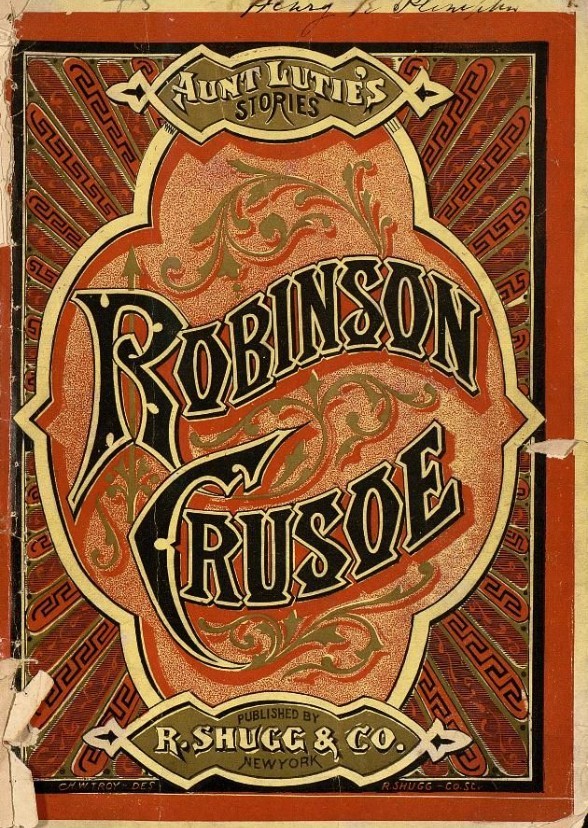
Robinson Crusoe is an Englishman of York in 17th century. Encouraged by his father to study law, Crusoe expresses his wish to go to sea instead. Initially, Robinson is committed to obeying his father, but he eventually embarks on a ship bound for London with a friend. When a storm causes the near deaths of Crusoe and his friend, Crusoe still goes on to set himself up as merchant on a ship leaving London. This trip is financially successful, and Crusoe plans another, leaving his early profits in the care of a friendly widow. The ship is seized by Moorish pirates, and Crusoe is enslaved to a potentate in Sallee. While on a fishing expedition, he and a slave boy break free and sail down the African coast. A kindly Portuguese captain picks them up, buys the slave boy from Crusoe, and takes Crusoe to Brazil. In Brazil, Crusoe establishes himself as a plantation owner and soon becomes successful. Eager for slave labor and its economic advantages, he embarks on a slave-gathering expedition to West Africa but ends up shipwrecked off of the coast of Trinidad. Crusoe is onlyone survivor. Returns to the wreck for guns, powder, food, finds goats, build a shelter. 1660, he is ill, hallucinates that an angel visits, warning him to repent. Drinking tobacco-steeped rum, Crusoe realizes that God has delivered him from his earlier sins. He saved native and named him Friday. On December 19, 1686, Crusoe boards the ship to return to England. His widow friend has kept Crusoe’s money safe.



