Age: 47
male
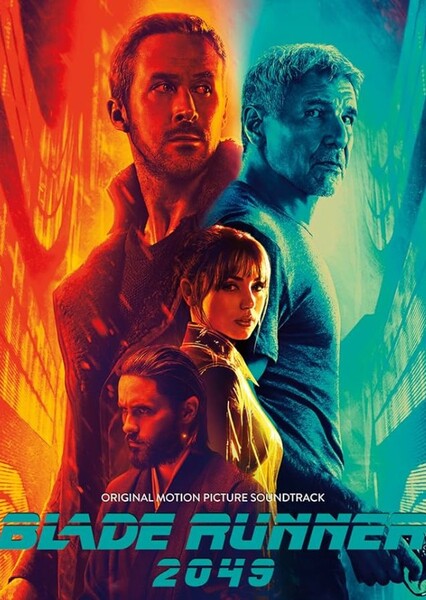
Benjamin Mark Lasker Wallfisch (born 7 August 1979) is a British composer, conductor, and music producer known for his work on film scores. He has contributed to over 50 feature films since the mid-2000s, including notable works like Blade Runner 2049, Shazam!, It, It Chapter Two, The Invisible Man, Hidden Figures, A Cure for Wellness, The Flash, Twisters, Alien: Romulus, Kraven the Hunter and Predator: Killer of Killers. His work has earned recognition, including a joint nomination with Pharrell Williams and Hans Zimmer for Best Original Score at the 74th Golden Globe Awards for Hidden Figures, as well as nominations for the BAFTA Award for Best Film Music and the Grammy Award for Best Score Soundtrack for Visual Media for Blade Runner 2049. In 2020, Wallfisch was nominated for Film Composer of the Year for the second consecutive year at the World Soundtrack Awards. Wallfisch's film compositions have contributed to movies with a combined worldwide box office revenue of over $2.5 billion. In 2019, Variety acknowledged his achievements by including him in their Billion Dollar Composer series. Description above from the Wikipedia article Benjamin Wallfisch, licensed under CC-BY-SA, full list of contributors on Wikipedia.
Benjamin Wallfisch

Soundtrack Composer
for Soundtrack Composer in Reverse Flash
Suggested by lllaryn
Set centuries before Barry Allen becomes the Flash, the film follows Eobard Thawne, a brilliant but obsessive scientist who becomes the first being to master time travel and breach the multiverse using the Negative Speed Force. Long before the idea of “The Flash” exists, Thawne pushes beyond time itself, tearing open realities and exploring unstable universes purely to understand and control creation. His experiments trigger catastrophic ripple effects across the multiverse, drawing the attention of an alternate-reality Kid Flash (Wally West)—a hardened survivor whose world collapses as a direct consequence of Thawne’s actions. The two speedsters clash across fractured timelines and dying universes, not as hero versus villain, but as opposing philosophies: preservation versus domination. As Thawne continues his reckless exploration, he unknowingly plants the paradox seed that will one day lead to Barry Allen’s creation—making Thawne the indirect architect of his own future nemesis. By the end, Thawne embraces his destiny as a force beyond morality, setting the stage for his eventual obsession with the Flash, while cementing himself as the originator of multiversal chaos in the alternate multiversal dimensional reality (in DCEU)