
Age: 43
female
Lupita Amondi Nyong'o (born 1 March 1983) is a Kenyan-Mexican actress and author. She began her career in Hollywood as a production assistant. In 2008, she made her acting debut with the short film East River and subsequently returned to Kenya to star in the television series Shuga (2009–2012). In 2009, she wrote, produced and directed the documentary In My Genes. She then pursued a master's degree in acting from the Yale School of Drama. She had her first feature film role as Patsey in 12 Years a Slave (2013), for which she received critical acclaim and won several awards, including the Academy Award for Best Supporting Actress. She became the first Kenyan and Mexican actress to win an Academy Award. She made her Broadway debut as a teenage orphan in the play Eclipsed (2015), for which she was nominated for a Tony Award for Best Actress in a Play. She went on to perform a motion capture role as Maz Kanata in the Star Wars sequel trilogy (2015–2019) and a lead voice role as Raksha in The Jungle Book (2016). Her career progressed with her role as Nakia in the Marvel Cinematic Universe superhero film Black Panther (2018) and her starring role in Jordan Peele's critically acclaimed horror film Us (2019). In addition to acting, she supports historic preservation. She is vocal about preventing sexual harassment and working for women's and animal rights. In 2014, she was named the most beautiful woman by People. She has also written a children's book named Sulwe (2019), which became a number-one New York Times Best-Seller. Also in 2019, she narrated the Discovery Channel docu-series Serengeti, which earned her a Primetime Emmy Award nomination for Outstanding Narrator. She was named among Africa's "50 Most Powerful Women" by Forbes in 2020. Description above is from the Wikipedia article Lupita Nyong'o, licensed under CC-BY-SA, full list of contributors on Wikipedia.
Lupita Nyong'o

The Angel (interpreting angel)
for The Angel (interpreting angel) in Revelation: The Final Vision
Suggested by mr95
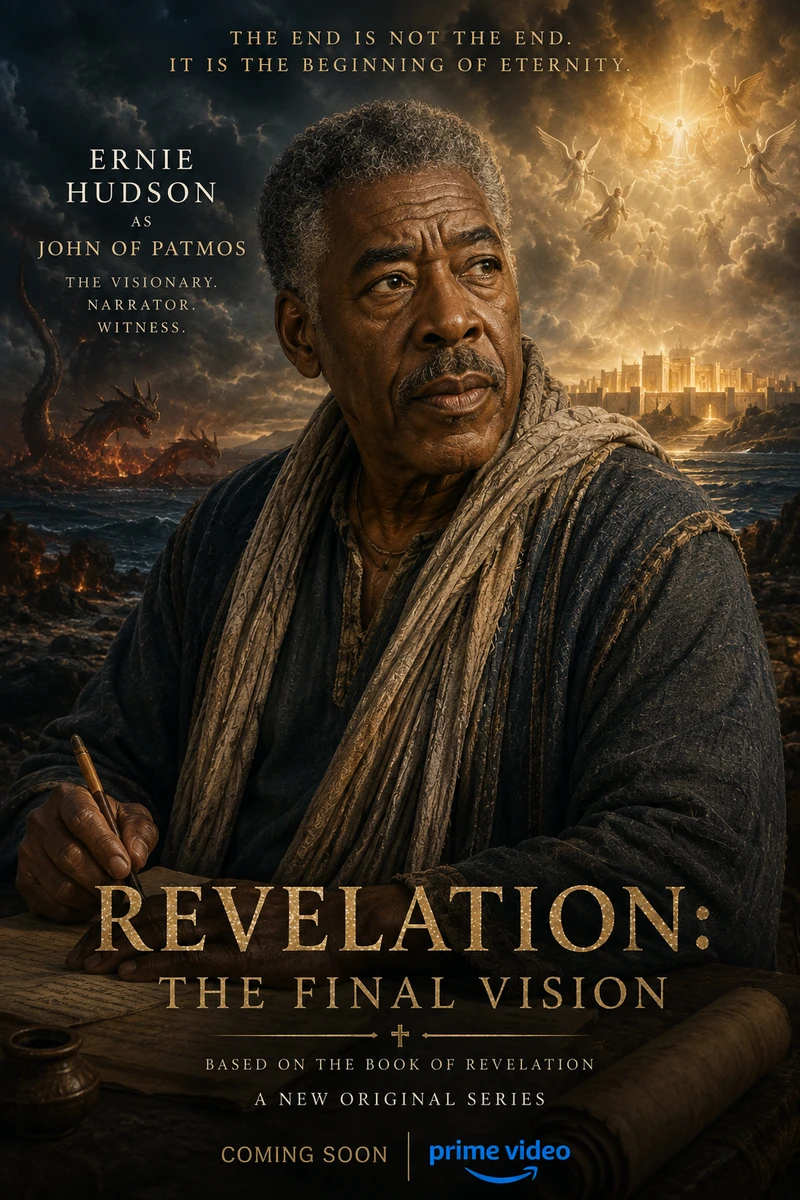
The last book of the Bible. The most visually extraordinary. The most contested. The most necessary. A faithful, visually ambitious adaptation of the Revelation to John — approached as what the text presents itself as: the apocalyptic vision of John of Patmos, written to seven specific churches in Asia Minor under Roman persecution, using the specific visual language of Jewish apocalyptic literature to communicate hope to a persecuted community. The series takes the Revelation seriously as both historical document and prophetic vision — grounding it in the specific historical context of Domitian's Rome while honoring its eschatological scope. Structured in two seasons following the text's own structure: Season 1 covers the letters to the seven churches, the throne room vision, the seals, and the trumpets. Season 2 covers the woman and the dragon, the beast, the bowls of wrath, Babylon's fall, the final battle, and the New Jerusalem. The visual language draws from ancient Near Eastern imagery, Roman imperial iconography, and the specific visual metaphors of Jewish apocalyptic — rendered with the conviction that these images were chosen for their specific meaning and deserve to be taken seriously. Season 1 — The Vision Begins Patmos. The throne room. The letters to the seven churches. The scroll with seven seals. The four living creatures. The martyrs under the altar. Season 2 — The End and the Beginning The woman clothed with the sun. The beast. Babylon's fall. The rider on the white horse. The thousand years. The new heaven and new earth. The New Jerusalem descending. 'Come, Lord Jesus.'

