
Age: 68
male
Steven Vincent Buscemi (born December 13, 1957) is an American actor. His early credits consist of significant roles in independent film productions such as Parting Glances (1986), Mystery Train (1989), In the Soup (1992), and his breakout role as Mr. Pink in Quentin Tarantino's Reservoir Dogs (1992). Buscemi has appeared in both independent and mainstream films, including Living in Oblivion (1995), Desperado (1995), Con Air (1997), Armageddon (1998), Ghost World (2001), Big Fish (2003), and The Death of Stalin (2017). Buscemi has often collaborated with the Coen brothers, appearing in Miller's Crossing (1990), Fargo (1996), and The Big Lebowski (1998). He also appeared in supporting or cameo roles in many films with Adam Sandler, including Airheads (1994), Billy Madison (1995), The Wedding Singer (1998), Mr. Deeds (2002), and Hubie Halloween (2020). He provided voice acting roles in the animated films Monsters, Inc. (2001), The Boss Baby (2017), and Transformers One (2024). Buscemi also directed the films Trees Lounge (1996), Animal Factory (2000), and Interview (2007). Buscemi has also had an extensive career in television, notably starring in the lead role of Enoch "Nucky" Thompson in the HBO series Boardwalk Empire (2010–2014). His performance earned him two Screen Actors Guild Awards, a Golden Globe and two nominations for a Primetime Emmy Award. His other television roles include Lonesome Dove (1989), The Sopranos (2004, 2006), 30 Rock (2007–2013), Horace and Pete (2016), and Miracle Workers (2019–2023).
Steve Buscemi

Four eyes
for Four eyes in Quentin Tarantino DC Easy Company (1999)
Suggested by lucasmartinssaraiva
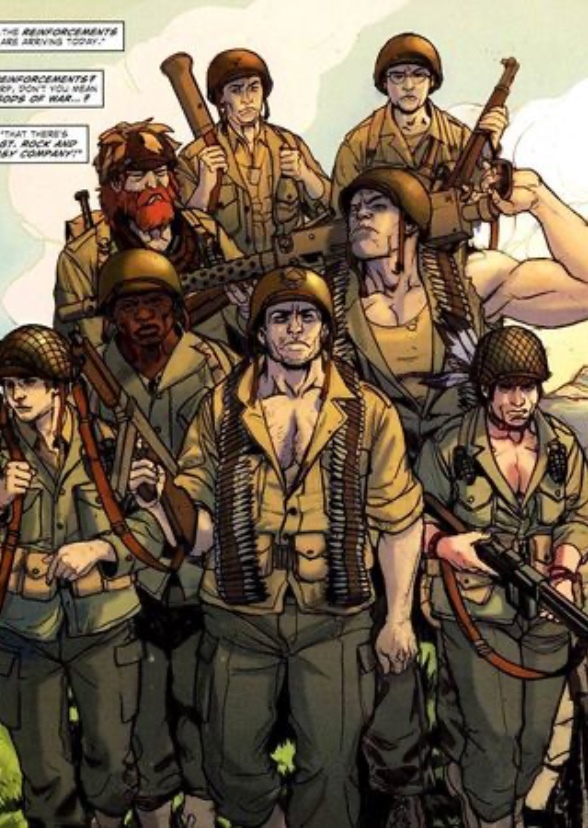
In the stories, the unit saw action in every combat zone in the European Theatre. Unlike actual units, the unit has at least one African-American member, which was in defiance of racial segregation policy of the Army at the time. In the graphic novel Between Hell and a Hard Place, Sgt. Rock explained that he gave nicknames to Easy Company men because during battle, they would be required to do things their civilian identities might not be able to live with; once the war was over, the nicknames could be left behind once the soldiers resumed their civilian lives. This accounts for the proliferation of unusual character names in Easy Company over the years.

