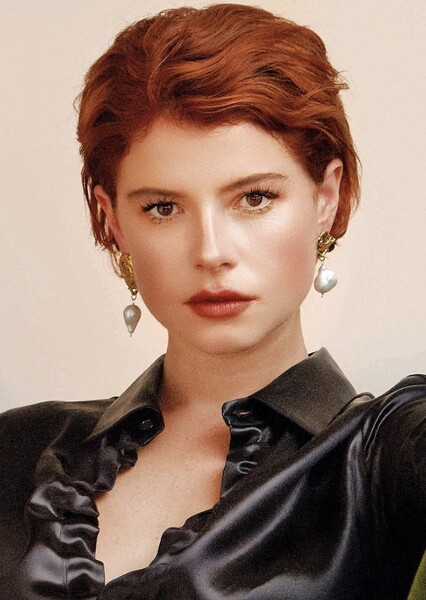
Age: 36
female
Jessie Buckley (born 28 December 1989) is an Irish actress and singer. Her accolades include Best Actress at the Oscar Academy Awards 2026 (becoming the first Irish woman to win it), a British Academy Film Award, an Actor Award, a Golden Globe Award, and a Scottish BAFTA, in addition to nominations for two Academy Awards. Buckley began her career in 2008 as a contestant on the BBC talent show I'd Do Anything, in which she came second. A RADA graduate, her early onscreen appearances were in BBC television series such as War & Peace (2016) and Taboo (2017). Buckley made her film debut with the lead role in Beast (2017), followed by her breakout role as an aspiring country music singer in the musical film Wild Rose (2018); the latter earned her a nomination for the BAFTA Award for Best Actress in a Leading Role. Buckley's career progressed with starring roles in films such as I'm Thinking of Ending Things (2020), Men (2022), Women Talking (2022) and Wicked Little Letters (2023). For her performance as a troubled mother in the psychological drama The Lost Daughter (2021), she received nominations for the BAFTA Award for Best Actress in a Supporting Role and the Academy Award for Best Supporting Actress. She gained further recognition for her portrayal of Agnes Shakespeare in the period drama Hamnet (2025), receiving a Golden Globe, a BAFTA Award, an Actor Award and an Academy Award for Best Actress. On television, Buckley has starred in the HBO miniseries Chernobyl (2019) and season four of Fargo (2020). On stage, Buckley's portrayal of Sally Bowles in a 2021 West End theatre revival of Cabaret won her the Laurence Olivier Award for Best Actress in a Musical. In 2022, she released the collaborative album For All Our Days That Tear the Heart with Bernard Butler, which was shortlisted for the 2022 Mercury Prize. Description above from the Wikipedia article Jessie Buckley, licensed under CC-BY-SA, full list of contributors on Wikipedia.
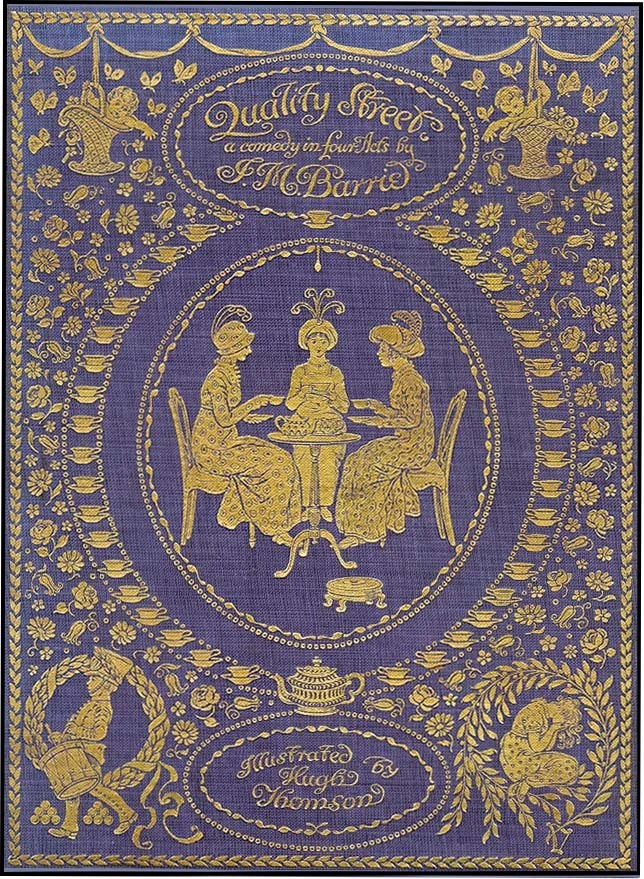
Quality Street follows Phoebe Throssel, a spirited young woman whose life is upended when her fiancé, a military officer, departs for war without a clear commitment to their future. Believing herself abandoned and facing spinsterhood in her provincial English town, Phoebe transforms herself into a mysterious, youthful visitor—a fictional French relative—to test whether her former love still cares for her. As she navigates the delicious deception, moving between her true self and her alter ego, Phoebe discovers unexpected romance, self-discovery, and the power of reinvention. The play explores themes of identity, social expectation, and female agency with wit and charm. Through mistaken identities, romantic entanglements, and comedic misunderstandings, Phoebe learns that life offers second chances and that authenticity ultimately triumphs. The work celebrates the resilience of women who refuse to be defined by societal limitations, blending romantic comedy with genuine emotional depth and social commentary about women's independence and choice.



