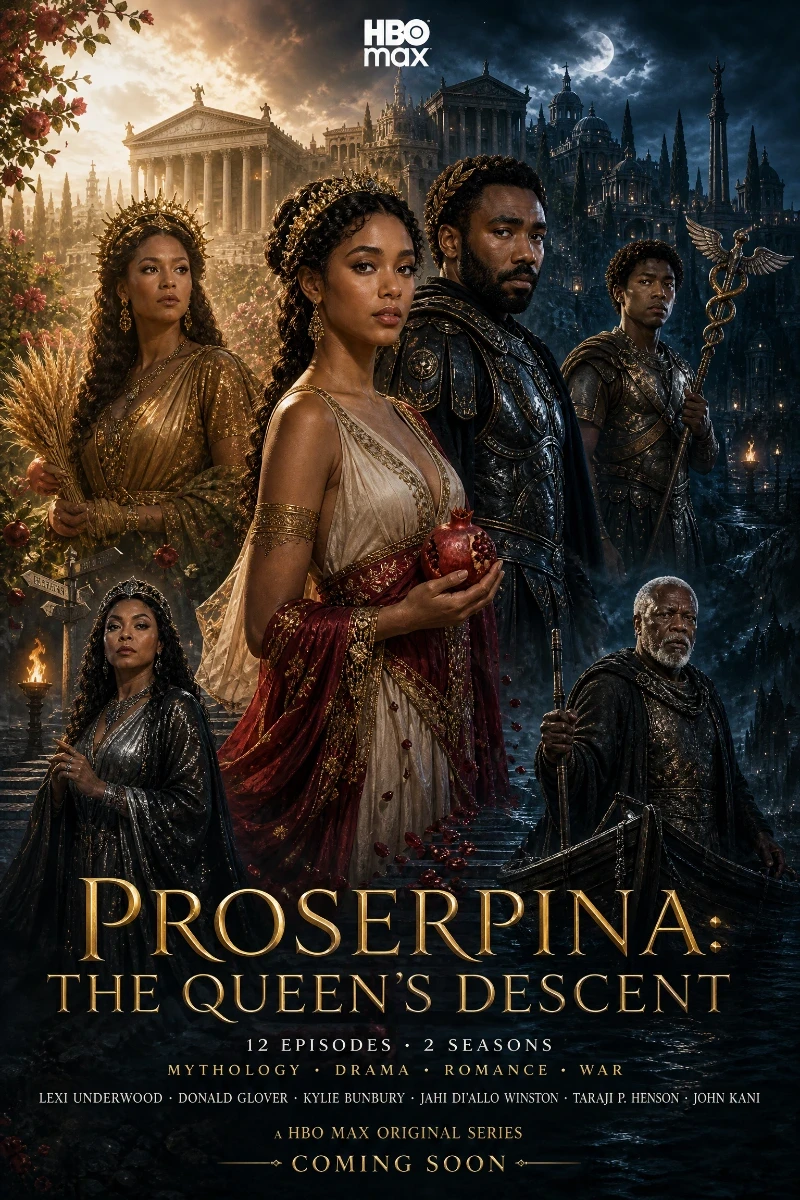
She was not stolen. She was not a victim. She was a goddess discovering that her nature was larger than her mother's garden. The most faithful, psychologically rich retelling of the Proserpina myth ever produced — and a deliberate corrective to centuries of misrepresentation. Proserpina is not abducted; she is drawn to the Underworld by her own divine nature (as goddess of spring's return, she is inherently connected to the cycle of descent and renewal) and by genuine curiosity about the domain her uncle Pluto governs. Pluto is portrayed throughout as a figure of exceptional honor: patient, deeply fair, constitutionally incapable of coercion. The pomegranate seeds are Proserpina's informed choice. Their relationship builds from formal acquaintance to intellectual companionship to genuine love — two divine beings who are surprised to find an equal. Mercury (Mercurius) serves as the inter-realm negotiator and the series' sharpest comedic voice. Ceres's grief is treated with full weight without making Pluto its villain.
S2E1 — The Garden's Edge
Proserpina drawn to the Underworld's threshold by her own nature — the goddess of return cannot fully exist without understanding descent.
S2E6 — The Pomegranate
Proserpina understands what eating the seeds means. She eats them with full, deliberate knowledge. Pluto watches and says nothing — he will not influence her choice. His expression when she does is the episode's defining image.
S2E12 — Two Thrones
The arrangement reached: six months each realm. Proserpina facing Ceres and saying, gently but completely, that she chose her life. The world understands seasons for the first time.