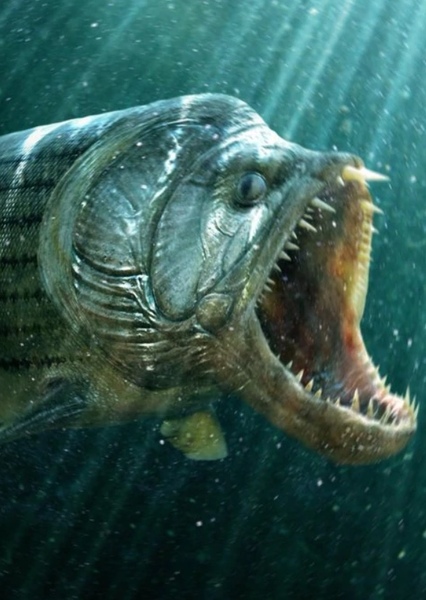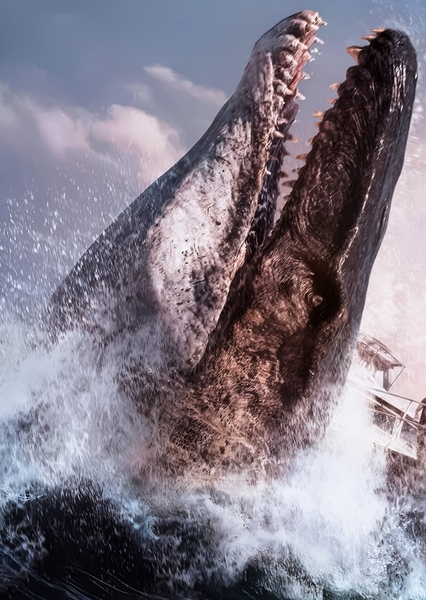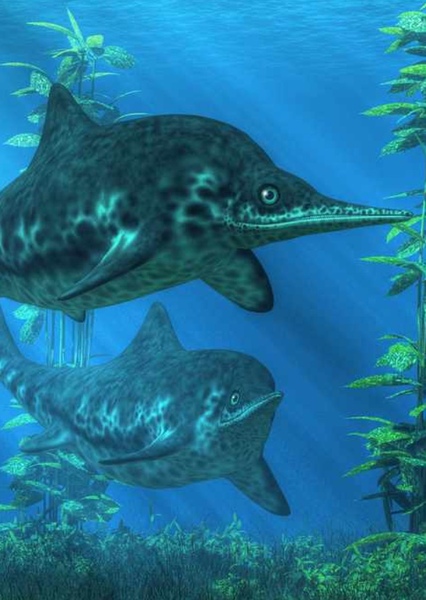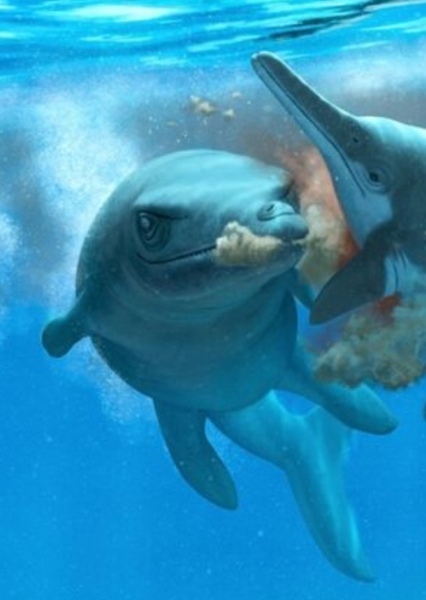
When the skull of Torvoneustes was originally described it was thought to belong to a species of Metriorhynchus, M. superciliosus. However the later discovery of post cranial remains led to the conclusion that the skull remains did not belong to that species of Metriorhynchus, and they were re-described as a new species of Dakosaurus, D. carpenteri, in 2008. Later in 2008, the remains were again moved to a another genus as a species of Geosaurus, G. carpenteri. Ultimately in 2010, the remains were again reclassified, this time as their own genus, Torvoneustes. In 2013 a second species, T. coryphaeus, was named from further remains recovered from the Kimmeridge Clay Formation. Torvoneustes was a metriorhynchid thalattosuchian, a creature that can be more simply referred to as a marine crocodile adapted for life in the sea. The legs were flattened and shaped more like paddles, while the tail would have ended with a fish-like fluke, similar to those of ichthyosaurs. The hard osteoderms that are commonly found in the skin of terrestrial (land dwelling) crocodiles were also gone so that the skin had a more hydrodynamic surface, making swimming easier and more efficient. Despite being large Torvoneustes seems to have been adapted more for a piscivorous (fish eating) diet. This is because the jaws of Torvoneustes are relatively long with teeth that are smaller than those of suspected hyper carnivorous genera like Dakosaurus which were better at slicing the flesh of other marine reptiles. This is not to say that Torvoneustes would not target other marine reptiles in its pursuit of prey, just that the teeth and jaws would be better suited for work upon fish. As far as comparisons to other metriorhynchid crocodiles go, Torvoneustes was larger than Geosaurus and Metriorhynchus, but roughly comparable to larger Dakosaurus. Even larger than all of these though was Plesiosuchus.
Torvoneustes

Prehistoric Sea Creatures
for Prehistoric Sea Creatures in Primal Abyss: A Jurassic World Story
Suggested by damo01
A spinoff movie to the JW Alternate Timeline Trilogy, it takes place after the events of JW Alternate Timeline part one. During the success of the Jurassic World resort, InGen have decided to spread their success by building facilities in other parts of the world. One in particular is a half submerged underwater laboratory/sea sanctuary, located of the coast of an island in the Caribbean Sea, where a team of geneticists have been excavating Lampreys frozen in ice containing blood with DNA from long extinct sea creatures to genetically re-create them, which then are cared for by Marine biologists. But among them is someone who is a spy working for Biosyn, who’s hoping to get away with their tech & some DNA samples, but a hurricane has damaged the facility trapping everyone in it and is flooding. And to make things worse, some of the creatures have escaped from their containments and are now swimming freely & they’re hungry! The survivors must find a way out and call for help or they all meet their fates.