Age: 51
male
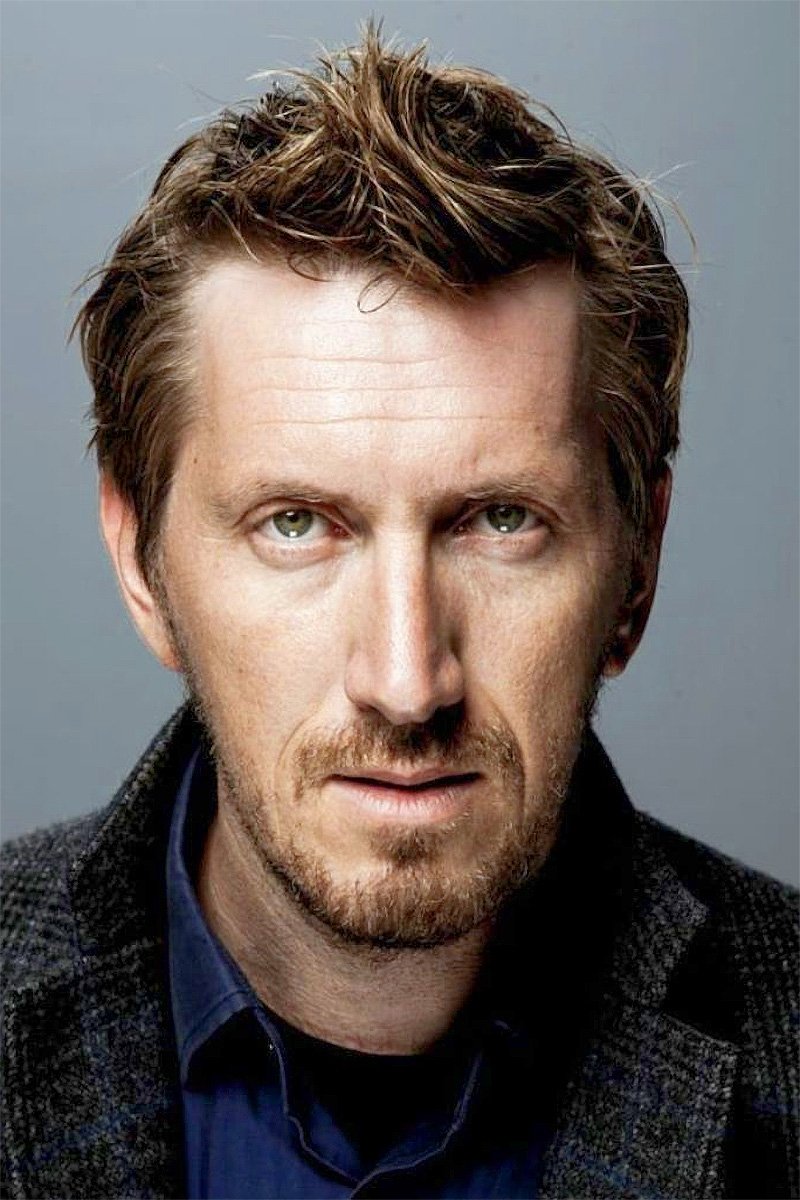
Kirill Valerievich Käro (Russian: Кири́лл Вале́рьевич Кя́ро; born 24 February 1975) is an Estonian-Russian actor. He is best known for playing the lead character in 32 episodes of The Sniffer (2013–2017), as George Safronov in 16 episodes of the Netflix sci-fi series Better than Us (2019), and as Sergey in the thriller series To the Lake (2020). Kirill Käro was born in Tallinn, Estonia. His father was a sea captain of mixed Estonian-Russian descent, and his Russian mother was a teacher. His first cousin, once removed, is actor Volli Käro. After graduating from secondary school at Lasnamäe in 1992, Käro entered a five-year acting course at the Boris Shchukin Theatre Institute in Moscow. Following graduation in 1997, he continued to work at the Boris Shchukin Theatre Institute under the mentorship of Armen Dzhigarkhanyan. Käro returned to Tallinn in 1999, acting at the Russian Theatre for five years, before going back to Moscow to the Praktika Theatre in 2004. Käro's career in film and television began in 2008 with various small parts. In 2013, he landed the leading role in The Sniffer, for which he won the Association of Film and TV Producers award in the category Best Actor. In 2019, he played the main role of George Safronov in sixteen episodes of the Netflix Russian android thriller series Better than Us. In 2020, Käro starred as Sergey in the lead role of the Russian television series To the Lake. The show was acquired by Netflix and broadcast in October 2020.
Kirill Käro

Makar Alekseyevich Devushkin
for Makar Alekseyevich Devushkin in Poor Folk
Suggested by sepanta_kazemi
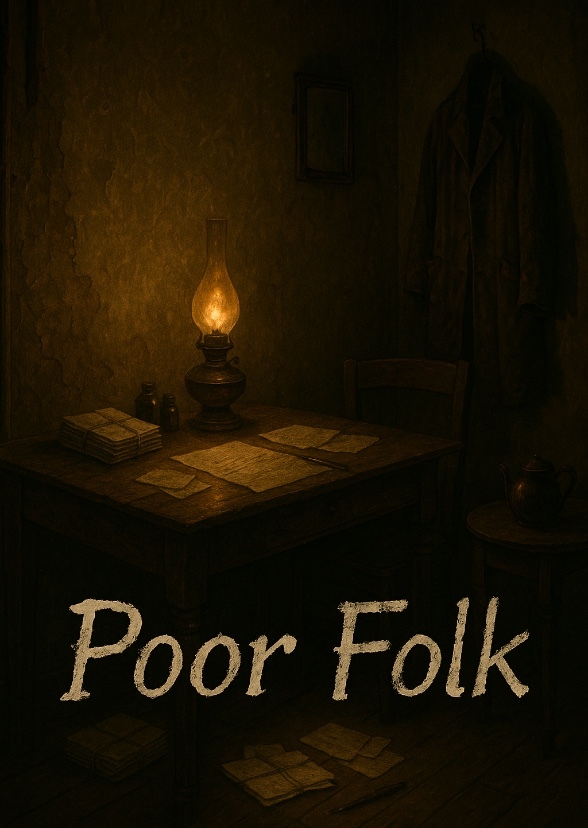
In a cramped St. Petersburg neighborhood, two distant relatives—Varvara Dobroselova and Makar Devushkin—live across from each other in rundown apartments where thin walls carry every sound of struggle. Both hover at the edge of poverty, but the letters they exchange become the one steady thread holding their lives together. Varvara carries the weight of a turbulent past: a harsh childhood, an abusive home, and a brief, tender attachment that ended in loss. Makar works long hours as a low-level copyist, constantly belittled at the office and painfully aware of his place in the world. Despite his hardships, he sends her gifts he can barely afford, hoping to offer her a small comfort. Through their correspondence, they share stories, fears, and the small victories that keep them going. Books pass between them, ideas spark, and a quiet bond forms—fragile, hopeful, and never spoken aloud. As pressures mount around them—money troubles, intrusive landlords, old memories, and new opportunities—the two must face a question they’ve both avoided: whether their connection can survive the hard pull of circumstances that never seem to ease. Poor Folk unfolds as an intimate portrait of two lonely souls reaching toward each other in a city that rarely makes room for tenderness, letting their letters become the only place where they can breathe.


