
Age: 82
male
From Wikipedia, the free encyclopedia. Bonsile John Kani (born 1943) is a South African actor, director and playwright. He was born in New Brighton, South Africa. Kani joined The Serpent Players (a group of actors whose first performance was in the former snake pit of the zoo, hence the name) in Port Elizabeth in 1965 and helped to create many plays that went unpublished but were performed to a resounding reception. These were followed by the more famous Sizwe Banzi is Dead and The Island, co-written with Athol Fugard and Winston Ntshona, in the early 1970s. He also received an Olivier nomination for his role in My Children My Africa! Kani's work has been widely performed around the world, including New York, where he and Winston Ntshona won a Tony Award in 1975 for Sizwe Banzi Is Dead and The Island. These two plays were presented in repertory at the Edison Theatre for a total of 52 performances. Nothing but the Truth (2002) was his debut as sole playwright and was first performed in the Market Theatre in Johannesburg. This play takes place in post-apartheid South Africa and does not concern the conflicts between whites and blacks, but the rift between blacks who stayed in South Africa to fight apartheid, and those who left only to return when the hated regime folded. It won the 2003 Fleur du Cap Awards for best actor and best new South African play. In the same year he was also awarded a special Obie award for his extraordinary contribution to theatre in the USA. Kani is executive trustee of the Market Theatre Foundation, founder and director of the Market Theatre Laboratory and chairman of the National Arts Council of SA. Description above from the Wikipedia article John Kani, licensed under CC-BY-SA, full list of contributors on Wikipedia.
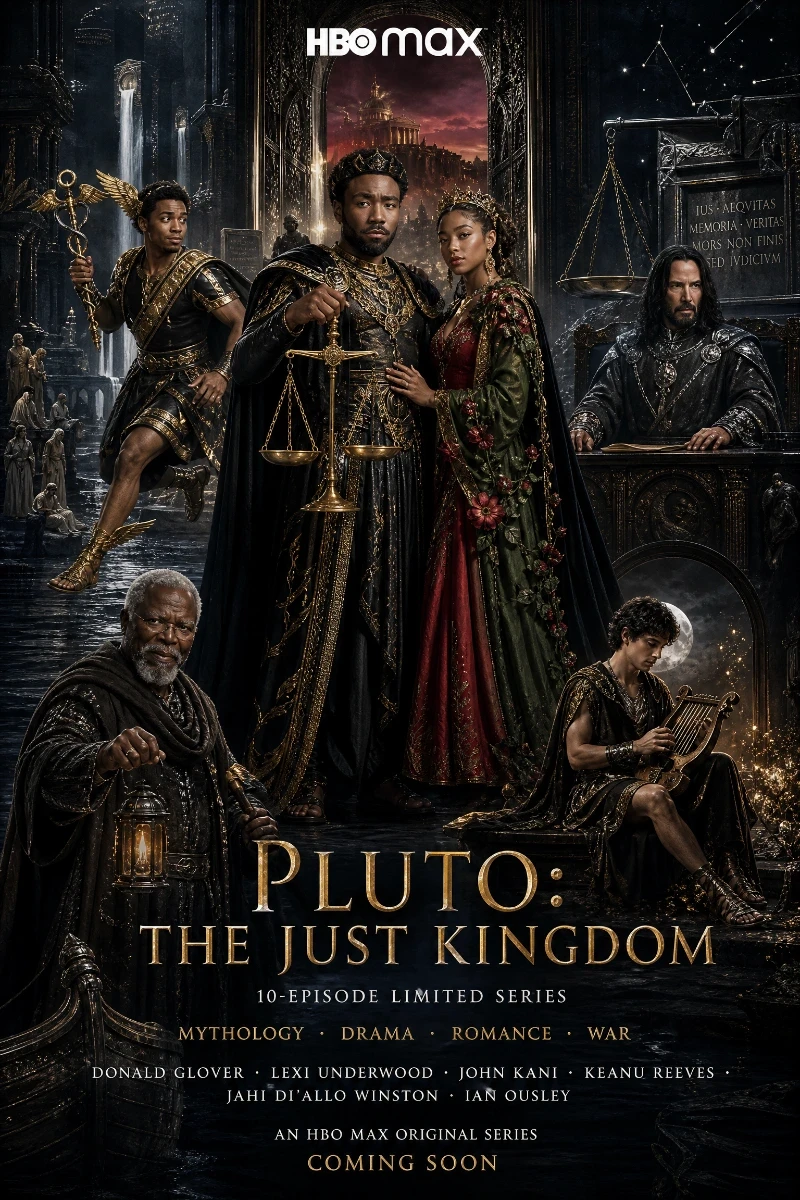
The definitive, comprehensive, and long-overdue portrait of Pluto as he actually appears in Roman religion and literature — and the universe's most important corrective to centuries of misrepresentation. Pluto in Roman mythology is the god of the earth's wealth (his name literally means 'wealth'), the sovereign of the Underworld's order, and the most impartial judge in the entire divine hierarchy. He is not associated with evil, not resentful of his domain, not jealous of his brothers. He received the Underworld by lot and governs it with the seriousness it deserves. This series shows his daily governance: adjudicating with his judges Minos, Rhadamanthus, and Aeacus; managing the river Styx with Charon; administering the Elysian Fields and the Asphodel Meadows; navigating rare visits from living mortals with appropriate gravity; building his life with Proserpina from their marriage onward. The series is quiet, formal, and occasionally deeply funny — Pluto's dry wit is the show's greatest comedic resource, deployed sparingly and therefore devastatingly. S6E1 — The Kingdom A day in the Underworld. No crisis. No drama. Just governance. Pluto adjudicating with his judges. Speaking quietly with Proserpina. Receiving the newly dead with solemn dignity. The episode is deliberately quiet and the most powerful of the six series. S6E5 — Orpheus Orpheus arrives. His music fills the Underworld. Everything stops. Pluto's decision to release Eurydice is the episode's moral center: an act of genuine compassion from the most just deity in the cosmos. S6E10 — The Oldest Promise Series finale: The universe's final episode meditates on what Pluto's domain actually means — not punishment but completion. Every soul received with care. Every judgment made with fairness. The final image: Pluto and Proserpina in their palace, purposeful and at peace. The camera holds on Pluto's face — steady, certain, entirely without resentment — which is the Roman Chronicles universe's last word.


