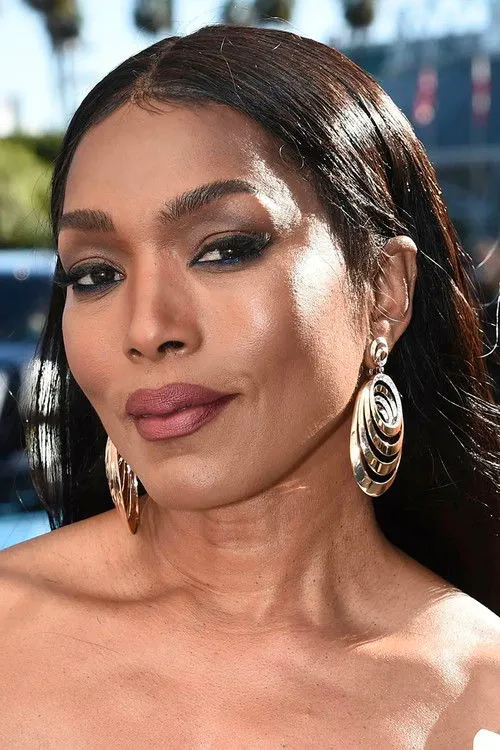
Age: 67
female
Angela Evelyn Bassett (born August 16, 1958) is an American actress. Known for her work in film and television since the 1980s, she has received various accolades, including a Primetime Emmy Award and two Golden Globe Awards, as well as nominations for two Academy Awards. In 2023, Time magazine named her one of the 100 most influential people in the world, and she received an Academy Honorary Award. Bassett had her breakthrough portraying singer Tina Turner in the biopic What's Love Got to Do with It (1993), which won her a Golden Globe Award and a nomination for the Academy Award for Best Actress. She had success starring in Boyz n the Hood (1991), Malcolm X (1992), Waiting to Exhale (1995), Vampire in Brooklyn (1995), How Stella Got Her Groove Back (1998), and Music of the Heart (1999). In the following decades, she took on supporting roles in the drama Notorious (2009) and the action films Green Lantern (2011), Olympus Has Fallen(2013), and London Has Fallen (2016). She also played Queen Ramonda in the Marvel Cinematic Universe films Black Panther (2018), Avengers: Endgame (2019), and Black Panther: Wakanda Forever (2022). For the latter, she won another Golden Globe and was nominated for the Academy Award for Best Supporting Actress. On television, Bassett has starred as Katherine Jackson in the miniseries The Jacksons: An American Dream (1992). Her portrayal of Rosa Parks in the television film The Rosa Parks Story (2002) gained her a nomination for an Emmy Award for Outstanding Lead Actress. Her performances in two seasons of the FX horror anthology series American Horror Story earned her nominations for an Emmy Award for Outstanding Supporting Actress in 2014 and 2015. In 2018, Bassett began producing and starring as an LAPD patrol sergeant, Athena Grant, in the Fox drama series 9-1-1. Description above from the Wikipedia article about Angela Bassett, licensed under CC-BY-SA, full list of contributors on Wikipedia.

After years of being hunted and weaponized, Bruce Banner is betrayed once more. An off-world containment mission meant to remove him from Earth goes catastrophically wrong, sending Banner and the Hulk hurtling through space. The ship crash-lands on the brutal planet Sakaar, a world ruled by violence, slavery, and spectacle. Captured by the forces of the tyrant Red King, the Hulk is forced into the gladiator arenas, where survival is entertainment and death is currency. Stripped of hope and language, Hulk becomes a weapon once again—until he meets others who have been broken by Sakaar. Among them are: Hiroim the Shamed, a haunted priest-warrior seeking redemption Careira Oldstrong, a hardened Shadow Person fighter Elloe Kaifi, a former royal guard turned slave Miek, a survivor of genocide who sees Hulk as prophecy Together, they form a reluctant brotherhood, united not by destiny—but by shared suffering. Through combat and bloodshed, Hulk earns their loyalty and slowly regains Banner’s fractured sense of self. For the first time, Hulk is not feared—he is followed. As rebellion grows, the truth of Sakaar’s oppression is revealed. The Red King’s rule is sustained by cruelty and manipulation, and the planet itself is dying. Hulk leads an uprising that topples the arena system and challenges the throne, culminating in a city-shattering confrontation with the Red King. Just as Hulk claims victory, outside forces intervene. Thor arrives on Sakaar, tracking cosmic disturbances caused by the Hulk’s presence. Alongside him is Korg, a revolutionary warrior who recognizes Hulk as more than a destroyer. Thor and Korg help Banner escape Sakaar before its collapse, warning that Earth—and the cosmos—are on the brink of war. Hulk is forced to choose between the world that finally accepted him and the one that still fears him. The film ends with Hulk leaving Sakaar behind, not as a monster—but as a king without a throne, carrying the weight of loyalty, loss, and vengeance toward the stars. Hulk no longer fights to survive. He fights to return.


